

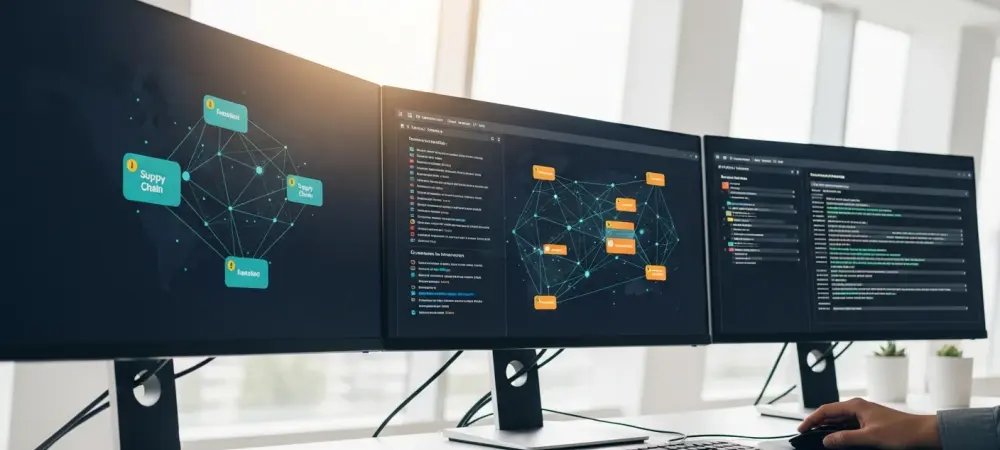
Software engineering has entered a volatile phase where the efficiency of large language models often outpaces the capacity of human oversight to secure the resulting logic. This evolution marks a shift from basic autocompletion tools to sophisticated agentic systems that autonomously generate complex functions. While the speed of production has reached unprecedented levels, the underlying security frameworks remain dangerously reactive. The rapid transition to agentic development necessitates a profound reevaluation of how integrity is maintained within the modern software supply chain.
Introduction to AI-Driven Software Engineering
The current technological landscape is defined by the emergence of “agentic development,” a paradigm where AI systems act as primary drivers of code production rather than mere assistants. This shift represents a departure from simple pattern matching toward logical reasoning and multi-step problem-solving. By integrating directly into the development lifecycle, these agents produce vast quantities of code that often bypass traditional peer-review cycles.
This emergence has occurred within a broader context of extreme pressure for rapid software delivery. Organizations are no longer using AI simply to fix bugs; they are utilizing it to architect entire modules. However, this velocity creates a fundamental tension between innovation and safety. As these systems become more deeply embedded in the stack, the complexity of the generated logic often obscures subtle security flaws that manual inspection can no longer reliably detect.
Key Pillars of Secure AI Integration
Automated Dependency Auditing and Supply Chain Security
A critical component of secure integration involves the management of third-party libraries, which remain a primary vector for exploitation. With nearly 44 percent of organizations reporting breaches linked to external dependencies recently, the need for robust auditing is clear. AI tools often pull in packages without fully vetting their provenance or historical vulnerability data, creating a fragile link in the software supply chain that malicious actors are eager to exploit. Effective auditing requires a proactive stance where dependencies are analyzed for security posture before they are integrated. Current systems are struggling to keep pace with the volume of code, leading to a reliance on outdated vulnerability databases. To bridge this gap, organizations are beginning to implement real-time dependency tracking that leverages AI to predict potential risks in library updates, though this remains an emerging and unrefined capability.
Contextual Security Scanning and Code Validation
Modern security relies on Software Composition Analysis and Static Application Security Testing to verify AI-generated output. These tools analyze the code structure and logic flow to identify common pitfalls like injection vulnerabilities or memory leaks. Unlike manual reviews, automated scanning provides a scalable way to handle the sheer volume of code produced by autonomous agents, ensuring that every line undergoes a baseline level of scrutiny.
Despite these advancements, technical performance varies significantly depending on the context of the application. Many scanning tools lack the nuance to understand intent, often resulting in high false-positive rates that frustrate developers. The industry is currently moving toward more context-aware validation that understands how specific code snippets interact with the broader system architecture, reducing the noise and focusing on high-impact threats.
Current Industry Trends and the Regulatory Landscape
The shift toward automated AI Ops infrastructure is fundamentally changing how vulnerabilities are reported and remediated. New regulations, such as the EU’s Cyber Resilience Act, now impose strict 48-hour windows for reporting major security incidents. This regulatory pressure is forcing a transition from manual documentation to automated compliance systems that can provide immediate visibility into a product’s security posture during an audit or breach investigation.
Simultaneously, a digital arms race has emerged between defenders and malicious actors. While developers use AI to secure their pipelines, attackers use similar models to scan open-source repositories for zero-day vulnerabilities. This competitive environment means that software integrity is no longer a static goal but a moving target. Consequently, the industry is seeing a surge in investment toward predictive security models that attempt to anticipate exploits before they are widely known.
Deployment Scenarios and Industry Use Cases
Adoption rates have skyrocketed, with 93 percent of organizations integrating AI tools into their workflows to maintain a competitive edge. In sectors like fintech and healthcare, where production velocity is a core business driver, AI is used to generate boilerplate code and complex data processing scripts. This integration allows smaller teams to achieve the output of much larger departments, though it often comes at the cost of deep architectural understanding.
However, certain high-stakes environments still prioritize manual validation over automation. In aerospace or critical infrastructure, where a single logic error can have catastrophic consequences, developers often spend over 40 hours a month verifying AI outputs. This dichotomy highlights a growing divide in the industry: sectors that prioritize speed accept higher risks, while those that prioritize safety struggle with the labor-intensive burden of human oversight.
Persistent Obstacles and Security Deficits
A significant “audit gap” persists across the industry, where a concerning number of organizations provide little to no formal oversight for AI-generated code. Nearly one-third of companies spend less than ten hours a month on security audits, leaving a massive portion of their codebase unverified. This deficit is often due to the technical hurdles of producing comprehensive security documentation at the same speed that AI generates the software itself.
The manual burden placed on developers remains an unsustainable bottleneck. When human experts are forced to spend a large portion of their time fixing AI mistakes, the efficiency gains of automation are effectively neutralized. Efforts are currently focused on reducing this friction by developing “correct-by-construction” AI models that incorporate security best practices directly into the generation process, though widespread implementation is still a work in progress.
Future Outlook and the Path Toward Agentic Security
The path forward involves a transition from manual intervention to a model of “agentic security.” In this scenario, autonomous security agents work in tandem with development agents to provide real-time guardrails and contextual monitoring. This would allow for a self-healing software ecosystem where vulnerabilities are detected and patched at the moment of creation, significantly reducing the window of exposure for the enterprise.
Long-term, these developments will likely automate the entire compliance lifecycle, making regulatory reporting a background process rather than a manual crisis. As autonomous agents become more reliable, the role of the human developer will shift toward high-level architectural design and ethical oversight. This transformation promises to redefine the global software supply chain, making security an inherent property of the code rather than an afterthought.
Summary and Conclusion
The review demonstrated a profound disconnect between the universal adoption of AI development tools and the actual level of security confidence within the industry. While the efficiency gains were undeniable, the fragility of the software supply chain became more apparent as organizations struggled to audit the massive volume of new code. It was clear that manual validation could no longer keep pace with the velocity of agentic systems, creating a vacuum that only further automation could fill. The industry moved toward a future where security must be as autonomous as the development process itself. Organizations that failed to implement automated guardrails found themselves increasingly vulnerable to both regulatory penalties and sophisticated AI-driven attacks. Ultimately, the successful integration of AI-generated code required a shift in mindset, treating security not as a final checklist but as a continuous, algorithmic function that operated at the same speed as innovation.