

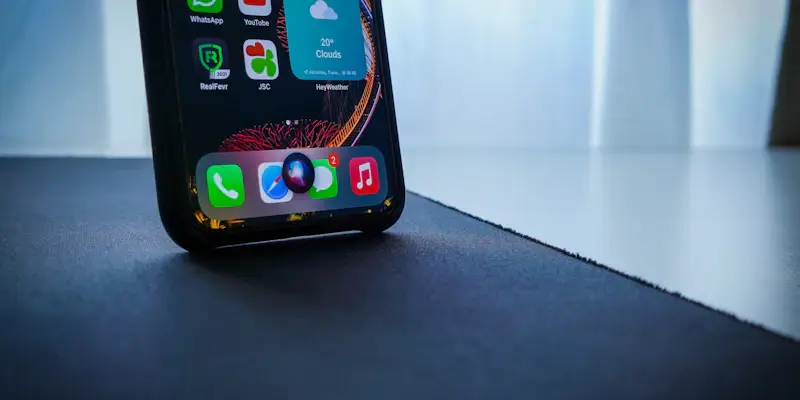
AI technology is making significant strides in various fields, including providing personalized fashion advice. As the weather becomes increasingly unpredictable, having an AI assistant that can suggest the perfect outfit is becoming more desirable. The capabilities of various AI assistants like Apple’s Siri, Amazon’s Alexa, and OpenAI’s ChatGPT 4o in offering weather-based fashion advice have been under scrutiny. This article delves into how each of these technologies fares when it comes to guiding users on what to wear.
The AI Assistants in the Spotlight
Siri and AlexThe Basics
Apple’s Siri has long been known for its ability to provide weather updates and perform other voice-activated tasks. However, when it comes to offering personalized fashion advice, Siri’s usefulness is significantly limited. Siri can effortlessly inform you of the day’s weather forecast, but it can’t translate that information into practical fashion advice, such as what type of jacket would be appropriate or if an umbrella is necessary. This limitation restricts Siri’s utility for users seeking specific, day-to-day sartorial guidance based on fluctuating weather conditions.
Similarly, Amazon’s Alexa faces a comparable shortcoming. While Alexa is highly efficient at delivering accurate weather data and can integrate with various smart home devices, it does not possess the capability to suggest weather-appropriate clothing. Users who turn to Alexa for fashion advice will find its functionality limited to weather forecasts without any further personalized recommendations. Both Siri and Alexa reveal a significant gap in their feature sets, underscoring the need for AI assistants capable of merging weather data with pragmatic fashion guidance.
ChatGPT 4o: A Game Changer
In stark contrast to Siri and Alexa, ChatGPT 4o developed by OpenAI stands out with its sophisticated and interactive capabilities. Unlike the other AI assistants, ChatGPT 4o can go beyond interpreting weather data. By analyzing the user’s wardrobe through the iPhone camera, it can provide specific outfit suggestions tailored to the day’s weather conditions. This multimodal integration delivers a richer and more personalized user experience, making it much more than just a weather update tool.
ChatGPT 4o’s ability to offer such detailed and context-aware advice marks a significant advancement. For instance, if the user photographs their closet, ChatGPT 4o can identify potential outfit combinations that align with the predicted weather, factoring in nuances such as layering or material suitability. This level of personalized interaction ensures that users not only stay informed about the weather but can also dress suitably for any condition, effortlessly merging style and practicality.
Practical Experiment: The Weather Challenge
Testing the AIs
The real test for these AI assistants emerged through a practical experiment involving a typical March weather scenario in the United States. March is known for its unpredictable and often transitional weather, which can fluctuate between cool and rainy conditions with temperatures ranging from 48°F to 58°F. This posed a challenging setting for the AI assistants to prove their proficiency in offering relevant fashion advice. The author engaged with each AI to solicit outfit recommendations suitable for the given weather conditions.
The initial step involved asking Alexa and Siri for their weather forecasts. Both assistants excelled in this regard, delivering accurate and detailed weather updates. The following step, however, was to request fashion advice tailored to the weather information provided. It became evident that both Alexa and Siri hit a roadblock, failing to extend their functionality into the realm of personalized fashion suggestions. Their responses were confined to weather data, underscoring a significant limitation in their application to daily sartorial needs.
Alexa and Siri: Limited Utility
Despite their efficiency in providing weather forecasts, neither Alexa nor Siri could transition from delivering factual weather updates to suggesting appropriate clothing. When prompted for further advice, both AI assistants were unable to recommend what the user should wear. This experiment highlighted the limitations of Alexa and Siri in their current iterations, reflecting their inadequacies as comprehensive personal assistants capable of merging weather data with actionable fashion advice.
Alexa and Siri’s inability to move beyond basic weather updates underscores the potential room for growth and development in this domain. Users seeking more than just forecast data—those looking for specific guidance on how to dress appropriately for the weather—will find both platforms lacking. This exposes a gap in user needs and current technological capabilities, advocating for more integrated and holistic AI solutions that address these practical daily concerns.
ChatGPT 4o: Leading the Pack
Interpreting Weather and Wardrobe
ChatGPT 4o, developed by OpenAI, showcased its advanced capabilities in a way that Siri and Alexa couldn’t match. Upon analyzing the user’s wardrobe via the iPhone camera, ChatGPT 4o could offer specific outfit suggestions that aligned with the current weather conditions. For example, for a cool and rainy day with temperatures ranging from 48°F to 58°F, ChatGPT 4o recommended wearing a long-sleeve shirt, a jacket or sweater, and comfortable pants. This AI demonstrated an impressive ability to integrate visual information with weather data to deliver tailored fashion advice.
The sophistication of ChatGPT 4o in incorporating both weather forecasts and real-time visual inputs has highlighted its advanced multimodal capabilities. Users leveraging this technology gain not just weather-specific guidance but personalized fashion recommendations that suit their unique wardrobe, addressing a critical need that other AI assistants currently overlook. ChatGPT 4o’s approach marks a significant stride in the evolution of AI from simple data provision to more complex, user-centered applications.
Validating the Advice
To validate the effectiveness of the fashion advice provided by ChatGPT 4o, the author conducted a follow-up by cross-checking the chosen outfits. ChatGPT 4o consistently offered practical and stylish outfit suggestions that fit the given weather conditions perfectly. This validation highlighted the AI’s utility in helping users make daily fashion choices that are both weather-appropriate and aesthetically pleasing.
ChatGPT 4o’s ability to deliver such tailored and relevant advice showcases its superior functionality. The AI not only helps users stay comfortable during varying weather conditions but also ensures they present themselves stylishly. This capability reflects the potential of future AI developments to offer even more refined and relevant advice, further bridging the gap between human-like intuition and automated assistance. ChatGPT 4o represents a significant leap in the sophistication and practical utility of AI-driven personal assistants.
Final Thoughts
Artificial Intelligence (AI) is advancing rapidly in many areas, one of which is personalized fashion advice. With the weather becoming more erratic, the need for an AI assistant that can suggest the ideal outfit is growing. AI assistants like Apple’s Siri, Amazon’s Alexa, and OpenAI’s ChatGPT 4o are being evaluated for their effectiveness in offering weather-appropriate fashion guidance. This article explores how these technologies perform in helping users decide what to wear based on weather conditions. Each assistant brings its unique expertise, from Siri’s integration with iOS to Alexa’s smart home capabilities, and ChatGPT 4o’s conversational prowess. The analysis dives into their strengths and weaknesses, determining which AI performs best within this specific function. As technology evolves, the future of fashion and weather-based recommendations is poised to become even more tailored and precise, enhancing how we dress for all weather scenarios. Each of these AI systems strives to deliver the most practical and stylish solutions, making them invaluable in our daily lives.