

The global supply chain is no longer a linear sequence of predictable events but a complex web of rapid-fire demands that traditional machinery simply cannot handle. As e-commerce fulfillment centers struggle with the crushing weight of labor shortages and the chaotic variety of mixed-SKU inventory, the industry has reached a tipping point where rigid automation is becoming a liability. The MODEX 2026 showcase served as a definitive proving ground for a new philosophy in robotics, where the goal is no longer just mechanical speed, but cognitive adaptability.
Introduction to Modern Robotic Logistics
The transition from pre-programmed industrial arms to intelligent systems marks the end of the “black box” era of automation. In the past, a robot required a perfectly static environment to function; today, AI-integrated robotics utilize real-time environmental perception to navigate the unexpected. This shift is driven by core principles of motion planning and computer vision that allow machines to interpret their surroundings rather than just following a set of coordinates.
At the heart of this movement is the industry’s response to critical bottlenecks in high-volume fulfillment. By moving away from fixed configurations, companies like Yaskawa Motoman are demonstrating how robots can now manage the unpredictability of human-centric workspaces. This evolution is vital for modern hubs that must pivot between different product types without hours of manual reprogramming, ensuring that the supply chain remains resilient against sudden market shifts.
Core Technological Components and Performance Features
Advanced Motion Planning and AI-Driven Adaptability
The Motoman NEXT series represents a fundamental change in how robots process information through its open-platform software. Unlike closed systems that limit a machine to proprietary logic, this initiative allows robots to “think” by integrating third-party AI algorithms directly into their control loops. This adaptability is most visible in bin-picking tasks, where items of non-uniform shapes and sizes are identified and handled with a level of precision that was previously impossible. Performance metrics indicate that these systems excel at reducing downtime through autonomous decision-making and built-in error checking. When a robot encounters an item in an orientation it has not seen before, it no longer triggers a system-wide halt. Instead, the AI recalibrates the approach path in milliseconds. This capability effectively bridges the gap between mechanical power and human-like problem-solving, providing a scalable solution for warehouses that cannot afford constant technical intervention.
High-Speed Fulfillment and Vision-Guided Palletizing
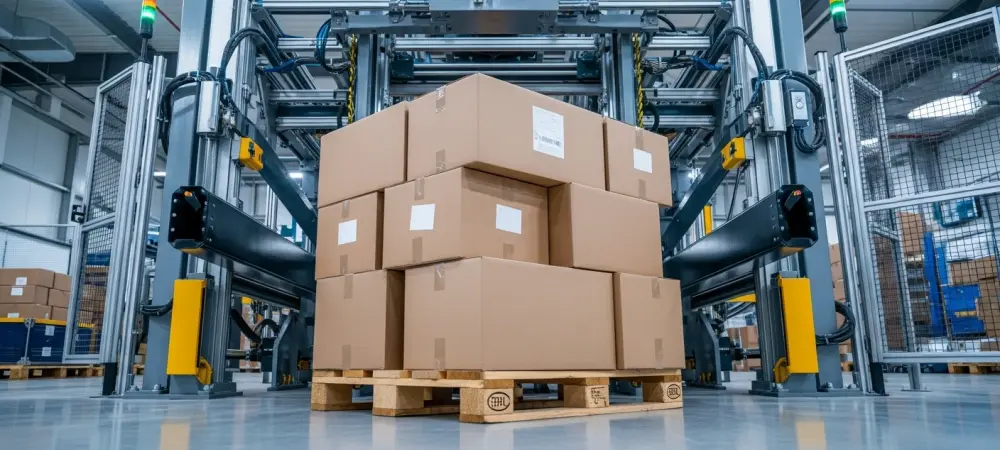
The introduction of the PackMaster and specialized layer picker solutions has redefined throughput for North American logistics. These systems utilize sophisticated vision sensors to detect and sort mixed packages into dense, stable layers. The technical achievement here lies in the software’s ability to calculate the optimal geometry of a pallet on the fly, ensuring that heavy items support lighter ones even when the incoming stream of goods is completely randomized.
This turnkey automation is significant because it matches the operational speeds of traditional single-product lines while offering infinitely more variety. By maximizing pallet density, these robots reduce shipping costs and carbon footprints. The transition to such high-speed, vision-guided systems suggests that the trade-off between volume and variety is finally being eliminated, allowing distributors to maintain aggressive shipping schedules without sacrificing order accuracy.
Collaborative Robotics and Human-Centric Safety
The HC series cobots, ranging from 10 to 30 kg in payload, are reclaiming the floor space once lost to bulky safety cages. These machines utilize advanced sensor-based mechanisms that immediately halt or slow motion upon detecting human proximity. This allows for a blended workspace where humans and robots interact directly, optimizing confined warehouse layouts that were never designed for large-scale industrial automation.
Moreover, the implementation of graphical programming interfaces has lowered the barrier to entry for the existing workforce. Operators who lack deep coding knowledge can now “teach” a robot a new welding or palletizing path through intuitive touchscreens. This democratization of technology ensures that the transition to automation does not leave current employees behind, but rather elevates them to roles as system supervisors and coordinators.
Emerging Trends in Smart Warehousing
A broader shift toward open-platform initiatives is currently reshaping how manufacturers source their technology. The industry is moving away from vendor lock-in, favoring systems that allow for the seamless integration of diverse AI hardware. This trend prioritizes flexibility and longevity, as companies can update their software capabilities without replacing the entire physical robot, effectively future-proofing their capital investments.
Furthermore, there is a rising demand for “plug-and-play” turnkey systems that minimize the technical overhead typically associated with installation. Modern warehouses are increasingly favoring decentralized, space-efficient units over massive, static footprints. This behavior reflects a market that values agility, allowing businesses to scale their automation horizontally as demand grows rather than committing to a single, rigid infrastructure from the outset.
Real-World Applications and Industry Implementation
In e-commerce fulfillment centers, AI-driven robotics are already managing the high-speed sorting of mixed-SKU orders with minimal human oversight. These deployments have proven that intelligent vision systems can handle the reflective surfaces and irregular shapes of modern packaging that once baffled older sensors. By automating these “unstructured” tasks, facilities have seen a measurable increase in order accuracy and a decrease in the physical strain on human workers.
The manufacturing sector has also seen a surge in collaborative hardware for heavy-duty palletizing and automated welding. These implementations are particularly notable in global distribution networks where labor scarcity is most acute. By deploying high-speed layer picking, these networks have managed to maintain peak operational capacity during seasonal spikes, proving that AI-driven automation is no longer an experimental luxury but a core operational necessity for global trade.
Challenges and Adoption Barriers
Despite these advancements, significant technical hurdles remain regarding the raw processing power required for real-time AI “thinking.” High-speed environments demand latency-free calculations, which can strain local hardware and require robust edge computing solutions. Additionally, the regulatory landscape for heavy-payload cobots is still evolving, as safety standards must keep pace with machines that are becoming both stronger and more autonomous in shared spaces. Market obstacles also persist, primarily centered on the high initial capital expenditure. While the long-term ROI is clear, the upfront cost can be a barrier for mid-sized enterprises. Furthermore, the reliance on open-platform systems necessitates a new breed of specialized personnel who can bridge the gap between traditional mechanical engineering and modern data science, creating a different kind of labor challenge within the industry.
Future Outlook and Strategic Projections
The next generation of logistics AI will likely move toward swarm intelligence, where fleets of robots communicate and coordinate their movements across a warehouse without a central controller. This level of autonomy will be supported by breakthroughs in haptic feedback, allowing robots to handle delicate or irregular materials with a “soft touch.” Such advancements will be the final piece of the puzzle for industries like grocery and electronics fulfillment.
Over the long term, the movement toward fully autonomous “dark warehouses” will become more prevalent. These facilities, designed to operate without human lighting or climate control, represent the ultimate evolution of efficiency. While this raises questions about the global labor market, the strategic focus will likely shift toward human-AI synergy, where robots handle the repetitive and dangerous tasks while humans focus on high-level strategic oversight and maintenance.
Final Assessment of AI-Driven Logistics
The synthesis of robust hardware and adaptive software has reached a level of maturity that effectively stabilizes the global supply chain. Yaskawa’s innovations, particularly the NEXT series and the expansion of the HC cobot line, provided a clear blueprint for how machines can transcend their traditional limits. The shift toward open platforms and vision-guided intelligence addressed the most pressing challenges of modern commerce, from labor scarcity to the complexity of mixed-inventory management.
Ultimately, the transition toward intelligent automation was validated as the only viable path for sustainable operational scaling. Stakeholders moved beyond viewing robotics as a replacement for human labor and instead embraced them as a necessary tool for resilience. The focus shifted toward creating modular, “plug-and-play” ecosystems that could be deployed rapidly across various sectors. This strategic pivot ensured that the logistics infrastructure was prepared for a future where adaptability is just as valuable as speed.