

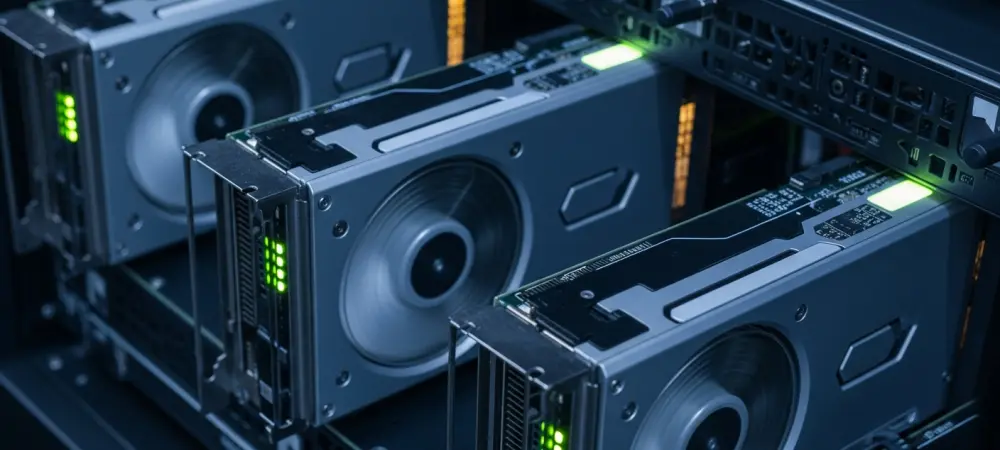
The traditional image of a high-performance computer sitting beneath a professional’s desk is rapidly fading as organizations grapple with the immense computational requirements of modern artificial intelligence. For several decades, the technology industry prioritized the miniaturization and decentralization of hardware, placing immense power in the hands of individual engineers and designers through localized tower workstations. This model flourished because it provided immediate responsiveness and autonomy, allowing technical talent to operate without the constraints of shared network resources or remote processing queues. However, the sheer scale of hardware now required to run generative models and real-time AI assistants has outpaced the capabilities of typical office infrastructure. What once fit comfortably in a mid-sized chassis now demands cooling and power delivery systems that only a specialized facility can provide, forcing a fundamental rethink of where professional work actually happens. This migration signifies more than just a change in physical location; it represents a wholesale shift toward centralized, enterprise-grade resource management in a landscape where performance is the primary currency for modern success.
Professional Software: The Broad Integration of AI
High-end GPU workstations were once specialized tools reserved for a small group of professionals, such as 3D animators and mechanical engineers, but today the landscape has shifted because AI has become a fundamental part of the modern software stack. Software developers now use AI assistants to generate and debug code in real-time, while creative professionals rely on generative features in standard applications to automate complex visual tasks that once took hours of manual labor. This integration means that accelerated computing is no longer a luxury for specialized departments but a necessity for the baseline productivity of the entire workforce. As these tools become more sophisticated, the hardware required to run them locally becomes prohibitively bulky and loud for a standard office setting. Consequently, the workstation is transforming from a personal peripheral into a backend service, accessible via high-speed connections while the physical units reside in climate-controlled environments. This shift allows for a more fluid and scalable approach to professional computing.
Because these AI-driven features are becoming standard across diverse industries, the need for heavy-duty GPU power is no longer limited to niche roles, creating a logistical challenge for hardware procurement. Entire technical teams now require accelerated computing to maintain their pace of innovation, which makes the traditional model of purchasing individual high-end towers for every staff member increasingly expensive and difficult to manage. By moving these capabilities into a centralized data center, organizations can allocate resources more dynamically, ensuring that the most intensive tasks receive the priority they need without wasting money on idle hardware. This centralized approach also facilitates easier software updates, as IT teams can deploy the latest AI drivers and libraries across the entire fleet simultaneously. By decoupling the interface from the raw processing power, companies provide their staff with the flexibility to work from any device.
Financial Incentives: The Move to Internal Hosting
The transition to the data center is also driven by the shifting economics of AI, as many companies originally started by accessing these capabilities through third-party APIs that charge per request or token. While this pay-as-you-go model offered a convenient entry point during the initial AI boom, the costs quickly became unsustainable as usage scaled across thousands of employees and millions of lines of code. By moving to an owned infrastructure model, organizations can convert these unpredictable and rising operational expenses into a more manageable capital investment that provides a better long-term return on capital. This approach allows businesses to run their models 24/7 without the fear of a massive bill at the end of the month, providing the financial predictability that CFOs demand. Furthermore, having internal hardware ensures that processing speeds remain consistent, avoiding the variability and potential downtime often associated with public cloud services that experience high demand during peak hours. Using internal hardware allows organizations to utilize open-weight models, which offers significant strategic advantages including better data privacy and the ability to fine-tune models for specific industry needs. Keeping proprietary data within the company’s own secure environment, rather than sending it to an external provider for processing, has become a major priority for businesses handling sensitive medical, legal, or financial information. When a company controls the entire hardware stack, it can ensure that none of its internal prompts or training data are used to improve a competitor’s product through unintended data leaks. This level of data sovereignty is impossible to achieve when relying solely on public AI platforms that require data to leave the internal network. Moreover, the ability to fine-tune specialized models on internal hardware means that the AI can become more expert in a company’s specific niche, providing a competitive edge that generic, third-party models simply cannot match at scale.
Physical Barriers: Solving Infrastructure and Performance Issues
Modern GPU workstations are demanding machines that generate intense heat and consume vast amounts of electricity, creating environments that are often unsuitable for a standard office cubicle. Most office buildings were designed with lighting and basic air conditioning in mind, not the thermal output of a high-performance GPU fleet running at full capacity for several hours a day. Moving these machines into a racked data center environment allows for professional cooling and power management, which extends the lifespan of hardware and prevents office spaces from becoming uncomfortably warm or noisy. Industrial-grade cooling systems in a dedicated facility can dissipate heat much more efficiently than a standard chassis fan, which reduces the risk of thermal throttling and ensures that hardware performs at peak efficiency. This centralized cooling strategy also reduces the total energy footprint of the organization, as specialized HVAC systems are more efficient at moving heat out of a building.
Historically, the biggest challenge to centralizing these machines was the user experience, as remote desktop lag often frustrated professionals who required instantaneous feedback for their work. However, a new generation of remote access technology has largely eliminated these latency issues, providing a high-performance experience that feels identical to a local machine. Modern solutions now utilize advanced encoding and decoding protocols that allow artists and engineers to perform complex 3D manipulation or real-time simulation from any location while the hardware stays in a controlled data center. This breakthrough has untethered high-performance work from the physical office, allowing for a hybrid workforce that maintains full productivity regardless of geographic location. Because the pixel stream is the only thing moving across the network, the raw data remains safe in the data center, while the user enjoys a fluid interface that supports multi-monitor setups and high-refresh-rate displays without the stuttering of the past.
Enterprise Safety: Strengthening Security and Maintenance
Centralizing workstations in the data center provides a massive boost to corporate security because the physical hardware and the data it processes stay behind the enterprise firewall. When a professional workstation is located under a desk or in a home office, it represents a physical security risk and a potential entry point for data exfiltration that is difficult to monitor. By keeping the machines in a secure facility, sensitive source code, proprietary models, and customer data never leave the building, significantly reducing the risk of a breach. Even if an employee loses their physical laptop or it is stolen, the actual work environment remains safe and inaccessible to unauthorized users because the processing and storage are not local to the device. This architecture allows security teams to implement more rigorous access controls and monitoring without hindering the productivity of the staff, creating a zero trust environment that is inherently more resilient to the evolving threats of the modern digital landscape. This centralized model also makes life much easier for IT departments, as it consolidates the maintenance and management of hardware that would otherwise be spread across numerous locations. Rather than tracking down individual machines for routine maintenance, technicians can patch software, update drivers, and upgrade hardware components in one central location without interrupting the user. If a component fails, an employee can be quickly moved to a new virtual instance or a standby machine, ensuring that technical issues do not lead to costly downtime or lost productivity. This efficiency extends to the procurement process, as IT leaders can buy hardware in bulk and rack it in a way that maximizes density and power usage effectiveness. Furthermore, the ability to monitor hardware health in real-time within a data center allows for predictive maintenance, where components are replaced before they fail, ensuring that the technical staff always has access to reliable, high-performance tools for their daily tasks.
Strategic Evolution: The Future of Workspace Architecture
The decision to move workstations into the data center addressed several looming operational crises that threatened to stall technological progress within the enterprise. Organizations that adopted this centralized model successfully bypassed the limitations of local hardware and created a more resilient, scalable environment for their technical staff. Leaders focused on establishing high-bandwidth connections and invested in robust virtualization layers that allowed seamless transitions between remote and local-style workflows. IT departments shifted their focus from individual hardware repairs to high-level resource orchestration, which improved overall system uptime and lowered the total cost of ownership. By removing the physical burden of the workstation from the office, companies enabled their teams to utilize the full power of modern AI without the noise, heat, and security risks of decentralized machines. This transition proved that the future of high-performance work relied on the strength of the infrastructure.
To capitalize on this shift, enterprise leaders developed clear roadmaps for hardware decommissioning and replaced legacy towers with lightweight, energy-efficient thin clients. This move not only simplified the physical workspace but also reduced the administrative burden on support staff who previously managed a fragmented fleet of machines. Organizations that moved aggressively toward data center centralization found themselves better prepared for the next wave of AI model scaling, as they already possessed the racks, power, and cooling necessary for expansion. Looking forward, the emphasis shifted from individual device specifications to network reliability and low-latency delivery of computational power. By standardizing on a centralized GPU architecture, these companies ensured that every employee had access to top-tier performance regardless of their physical location or the device in their hands. This strategic realignment established a sustainable foundation for the continued growth of AI-driven tools.