

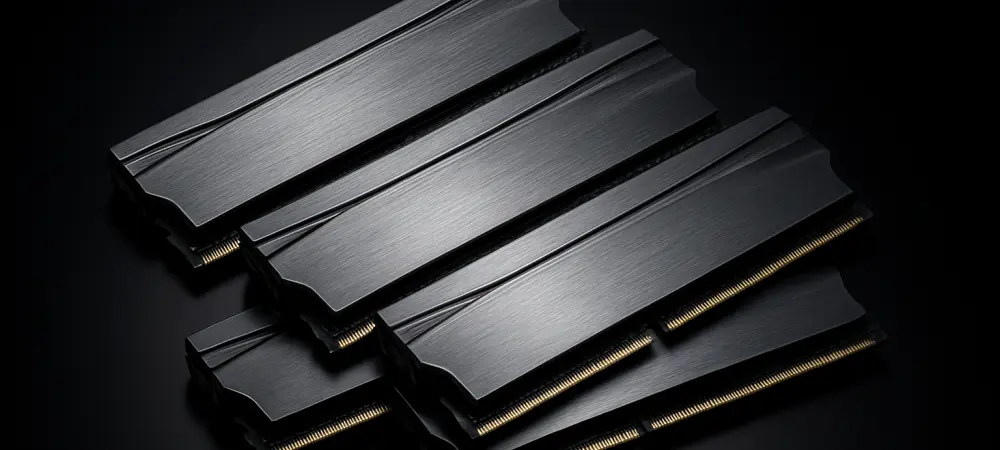
Traditional electronics like laptops and gaming PCs are being starved of resources as high-margin enterprise orders take priority at major semiconductor manufacturing facilities. This shift marks a dramatic departure from the historical trend where Random Access Memory (RAM) was viewed as an affordable commodity that became cheaper and more dense with each passing year. In the current landscape, the global semiconductor market is grappling with extreme volatility that has fundamentally altered how both manufacturers and consumers value memory components. A perfect storm of limited production capacity and an insatiable demand for Artificial Intelligence hardware has triggered what industry veterans are calling the RAMpocalypse. This situation has effectively transformed essential computer components into luxury goods, priced well beyond the reach of the average home user or small business. The core of this crisis lies in the critical role memory plays as the high-speed bridge between modern processors and long-term storage solutions. Because this memory dictates the overall responsiveness and capability of a system, the current shortage is rippling through every sector of the technology industry, from the latest smartphones to high-performance scientific workstations.
The Technical Conflict Between Consumers and AI
Resource Cannibalization: The HBM Bottleneck
The primary technical driver of the current price surge is the zero-sum nature of semiconductor manufacturing, where every wafer allocated to one product is a wafer denied to another. High Bandwidth Memory (HBM), specifically the latest HBM3e and HBM4 standards designed for high-end AI accelerators, is significantly more resource-intensive to produce than the standard DDR5 memory used in home computers. A single HBM module requires roughly three times the amount of silicon wafer supply as a standard consumer module due to its complex vertical stacking and the integration of Through-Silicon Via technology. This manufacturing complexity means that even if a factory is running at one hundred percent capacity, it is producing far fewer total units of memory than it would if it were focusing on traditional consumer grades. Consequently, manufacturers like Samsung and SK Hynix are forced to make a strategic choice: serve the broad public market or cater to the massive, high-margin contracts offered by AI developers. As long as the profit per wafer remains significantly higher for AI-focused hardware, the production of standard RAM will remain an afterthought for the industry giants.
The scarcity resulting from this production pivot has led to an aggressive upward trend in retail pricing that shows no signs of slowing down. For example, standard 32GB DDR5 RAM kits that were widely available for less than $100 in early 2025 have recently surged to prices exceeding $400 in the retail market. The situation is even more dire for enthusiasts and professional creators who require premium, high-performance kits with lower latencies and higher clock speeds. These specialized modules have seen their prices jump from approximately $250 to over $1,200, which effectively matches the total cost of a high-end laptop from just a few years ago. This pricing structure has created a massive barrier to entry for students, hobbyists, and researchers who depend on affordable hardware for their work. The market has effectively been bifurcated, where high-performance memory is now treated with the same exclusivity as enterprise-grade server hardware, leaving the consumer DIY market in a state of perpetual shortage and financial strain.
Architecture Shifts: Prioritizing Intelligence Over Utility
Beyond the raw silicon consumption, the very architecture of modern memory fabrication is being redesigned to favor AI-centric workflows, further marginalizing the consumer. Engineering talent and research budgets are being funneled into specialized memory controllers and interposer technologies that facilitate the massive data throughput required by large language models. This shift means that the development of next-generation standard memory, such as DDR6, has seen significant delays as the brightest minds in the industry focus on solving the thermal and signal integrity challenges of HBM4. The result is a stagnation in the consumer space, where users are paying four times the price for older technology while the cutting-edge innovations are locked behind enterprise firewalls. This creates a secondary problem where even if a consumer is willing to pay the premium, they are receiving hardware that is no longer the primary focus of the manufacturer’s quality control or optimization efforts, leading to a decline in the value-to-performance ratio across the board.
The reallocation of production lines has also affected the secondary and budget markets, which used to rely on the oversupply of older memory generations. In previous cycles, the transition to a new DDR standard would result in a surplus of the previous generation, driving prices down for budget-conscious users. However, in the current environment, manufacturers are repurposing older fabrication lines to create lower-tier AI components or specialized memory for edge computing devices. This has effectively eliminated the “budget” tier of the market, as there is no longer a surplus of older chips to be sold at a discount. Even mid-range smartphones and office laptops are seeing their specifications downgraded or their prices increased because the underlying cost of 8GB or 16GB of memory has become a dominant factor in the total bill of materials. The ripple effect of this strategic pivot is felt most acutely by manufacturers of affordable electronics, who can no longer find reliable suppliers for low-cost memory modules.
The Drivers of Unprecedented Supply Scarcity
Corporate Consumption: The Massive Data Center Boom
The overarching cause of this supply crunch is the unprecedented influx of capital into massive AI infrastructure projects. Companies backed by billions of dollars in venture capital and government subsidies are operating on a war-footing, buying out entire years of manufacturing capacity in advance to ensure their projects are not stalled by hardware delays. Reports from industry insiders indicate that the production lines for the “Big Three” manufacturers—Samsung, SK Hynix, and Micron—are already fully committed through 2027. This leaves virtually no surplus for the retail market or for smaller hardware vendors who cannot compete with the purchasing power of tech giants. When a company like OpenAI or xAI places an order, they aren’t looking for a few thousand modules; they are securing millions of gigabytes of high-performance memory, often paying a premium to jump to the front of the production queue, effectively sidelining the needs of the global consumer base.
The sheer scale of this corporate demand is difficult to overstate when looking at the massive infrastructure projects currently under construction. For instance, large-scale data centers such as xAI’s Colossus or the latest collaborative clusters between OpenAI and major chip designers require an astronomical amount of memory. A single flagship data center can consume over 100 million gigabytes of RAM, which is the equivalent amount of silicon required to build over 14 million high-end smartphones. With hundreds of these massive sites under construction or expansion globally, the cumulative demand from the AI sector has effectively priced the average consumer out of the market. This intense competition for a finite supply of silicon means that as long as the AI investment bubble continues to expand, the availability of RAM for traditional computing will continue to dwindle, forcing a total reset of consumer expectations regarding hardware costs and system specifications.
Manufacturing Realities: Strategic Pivots and Lead Times
Expanding the global supply of RAM is not a quick or simple endeavor, as building a modern semiconductor fabrication plant is among the most complex engineering tasks in human history. These facilities require ultra-sterile clean rooms, advanced lithography machines that cost hundreds of millions of dollars, and years of careful construction and calibration. Even with the current injection of tens of billions of dollars in new investment, major facilities like the ones being developed by SK Hynix in South Korea are not expected to reach full production capacity until 2029 at the earliest. The lead times for the equipment needed to build these factories have also tripled, as the companies that make the tools are themselves facing shortages of specialized components and skilled labor.
Furthermore, from a purely financial perspective, memory manufacturers have very little incentive to lower prices for the general public. The Big Three are currently reporting record-breaking profits, with some seeing their operating income jump by over 500 percent compared to recent years, primarily driven by enterprise AI sales. This massive profitability has led to a fundamental shift in corporate strategy. For example, Micron has recently taken steps to consolidate its long-standing consumer brands to focus more resources on the higher profit margins found in the AI and data center sectors. When a company can sell its entire inventory to a handful of enterprise clients at a massive markup, the logistical headache of dealing with the fragmented retail market and individual consumers becomes less attractive. This strategic pivot ensures that the interests of the manufacturers are now directly aligned with the AI industry, rather than the broader consumer electronics market.
Future Projections and Consumer Realities
Navigating Scarcity: Market Realities Until 2030
Industry analysts and financial experts largely agree that the RAMpocalypse is not a temporary glitch or a short-term supply chain hiccup, but rather a long-term structural shift in the global economy. The consensus within the financial sector is that the memory market will remain extremely tight until at least 2027, with no significant relief for consumers until a new generation of high-capacity factories comes online around 2030. This reality is predicated on the continued growth of AI applications in every sector of life, from autonomous vehicles to real-time language translation. Barring a sudden and catastrophic collapse of the AI investment bubble, high prices and limited availability are expected to be the new normal for the foreseeable future. This means that the era of cheap, easily accessible hardware upgrades has effectively come to an end, forcing a change in how users approach the lifecycle of their devices.
For the average user, this structural change necessitates a more cautious and deliberate approach to hardware acquisition. Instead of the traditional three-year upgrade cycle, many consumers are now looking at five- or six-year lifespans for their existing PCs and laptops. This has sparked a renewed interest in software optimization and lightweight operating systems that can run efficiently on limited memory. In the corporate world, IT departments are moving away from purchasing physical hardware in favor of cloud-based virtual desktops, where the burden of high memory costs is shifted to the service provider. However, even these providers are raising their subscription fees to cover the soaring costs of the RAM that powers their servers. The global technology landscape is being fundamentally reshaped, and the priority is now firmly placed on the infrastructure that supports artificial intelligence, leaving the individual consumer to navigate a market defined by scarcity and high barriers to entry.
Strategic Decisions: Managing the Hardware Crisis
The shift in the memory market was a direct consequence of the global rush toward artificial intelligence, which fundamentally changed the economic landscape for semiconductor manufacturers. Decision-makers in both the public and private sectors faced a reality where traditional supply and demand metrics no longer applied to essential computing components. Organizations that recognized this trend early were able to secure their hardware needs by entering into long-term supply agreements, though these contracts came at a significant premium. For the individual consumer, the strategy shifted toward maintaining and repairing existing equipment rather than seeking frequent upgrades. The industry saw a surge in the popularity of specialized refurbishing services, as the value of even used memory modules remained high due to the lack of new retail inventory.
As the market moved toward 2030, the focus for hardware manufacturers turned toward the development of alternative technologies that could reduce the reliance on traditional silicon-based RAM. Researchers explored the potential of optical memory and new carbon-based materials to bypass the current manufacturing bottlenecks. However, these solutions remained years away from commercial viability. For the immediate future, the most effective path for businesses and professionals was to invest in highly specialized hardware that offered maximum efficiency for their specific workloads. This prevented the waste of expensive resources and ensured that every gigabyte of memory was utilized to its full potential. The global technology industry was realigned to prioritize AI infrastructure, and users adapted by becoming more resourceful and strategic in their hardware management. Through a combination of software optimization and more disciplined procurement, the technology sector managed to navigate the most challenging period in the history of computer memory.