

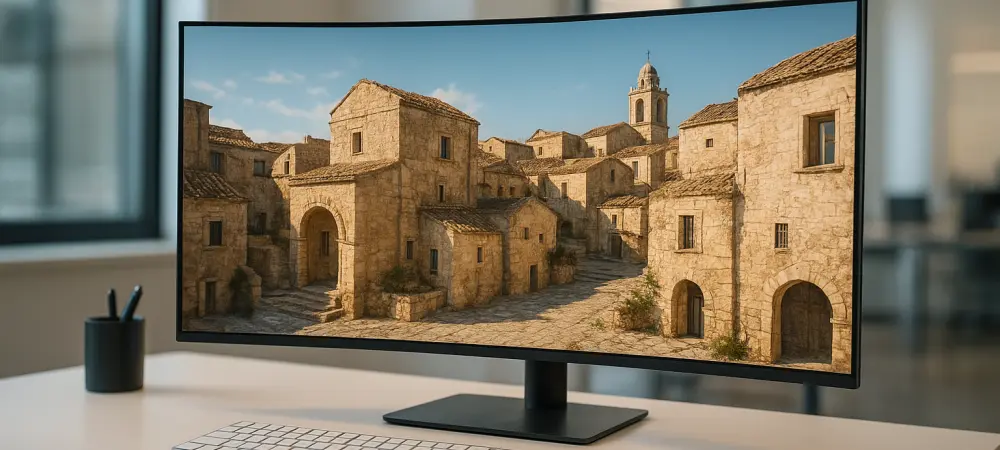
The artificial intelligence in Man of Honor is programmed to react dynamically to player actions, where firing a historically accurate weapon in a public space triggers immediate panic and civilian movement, taxing the system’s processing capabilities. This prequel serves as a premier showcase for Unreal Engine 5, representing a significant technical shift for the franchise as it moves from the mid-century American urban sprawl to the rugged and unforgiving landscapes of early 1900s Sicily. By centering the experience on the origins of organized crime, the developers have moved away from expansive, activity-dense open worlds toward a more concentrated, high-fidelity environment that demands rigorous performance from modern PC components. The technical analysis reveals a title designed to push the limits of current hardware, utilizing advanced rendering technologies to achieve a cinematic atmosphere that feels grounded in historical reality. Every architectural detail, from the weathered limestone of village squares to the linguistic nuances of the period, is rendered with a level of precision that sets a new standard for visual ambition in single-player narrative campaigns. This focus on environmental density rather than sheer map size allows for a dramatic intensity that is rare in the genre, necessitating a hardware configuration capable of handling massive amounts of asset streaming and complex geometric calculations simultaneously.
The Evolution of Tactical Interaction: Gameplay and Reactivity
Beyond the core gunplay, the title introduces a robust melee system and refined stealth mechanics that emphasize physical intensity and precision timing. Players must master the art of parrying and dodging during brutal knife duels, where the weight of every movement is felt through sophisticated animation blending. This approach to combat requires the engine to manage complex physics interactions and collision detection in real time, particularly during close-quarters encounters where the environment itself can become a weapon. The artificial intelligence contributes significantly to this immersion, as non-player characters do not simply follow scripted paths but instead analyze the player’s posture and equipped items. Drawing a weapon or acting aggressively causes a ripple effect through the crowd, where civilian AI routines prioritize self-preservation, leading to chaotic yet realistic scenarios that challenge the CPU’s ability to manage hundreds of independent agents. This reactivity ensures that the world of Sicily feels like a living, breathing ecosystem rather than a static backdrop for the narrative, placing a premium on processors with high multi-threaded performance.
Transportation in this era is similarly rooted in historical authenticity, featuring a variety of horse-drawn carts and early vintage automobiles that were common at the turn of the century. These vehicles utilize advanced physics models to navigate the challenging and often unpaved terrain of the Sicilian mountains, where every bump and incline affects the handling and structural integrity of the carriage. Driving a primitive motorcar across a rocky hillside requires the hardware to process high-frequency physics updates to simulate the suspension and tire traction accurately. The technical challenge extends to the interaction between the vehicles and the terrain, where mud, dust, and debris are kicked up dynamically, requiring substantial GPU resources to render these particle effects without dropping frames. This attention to detail ensures that traversing the landscape is just as demanding as the combat sequences, requiring a balanced system that can handle both the visual fidelity of the environment and the underlying mathematical simulations that govern the movement of objects through space.
Technical Foundations: Nanite and Dynamic Lighting Engines
The visual prowess of this title is driven by the sophisticated implementation of Unreal Engine 5, specifically utilizing the Nanite virtualized geometry system to its fullest potential. This technology allows the game to render millions of micropolygons per frame, ensuring that the intricate stonework of ancient Sicilian streets and the jagged textures of mountain slopes remain sharp regardless of the distance from the camera. Nanite effectively eliminates the traditional concept of levels of detail, meaning that objects do not “pop in” or lose quality as the player moves through the environment. However, this level of geometric complexity places an immense burden on the graphics card and the storage interface, as the engine must stream massive amounts of data from the SSD to keep up with the player’s movement. The resulting visual clarity is transformative, providing a sense of presence where every weathered brick and blade of grass looks tangible, but it requires a high-performance NVMe drive to maintain a stutter-free experience during rapid transitions between different areas of the map. Complementing the geometry is the Lumen global illumination module, which manages real-time reflections and light diffusion with incredible accuracy. Lumen provides a realistic simulation of how sunlight bounces through narrow alleys and grand villas, creating natural shadows and highlights that adapt to changing time-of-day cycles. This eliminates the flat, baked-in lighting often found in older titles, allowing for a more dynamic and atmospheric world where the interplay of light and shadow becomes a core part of the aesthetic. Furthermore, the Chaos physics subsystem is employed to govern the destruction of environmental elements, from crumbling stone walls to shattering wooden crates, adding a layer of tactical depth to firefights. Spatial audio technology also plays a critical role, recreating the specific acoustics of limestone rooms and the way sound echoes across the valleys, which further taxes the system’s processing overhead. The combination of these technologies creates a masterclass in environmental immersion, but it serves as a reminder that the era of mid-range hardware easily handling maximum settings is rapidly coming to an end.
Hardware Benchmarks: The Cost of High Fidelity
Benchmarks conducted on a wide range of modern systems reveal that the game is a demanding test for even the most capable PCs, with minimum settings requiring at least an Intel Core i7-9700K or a Ryzen 7 2700X. Even when running at 1080p with medium presets, the engine makes significant visual sacrifices, such as reducing the resolution of textures and the complexity of distant shadows. This high entry barrier suggests that the game is optimized for a higher tier of performance than many other flagship titles released recently, making it a “Crysis-level” benchmark for the current hardware landscape. Players attempting to run the game on older quad-core processors will likely encounter significant frame time inconsistencies, particularly during scenes with high civilian density or complex physics interactions. The reliance on modern instruction sets and high core counts means that a recent CPU upgrade is almost a necessity for anyone looking to maintain a stable frame rate without experiencing the jarring micro-stutter that can occur when the system is pushed to its absolute limit. For those seeking a recommended experience at 1440p resolution, the hardware requirements jump significantly, necessitating 32 GB of system RAM and high-end GPUs like the RTX 3080 Ti. The game operates exclusively on the DirectX 12 API, utilizing its advanced features to manage the heavy draw call counts and complex shaders required by Unreal Engine 5. A mandatory SSD with at least 55 GB of available space is required for storage, reflecting the game’s dependence on fast asset streaming to maintain its detailed environments. At 4K resolution, the demands push even the most powerful cards on the market to their breaking point, where achieving a smooth 60 FPS is nearly unreachable without the use of advanced upscaling technologies like DLSS or FSR. This steep performance curve marks a definitive shift in the industry, where the pursuit of extreme visual realism requires a corresponding investment in top-tier components. The data indicates that to see the game as the developers intended, players must move beyond the standard 16 GB of RAM and mid-range graphics cards that have dominated the market for the past few years.
System Resources: VRAM and RAM Performance Scaling
Video RAM consumption is a critical factor in maintaining performance, as high-resolution textures and complex geometry buffers often utilize between 10 GB and 12 GB of VRAM during normal gameplay. While cards with larger memory buffers provide some overhead for background tasks, the game is well-optimized to fit within a 12 GB window even at high resolutions, provided the user does not have excessive secondary processes running. However, this leaves very little room for error on cards with only 8 GB of VRAM, where significant stuttering and texture swapping can occur as the engine struggles to manage its memory footprint. This reinforces the shift toward 12 GB as the new minimum standard for high-end gaming in 2026, as developers continue to push the boundaries of texture quality and shader complexity. The efficiency of the memory management system is impressive, but it cannot overcome the physical limitations of older hardware, making a GPU upgrade a primary consideration for enthusiasts looking for a long-term solution to performance bottlenecks. System RAM usage is also notably high, with the game typically consuming between 20 GB and 24 GB of memory across all tested resolutions. This confirms that the 32 GB recommendation is not merely a suggestion but a necessity for maintaining system stability, particularly when high-end GPUs are funneling massive amounts of data through the CPU. The game’s ability to scale across multiple cores also means that a modern processor is required to avoid performance bottlenecks during intense action sequences where the AI and physics engines are working at full capacity. The difference between minimum and maximum graphical settings is transformative, turning the game into a true visual showcase at “Epic” presets. Maximum settings allow for vast Sicilian vistas where distant villages are rendered with clarity, and physically based material rendering ensures that fabrics and weathered roof tiles look lifelike. For players with the hardware to support it, the game offers a masterclass in environmental immersion, successfully capturing the brutal yet beautiful essence of the early 20th-century Mediterranean landscape.
Strategic Upgrades: Preparing for the New Computational Era
Navigating the technical landscape of high-end gaming now requires a proactive approach to hardware maintenance and strategic upgrades. The analysis of performance data suggested that users should prioritize the transition to high-speed NVMe storage to mitigate the streaming bottlenecks inherent in virtualized geometry systems. It was observed that systems utilizing traditional SATA SSDs experienced noticeable hitches when moving between high-density zones, whereas PCIe Gen4 and Gen5 drives provided a seamless experience. Furthermore, the high system RAM requirements indicated that 32 GB had officially become the baseline for enthusiasts who wished to avoid page-file swapping and general system instability during extended play sessions. Monitoring VRAM usage became a vital habit for players, as reaching the limit of the graphics card’s memory often resulted in a precipitous drop in frame rates that no amount of CPU power could resolve. These insights pointed toward a future where hardware synergy is more important than the performance of any single component, requiring a balanced build that considers storage speed, memory capacity, and processing power in equal measure. The technical impact of this title provided a clear roadmap for the next several years of software development, where Unreal Engine 5 features like Nanite and Lumen would become the industry standard rather than the exception. It was concluded that the era of incremental upgrades had passed, replaced by a need for significant leaps in architectural efficiency and memory bandwidth to keep pace with modern rendering techniques. Actionable steps for players included checking for BIOS updates to ensure optimal CPU scheduling and verifying that Resizable BAR was enabled to maximize GPU communication efficiency. Looking back at the benchmarks, it was evident that those who invested in high-core-count processors and GPUs with at least 12 GB of VRAM were best positioned to enjoy the cinematic fidelity of the Sicilian underworld. As the industry moved forward, the lessons learned from this technical showcase served as a guide for future hardware acquisitions, emphasizing that performance stability is the result of a holistic approach to system design rather than simply chasing high clock speeds. This transition reflected a broader trend toward software that demands more from the underlying silicon, rewarding those who maintained their systems with the latest advancements in computing technology.