

The rapid proliferation of artificial intelligence has created a critical dilemma for customer experience leaders, who must innovate to stay competitive while simultaneously safeguarding their brand’s reputation against the risks of unproven technology. The LiveNexus platform represents a significant advancement in the customer experience (CX) sector. This review will explore the evolution of this technology, its key features, its operational model, and the impact it has had on modernizing customer care applications. The purpose of this review is to provide a thorough understanding of the platform, its current capabilities, and its potential future development in safely integrating AI into enterprise operations.
An Introduction to AI and Human Orchestration
The LiveNexus platform is built on the core principle of blending artificial intelligence with a human workforce, functioning not as a standalone AI product but as a sophisticated orchestration layer. This system harmonizes best-in-class AI tools, a vast network of human agents, and extensive historical data to create a controlled environment for CX innovation. It emerged in response to an industry-wide need for practical, production-ready solutions that move beyond experimental pilots.
Its relevance is underscored by the current technological landscape, where enterprises are increasingly seeking low-risk pathways for AI adoption. By creating a framework where new technologies can be tested and scaled with human oversight, LiveNexus offers a governed approach to modernization. This model allows businesses to enhance efficiency and customer satisfaction without compromising the trust they have built with their user base.
Key Features and Architectural Pillars
Integrated Best-in-Class AI Technologies
The platform operates as an innovation engine, distinguished by its ability to incorporate and manage a variety of third-party AI technologies. Rather than tying clients to a single proprietary model, LiveNexus orchestrates different AI tools to enhance, not replace, customer interactions. This flexibility ensures that businesses can leverage state-of-the-art solutions from across the market, adapting their technology stack as new advancements become available.
This approach is significant because it future-proofs an enterprise’s CX strategy. The focus is on finding the right tool for a specific business problem, whether that involves advanced natural language processing for self-service bots or analytical AI for quality monitoring. Consequently, the platform positions itself as a strategic partner in innovation rather than just another technology vendor.
The Distributed Human Agent Network
A unique element of the LiveNexus architecture is its integration of a 20,000-strong distributed network of experienced agents. This human-in-the-loop model is fundamental to the platform’s performance, providing the real-world validation that pure AI systems often lack. These agents interact with AI-driven solutions during testing phases, offering immediate feedback and handling escalations seamlessly.
This network adds immense value by enabling solutions to be tested, routed, and scaled in live environments with minimal risk. The agents act as a safety net and a source of practical insight, ensuring that automated systems are not only technically functional but also effective and empathetic in resolving customer issues. This human element is critical for maintaining service quality as new technologies are introduced.
The Power of Proprietary Interaction Data
Underpinning both the AI and human components is nearly three decades of proprietary customer interaction data. This vast repository of historical conversations, outcomes, and contextual information serves as a foundational pillar for the entire platform. It is used to train and fine-tune AI models, ensuring they are grounded in the nuances of real-world customer service scenarios.
Moreover, this data informs the entire testing and validation process. By analyzing past interactions, LiveNexus can guide the development of orchestrated strategies that are operationally sound from the outset. This data-driven foundation helps predict potential failure points and ensures that new solutions are effective at scale, moving them from theoretical concepts to reliable production systems.
Evolving Trends in AI Implementation
The deployment of AI in customer experience is shifting from a phase of open experimentation toward a more mature model focused on governed, production-ready systems. This trend reflects growing industry-wide concerns about risk, brand quality, and the preservation of customer trust. LiveNexus aligns with this evolution by championing a repeatable process: define the problem, test the solution on a limited scale, measure the impact, and then scale responsibly. This structured methodology addresses the common pitfalls of AI implementation, such as inconsistent bot experiences or solutions that fail under the pressure of real-world demand.
Real-World Applications and Use Cases
The true measure of any technology platform lies in its real-world applications. The orchestrated approach of LiveNexus is designed to solve specific, high-impact business problems that brands face in their customer journey. By providing a framework for deploying AI in a controlled manner, it enables organizations to move beyond theoretical benefits and achieve tangible improvements in efficiency, agent performance, and customer satisfaction.
AI-Assisted Agent Support
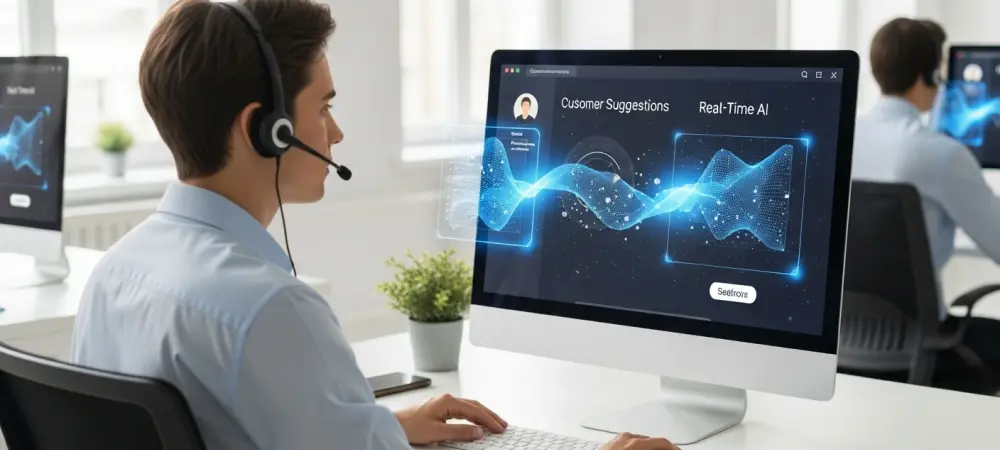
One of the most immediate applications is the implementation of AI to provide real-time support to human agents. In this use case, AI tools are orchestrated to analyze customer conversations and deliver relevant information, next-best-action suggestions, and compliance reminders directly to the agent’s desktop. This support enhances agent performance by reducing the cognitive load associated with searching for information or recalling complex procedures. It leads to faster resolutions, improved consistency, and a higher quality of service, allowing agents to focus more on the empathetic and problem-solving aspects of their role.
Smarter, Context-Aware Self-Service
The platform also excels at creating more intelligent and effective self-service options. By combining context-aware AI with insights from its vast interaction data, LiveNexus helps develop automated solutions that can understand user intent and handle complex queries with greater accuracy. A key feature of this use case is the seamless escalation path. When an automated system determines that a query requires human intervention, it can transfer the interaction to a live agent with the full context of the conversation intact. This prevents customer frustration and ensures that every issue is resolved efficiently, regardless of whether it starts with a bot or a person.
Automation for Quality and Training
Beyond customer-facing interactions, the platform applies AI to streamline critical back-office operations like quality monitoring and agent training. AI models can automatically analyze thousands of interactions to identify trends, score agent performance against key metrics, and flag calls for review.
This automation provides supervisors with actionable insights and allows for the development of personalized training programs tailored to an individual agent’s needs. By providing targeted feedback and accelerating skill development, this application improves the overall quality of the CX operation while reducing manual effort.
Addressing Challenges in AI Adoption
Despite the promise of AI, enterprises face significant challenges in its adoption, from the technical hurdles of integration to the market obstacles related to brand risk and customer trust. Many companies have struggled with initial AI deployments, resulting in inconsistent chatbot experiences or solutions that perform poorly at scale. LiveNexus is designed to mitigate these common pitfalls through its governed development process and human-in-the-loop model. By testing every solution with real agents and customers in a controlled environment before a full rollout, the platform helps ensure that new technologies are not only effective but also reliable and brand-aligned. This disciplined approach provides a crucial safety net, allowing businesses to innovate with confidence.
Future Outlook for Orchestrated CX
The future of customer experience is headed toward deeper and more seamless AI-human collaboration, and orchestration platforms are set to play a central role in this evolution. As AI capabilities continue to advance, the ability to manage, test, and integrate these technologies within a human-centric framework will become a key competitive differentiator.
This orchestrated approach will continue to shape the future of work for CX professionals, transforming their roles from simple issue resolution to more complex, value-added responsibilities. In the long term, platforms like LiveNexus will be instrumental in enabling digital-first service models that are both highly efficient and deeply human, setting a new standard for customer care.
Conclusion and Overall Assessment
The analysis of the LiveNexus platform showed that it offered a practical and governed solution for enterprises seeking to adopt AI without exposing themselves to undue risk. Its architecture, built on the orchestration of AI, human agents, and proprietary data, provided a robust framework for developing and scaling effective customer experience solutions. The platform demonstrated its value across several high-impact use cases, from enhancing agent support to creating smarter self-service, confirming its potential to turn AI from a buzzword into a tangible competitive advantage. This review concluded that its disciplined, human-in-the-loop methodology represented a mature and compelling approach for modernizing customer care with confidence and speed.