

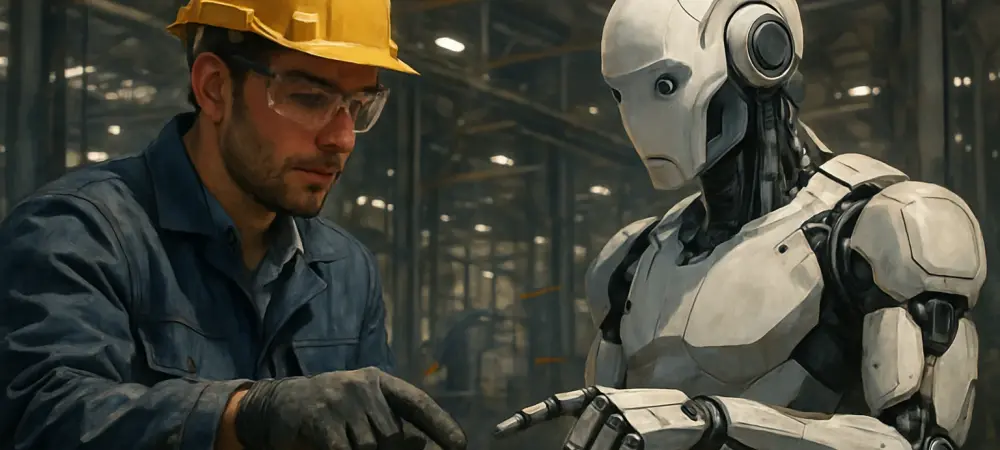
What happens when a factory’s production line grinds to a halt because a critical machine fails without warning, costing thousands in lost time? In today’s high-stakes manufacturing world, such scenarios are becoming less frequent, not just due to advanced technology, but through a surprising partnership that is transforming the industry. Artificial Intelligence (AI) systems are joining forces with the seasoned instincts of human operators, creating a dynamic duo that’s reshaping the factory floor. This collaboration is not about replacing one with the other but about harnessing their combined strengths to tackle downtime, quality issues, and complex challenges head-on.
The importance of this synergy cannot be overstated. With global supply chains under constant strain and customer expectations at an all-time high, manufacturers face relentless pressure to deliver flawless products on tight schedules. Merging AI’s data-crunching power with human intuition offers a lifeline, ensuring smarter decisions and sustainable growth. This story dives deep into how factories are redefining success by fostering teamwork between algorithms and experience, revealing insights from the field and practical steps for a collaborative future.
Why Are Factories Turning to Collaboration Over Competition?
In an industry where every minute of delay can spiral into significant financial loss, the old debate of technology versus human skill is fading. Factories are recognizing that pitting AI against human expertise creates missed opportunities. Instead, a shift toward collaboration is taking root, where both elements enhance each other’s capabilities, driving efficiency in ways neither could achieve alone.
This pivot stems from the realization that modern manufacturing challenges are too multifaceted for a single solution. AI can predict equipment failures with startling accuracy, yet it often lacks the context to prioritize repairs during peak production. Human operators, however, bring that contextual awareness, making real-time calls that keep operations smooth. The result is a partnership that minimizes risks and maximizes output.
A compelling example lies in how some plants have reduced unplanned downtime by blending these strengths. Rather than relying solely on automated alerts or manual inspections, they integrate AI diagnostics with human judgment, ensuring issues are addressed at the right moment. This trend signals a broader movement in manufacturing toward building systems where technology and intuition don’t compete but coexist.
The Stakes of Modern Manufacturing and the Need for a New Approach
Manufacturing today operates on razor-thin margins, where a single defect can erode customer trust and disrupt entire supply chains. The pressure to maintain quality while meeting aggressive deadlines has never been more intense. Traditional methods of problem-solving often fall short in this fast-paced environment, exposing the urgent need for innovative strategies.
AI has stepped in as a powerful tool, capable of processing massive datasets to spot patterns and predict outcomes in real time. Yet, its limitations surface in unpredictable situations where data alone can’t capture the full picture. Human operators, with their knack for sensing subtle irregularities, often fill this gap, identifying problems that technology might overlook.
The challenge lies in balancing these approaches to address both operational and financial hurdles. By combining AI’s analytical precision with the nuanced insights of experienced workers, factories can navigate the complexities of modern demands. This dual approach is not just a stopgap but a fundamental shift in how the industry tackles its toughest obstacles.
Unpacking the Strengths and Synergies of AI and Human Intuition
At the heart of this collaboration are the distinct advantages each side brings to the table. AI shines in handling data-intensive tasks like predictive maintenance and quality control. Systems such as vision-based defect detection can identify micro-flaws during off-hours and forecast machine breakdowns days in advance, cutting downtime by up to 50%, as noted in McKinsey studies.
Human intuition, by contrast, excels in interpreting the unquantifiable. Operators often detect issues through subtle signs—unusual noises or vibrations—that algorithms aren’t programmed to recognize. Their ability to adapt on the fly ensures that AI recommendations are applied with practical wisdom, avoiding costly missteps in dynamic settings.
Real-world scenarios highlight this synergy in action. In a food processing facility, AI flagged a potential motor failure, but a manager’s insight determined the optimal time for repairs to avoid disrupting key orders. Similarly, a quality engineer overruled an AI alert on a component, factoring in specific customer tolerances. These cases demonstrate how combining precision with adaptability creates a robust framework for addressing both routine and unexpected challenges.
Voices from the Field: Insights and Real-World Impact
Feedback from industry insiders underscores the tangible benefits of this partnership. According to a McKinsey report, AI-driven predictive maintenance can extend equipment life by 20–40%, but only when paired with human oversight to align interventions with production priorities. This balance is proving critical across various sectors.
At a packaging plant, the integration of AI tools with operator input led to a striking 25% drop in quality escapes while boosting delivery performance. Workers used data alerts as a foundation for decision-making, not as unbreakable rules. A veteran supervisor shared, “The system caught a throughput dip, but my years on the line told me it was a loading error. The alert pointed me there; I fixed it.”
Such anecdotes reveal a deeper truth about the impact of collaboration. When technology provides the raw information and humans add contextual understanding, the results are not just additive but multiplicative. Trust in both systems grows, paving the way for more seamless integration and measurable improvements on the factory floor.
Building a Collaborative Future: Practical Steps for Manufacturers
Creating an environment where AI and human intuition thrive together demands intentional effort and strategic planning. One critical step is investing in training programs that equip workers to interpret and, when necessary, challenge AI outputs. Empowering staff to trust their expertise alongside technology fosters a sense of ownership and partnership.
Another key action is adopting transparent AI systems that clarify the reasoning behind their suggestions. When operators understand why a particular alert was triggered, they can engage with the data as part of a dialogue rather than a directive. This transparency helps build confidence in the tools and encourages active collaboration.
Finally, manufacturers should cultivate a culture of shared responsibility, where questioning AI recommendations is viewed as constructive feedback. Establishing real-time feedback mechanisms also allows human insights to refine algorithms over time, ensuring continuous improvement. By taking these steps, factories can transform AI into a force multiplier, amplifying human judgment to achieve lasting competitive advantages.
Looking back, the journey of blending AI with human intuition in manufacturing revealed a profound shift in how challenges were met. Factories that embraced this partnership saw not just incremental gains but transformative outcomes, from slashed downtime to enhanced quality. The lesson was clear: success hinged on leveraging both data and experience in equal measure. Moving forward, the industry must prioritize designing systems that support this synergy, ensuring workers and technology evolve together. By focusing on training, transparency, and cultural change, manufacturers can build a future where collaboration remains the cornerstone of innovation and resilience.