

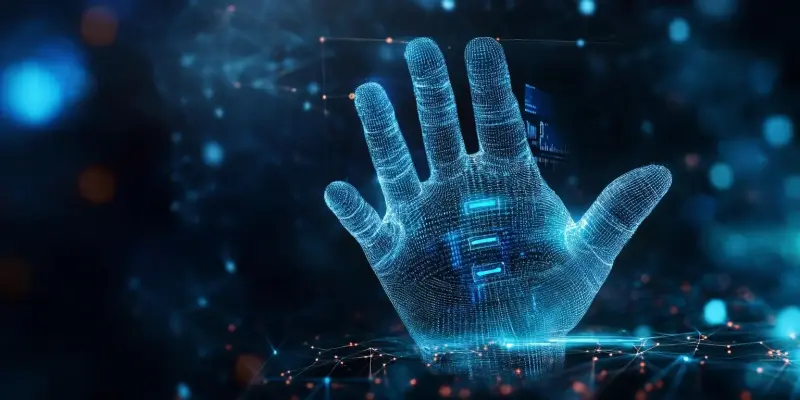
The intersection of artificial intelligence (AI) and biometric technology is rapidly evolving, promising enhanced security measures while also raising significant ethical questions. Understanding how these technologies interact and their potential impacts is crucial in the modern technological landscape. In everyday life, biometric authentication methods such as fingerprint scanning and facial recognition are becoming increasingly common for tasks like unlocking smartphones and navigating airport security. AI, which has shaped our lives for years, is now gaining traction with advancements in generative technologies, further integrating with biometric systems.
The Interplay of AI and Biometrics
AI enhances biometric data analysis, creating a future where these fields are deeply interconnected yet still distinct. The exact nature of their relationship can vary, requiring a nuanced understanding of how they coexist and complement each other. The Biometrics Institute conducted a survey of its members, revealing a split perspective on the integration of AI and biometrics. While some see biometrics as part of AI, others believe biometric applications exist independently but benefit from AI enhancements. Despite differing views, there is agreement on both the benefits and risks of their convergence.
Further examination of the relationship shows that AI’s sophisticated algorithms can process complex biometric data, improving the accuracy and efficiency of identification systems. This synergy promises to revolutionize various industries by providing more reliable authentication methods. AI’s ability to learn and adapt makes it invaluable for recognizing subtle patterns in biometric information, thus enhancing the overall security architecture. However, the integration of AI in biometric systems is not without challenges. The potential misuse of AI-driven biometric analysis for surveillance and profiling necessitates strict regulatory frameworks and ethical guidelines to prevent abuses.
Security and Fraud Prevention
One prominent advantage is the improvement in biometric security systems through AI integration. Traditional authentication systems face vulnerabilities that multi-modal biometric systems, enhanced by AI, can better mitigate. Multi-modal biometric systems utilize various types of biometric data, creating robust, risk-based authentication frameworks. AI’s ability to analyze complex patterns aids in detecting anomalies, thereby fortifying these systems against attacks and improving over time.
The implementation of AI in biometric systems allows for real-time monitoring and analysis, which is crucial for identifying and addressing potential threats as they arise. This proactive approach significantly reduces the chances of successful breaches and enhances the overall security posture. Additionally, AI-driven biometric systems can continuously learn from new data, ensuring that the authentication methods remain effective against evolving threats. However, the dependency on AI for security also highlights the need for transparency and accountability in the development and deployment of these technologies. Ensuring that AI algorithms are free from biases and vulnerabilities is essential for maintaining trust and reliability.
Enhancing Biometric Capabilities
AI significantly reinforces biometric security, making it tougher to replicate legitimate biometric markers. The rapid data analysis and trend recognition AI offers are instrumental in reducing fraud and false rejection rates, thereby enhancing overall system accuracy and reliability. Organizations like Wink, a biometric authentication company, advocate for the integration of AI to bolster biometric capabilities, highlighting lower instances of fraud and improved security as critical advancements brought by AI.
Furthermore, AI’s ability to process vast amounts of data at unprecedented speeds allows for the development of more sophisticated biometric solutions. For example, AI can enhance facial recognition systems by accounting for changes in appearance due to aging or environmental factors, resulting in more accurate identification over time. Similarly, AI can improve voice recognition by analyzing nuances in speech patterns, making it harder to deceive these systems. The continuous improvement of biometric systems through AI integration ensures that the technology remains a step ahead of potential threats, providing a more secure and reliable authentication method for users.
Privacy and Security Concerns
Despite its benefits, integrating AI with biometrics raises severe privacy and security concerns. Biometric data, being unique and immutable, poses significant risks if compromised. Large biometric data sets are attractive targets for cyberattacks, and stolen biometric data can be exploited for various malicious activities. The potential for AI to create sophisticated deepfake attacks represents a new threat, necessitating robust security measures.
These deepfake attacks can mimic genuine biometric markers, undermining the reliability of biometric systems and posing significant risks to personal privacy and security. Addressing these challenges requires a multi-faceted approach, including the development and implementation of advanced encryption techniques to protect biometric data during storage and transmission. Additionally, organizations must adopt stringent access controls and monitoring mechanisms to ensure that biometric data is only accessible to authorized personnel. By implementing these measures, the risks associated with the integration of AI and biometrics can be mitigated, preserving the security and privacy of individuals.
Defensive Measures Against AI Threats
Organizations increasingly use AI to protect against AI-driven attacks through advanced strategies like adversarial training and anti-spoofing techniques. These methods enhance the resilience and security of biometric systems, continually adapting to emerging threats. Techniques such as depth mapping with infrared sensors in facial recognition systems provide additional layers of security, ensuring robust defense against potential falsification attempts.
Moreover, implementing multi-layered verification approaches that assess real-time variables, such as geolocation and physical changes in individuals, strengthens the security framework. AI-based defensive measures also include the use of generative adversarial networks (GANs) to train biometric systems against potential attacks. By simulating realistic attack scenarios, GANs enhance the biometric systems’ ability to identify and counteract fraudulent activities effectively. This ongoing evolution of defensive measures ensures that biometric systems remain resilient in the face of increasingly sophisticated threats, providing enhanced security and peace of mind for users.
Ethical and Governance Considerations
Implementing AI and biometrics necessitates sound data governance to mitigate risks. Organizations must carefully consider the necessity and management of biometric data to avoid creating lucrative targets for cyberattacks. Restricting data collection to essentials and empowering individuals with control over their identity information are key strategies for minimizing risks. Cryptographic security measures and zero-knowledge proofs offer ways to verify identity without compromising personal data.
These strategies ensure that individuals’ privacy is safeguarded while maintaining the integrity and security of biometric systems. In addition to technical measures, establishing comprehensive policies and regulations that govern the use and handling of biometric data is crucial. Organizations must adhere to ethical guidelines and transparency practices, ensuring that the deployment of AI and biometrics aligns with societal values and respects individual rights. By fostering a culture of responsibility and accountability, the ethical challenges associated with AI and biometrics can be effectively addressed, paving the way for their responsible and beneficial integration.
Addressing Societal Impacts
The intersection of artificial intelligence (AI) and biometric technology is rapidly advancing, offering enhanced security measures while sparking considerable ethical debates. Grasping how these technologies interact and their potential consequences is vital in today’s tech-driven world. Biometric authentication methods like fingerprint scanning and facial recognition are increasingly prevalent in daily activities, such as unlocking smartphones and navigating airport security. AI, a long-standing influencer in our lives, is now gaining momentum with breakthroughs in generative technologies, thereby further merging with biometric systems.
The synergy of AI and biometrics promises to not only revolutionize security protocols but also change the way we interact with technology on a daily basis. These innovations offer streamlined user experiences and improved efficiency. However, they also raise significant ethical and privacy concerns, necessitating a careful balance between technological progress and safeguarding individual rights. As AI continues to evolve, its integration with biometric technology will likely play a pivotal role in shaping the future of security and personal identification practices.