

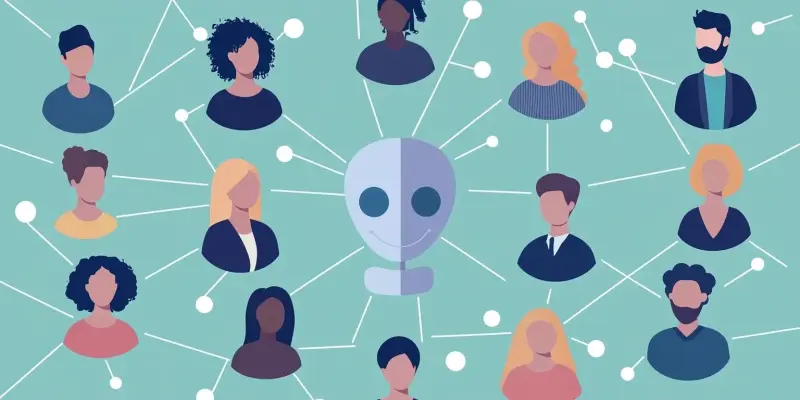
The integration of AI agents into the workforce is rapidly transforming a variety of industry sectors, revolutionizing how tasks are managed and executed. These digital labor platforms are designed to augment human teams, offering advanced capabilities that go well beyond traditional robotic process automation (RPA). As these AI agents become increasingly sophisticated, they are not only handling more complex tasks but also providing significant benefits to organizations. However, this advancement also brings along challenges that necessitate thoughtful management and oversight to ensure that their integration is both effective and reliable.
The Evolution of Digital Workers
The concept of “digital workers” has shown remarkable evolution, now encompassing advanced agentic AI which can manage a spectrum of complex tasks. Unlike traditional RPA systems that are limited to repetitive tasks, these AI agents are equipped with enhanced reasoning capabilities and data retrieval functionalities. Salesforce’s Agentforce 2.0 epitomizes this new wave of AI integration by enabling a limitless workforce through AI agents that come with pre-built skills. These agents can seamlessly navigate and perform actions across multiple systems and workflows, interact within platforms such as Slack, and provide precise answers to multi-step queries.
Major organizations are recognizing the advantages of integrating digital labor into their teams, especially for customer interaction and workflow management. With the scarcity of talent and the high costs associated with training, AI solutions have garnered unprecedented interest. Autonomous digital workers are now capable of handling intricate requests, offering personalized job application guidance, and nurturing leads with tailored product recommendations. This trend underscores the increasing significance of AI agents in today’s digital workforce, enabling companies to enhance efficiency and productivity.
Practical Applications in Public Safety and Security
AI agents are finding practical applications in enhancing public safety and enterprise security, showcasing their utility across diverse sectors. Companies like Motorola Solutions are leveraging agentic AI to provide real-time data, which significantly aids first responders and security personnel. These agents streamline efficiency by automating repetitive tasks, such as analyzing historical video footage to locate missing persons through natural language searches. This automation not only saves significant time but also reduces the workload for human workers, allowing them to focus on more critical aspects of their roles.
The capability of AI agents to process and analyze vast amounts of data in real time is revolutionizing public safety and security operations. By offering actionable insights and automating routine tasks, these AI systems enable human workers to concentrate on high-stakes activities that demand human oversight and decision-making. The integration of AI into public safety and security demonstrates the potential for AI agents to drastically improve operational efficiency and effectiveness, underscoring their value in critical environments.
Challenges and the Need for Oversight
Despite the numerous promises AI agents hold, their integration into the workforce introduces various challenges that must be managed with great care. One of the prominent challenges is the traceability and accountability of AI actions, along with the unpredictability of large language models (LLMs). LLMs are often considered black boxes because their decision-making processes are not entirely transparent, making it difficult to affirm whether they have executed tasks accurately and successfully. Additionally, errors in AI-driven processes can accumulate and magnify over time, leading to unreliable or flawed outputs.
Ensuring that AI agents can collaborate effectively and reliably adds another layer of complexity. While human workers can communicate and cooperate with relative ease, AI agents require extensive visibility across multiple systems and data stores to function collaboratively. Capturing every action executed by an AI agent and processing various data formats is crucial for assessing their performance and reliability. Integrating data from endpoint devices with network-level traffic data helps in tracking the AI agent’s actions and distinguishing between trustworthy and new agents.
The Emerging Role of AI Systems Engineers
To tackle these challenges, the emerging role of AI systems engineers has become essential for the quality assurance and oversight of AI agents. These professionals are tasked with managing, optimizing, and ensuring the smooth operation of AI-driven workflows in enterprise settings. In environments where multiple AI agents are at work, these agents are continually evolving by consuming new data to enhance their performance. However, if AI agents receive erroneous data, their efficacy can degrade, potentially disrupting the entire system. AI systems engineers play a pivotal role in preventing such issues, underscoring the necessity for human oversight in AI-driven processes.
The integration of AI systems engineers highlights the need to balance AI capabilities with human expertise. While many organizations may already have the infrastructure to support AI, achieving the right balance requires meticulous planning and gradual integration. Recognizing AI as an enhancement to human efforts, rather than a replacement, is crucial for successful implementation. By adopting this approach, organizations can ensure that AI agents augment productivity and efficiency without compromising the dependability and quality of human tasks.
Balancing AI and Human Workflows
The integration of AI agents into the workforce is rapidly changing numerous industry sectors, revolutionizing how tasks are managed and performed. These digital labor platforms are designed not simply to replace human efforts but to enhance them, offering advanced capabilities far beyond traditional robotic process automation (RPA). With increasing sophistication, AI agents are not only taking on more complex tasks but also delivering substantial benefits to organizations. They improve efficiency, accuracy, and even decision-making processes. Yet, this technological advancement also brings challenges that require careful management and oversight to ensure a smooth and beneficial integration. Challenges include ensuring data security, maintaining job roles for human workers, and addressing ethical concerns. Organizations must develop strategic frameworks to address these issues while leveraging AI’s potential fully. This thoughtful approach ensures that AI agents function effectively and reliably, providing a balanced ecosystem where human and AI collaboration thrives.