

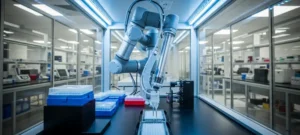
The technological landscape of modern drug discovery has been fundamentally altered by the maturation of High-Throughput Screening automation that now dictates the pace of global health innovation. In the high-stakes environment of pharmaceutical research, processing a library of millions of compounds by hand is no longer a feasible task; it is a mathematical impossibility. While traditional pipetting once defined the laboratory experience, the sheer scale of modern drug discovery has turned manual intervention into a liability. Today, integrated robotic ecosystems have transformed the benchtop, replacing human error with a framework where speed, precision, and reproducibility are inherent to the workflow rather than aspirational goals.
The transition toward these systems represents more than a simple upgrade in hardware; it is a fundamental shift in how biological data is generated and interpreted. By removing the physical limitations of the human researcher, laboratories are able to explore vast chemical spaces that were previously out of reach. This evolution ensures that the search for novel therapeutics is no longer constrained by the clock or the physical fatigue of laboratory personnel, but is instead limited only by the quality of the biological hypothesis and the robustness of the automated infrastructure.
The End of the Manual Bottleneck in Modern Laboratories
In the current era of pharmaceutical development, the manual pipette has largely been relegated to the role of a secondary tool for small-scale validation rather than the primary engine of discovery. The sheer volume of data required to move a drug candidate from the bench to the clinic demands a level of consistency that a human operator simply cannot provide over thousands of iterations. Modern laboratories have recognized that every manual touchpoint represents a potential source of variation, which can aggregate into significant data noise and obscure promising biological hits.
The integration of automated plate handlers and liquid workstations has effectively dissolved the bottleneck that once slowed the primary screening phase to a crawl. These robotic systems provide a continuous flow of microplates through various assay stages, from reagent addition to detection. This shift allows for the processing of hundreds of thousands of samples per day, transforming the laboratory from a series of disjointed experiments into a high-capacity data factory. By automating these repetitive tasks, researchers are freed to focus on the more complex intellectual challenges of data interpretation and experimental design.
The Imperative for Speed and Precision in Therapeutic Development
The move toward High-Throughput Screening (HTS) automation is driven by a critical need to navigate the immense complexity of biological assays without sacrificing data quality. As drug development costs soar, the ability to maintain rigorous standards across massive datasets is what separates a breakthrough from a failed campaign. This transition from isolated instruments to interconnected “unified organisms” allows laboratories to manage the delicate balance between high-volume output and the granular accuracy required for downstream success. Precision is not just about the volume of liquid moved; it is about the timing and synchronization of every action within the assay.
Furthermore, the speed offered by automation is essential for staying competitive in a global market where the first-to-market advantage can define the commercial viability of a new treatment. However, speed without precision is counterproductive. If a screening campaign is completed quickly but yields a high rate of false positives or negatives, the subsequent validation phases will be plagued by inefficiencies and wasted resources. Therefore, the imperative for modern HTS platforms is the harmonious integration of rapid movement with the surgical precision of automated dispensing technologies.
Engineering a Unified Organism of Specialized Hardware and Software
Modern HTS platforms function as a synergy of robotic liquid handlers and articulating arms that navigate the physical layout of the lab with perfect synchronization. These systems utilize precision technologies capable of dispensing volumes as small as a few nanoliters, a necessity for the industry’s shift toward assay miniaturization. By operating in “lights-out” mode, these platforms function continuously without human oversight, maximizing throughput while robotic arms move microplates between incubators and detection modules with tireless consistency. This mechanical choreography is directed by sophisticated scheduling software that optimizes plate movement to prevent idle time. The software layer of these systems acts as the central nervous system, coordinating the actions of diverse hardware components from multiple manufacturers. It manages complex timing requirements, ensuring that every plate in a screen receives exactly the same amount of incubation time and reagent exposure. This level of control is impossible to achieve manually, where small deviations in timing can lead to significant drift in assay results. By treating the entire laboratory setup as a single, unified organism, researchers can ensure that the physical execution of the assay is as reliable as the digital data it generates.
Overcoming Physical Constraints in High-Density Plate Formats
Transitioning from standard 96-well plates to 1536-well formats significantly reduces reagent consumption but introduces physical hurdles like evaporation and “edge effects.” To combat these, advanced automation must integrate sophisticated environmental controls that manage temperature and humidity with extreme granularity. As the volume of liquid in each well decreases, the surface area relative to the volume increases, making the samples highly sensitive to the surrounding atmosphere. Automated systems often include specialized plate seals and humidity-controlled incubators to maintain sample integrity throughout the screening process.
The success of kinetic assays depends on the perfect alignment of liquid handling and real-time detection, ensuring that the timing of reagent addition remains consistent across thousands of samples to prevent data drift. In these high-density formats, even a slight delay in reading a plate after a reagent is added can skew the results. Automation solves this by utilizing integrated readers that are physically linked to the liquid dispensing station. This allows for the immediate measurement of biochemical reactions as they occur, providing a level of temporal resolution that is essential for understanding the potency and kinetics of potential drug candidates.
Comparing Structural Philosophies: Vendor-Locked vs. Modular Ecosystems
Research facilities must choose between pre-configured “closed” systems and flexible modular setups. Closed systems offer high reliability and a shorter “time-to-science,” making them ideal for standardized, high-volume workflows where protocols rarely change. These platforms are often designed by a single manufacturer, ensuring that all hardware and software components are natively compatible. This leads to a smoother implementation process and easier maintenance, as there is a single point of contact for technical support and system upgrades. Conversely, modular “plug-and-play” systems allow researchers to integrate diverse instruments from various manufacturers. This flexibility is vital for early-stage academic research where the nature of the assays—from biochemical to phenotypic screens—is constantly evolving. While modular systems require more effort to configure and maintain, they allow laboratories to pick the “best-in-class” instrument for each specific task. This approach prevents the laboratory from being locked into a single vendor’s ecosystem, enabling the adoption of new technologies as they emerge without the need to replace the entire system.
Professional Standards for Validating Mechanical and Digital Integrity
Industry experts emphasize that automation is not a “set-and-forget” solution; it requires a deep commitment to preventive maintenance and validation. Even a minor mechanical drift in a robotic pipette can lead to unacceptable coefficients of variation that compromise an entire screening campaign. Regular calibration and rigorous testing of liquid handling accuracy are essential to ensure that the data remains reliable over time. This process often involves the use of fluorescent dyes or gravimetric measurements to verify that the volumes being dispensed are within the required tolerances.
Furthermore, as robotics generate terabytes of information, the digital infrastructure—specifically Laboratory Information Management Systems (LIMS)—must be robust enough to handle the “data bottleneck” as efficiently as the hardware handles the physical samples. The integrity of the data depends on the seamless transfer of information from the instruments to the database. Any loss or corruption of data during this process can invalidate the entire screen. Therefore, professional standards dictate that the digital workflow must be as carefully validated and maintained as the mechanical hardware to ensure the overall quality of the research output.
Strategies for Scaling and Implementing Closed-Loop Automation
To stay competitive, laboratories are now moving toward “closed-loop” automation, where AI algorithms analyze screening data in real-time to adjust parameters for the next run. Implementing this strategy requires a holistic approach: start by automating the cell culture and sample preparation phases, then integrate machine learning to select the most promising compounds based on previous results. This adaptive screening reduces wasted resources and accelerates the journey from a primary hit to a validated lead, democratizing high-throughput capabilities for laboratories of all sizes. By allowing the system to learn from its own data, researchers can focus on the higher-level strategic decisions of the drug discovery program.
The successful implementation of these strategies was achieved by focusing on the integration of data streams and physical movements. Facilities that transitioned toward this model found that they could iterate on their findings much faster than those using traditional methods. The industry prioritized the development of standardized communication protocols between instruments, which allowed for a more fluid exchange of information. As these systems matured, they became more than just tools for execution; they transformed into active participants in the scientific discovery process, providing insights that were previously hidden within the massive volume of raw data. Future progress depended on the continuous refinement of these autonomous workflows and the commitment to maintaining the highest standards of mechanical and digital integrity. This evolution provided a clear path toward a more efficient and effective therapeutic development pipeline.