

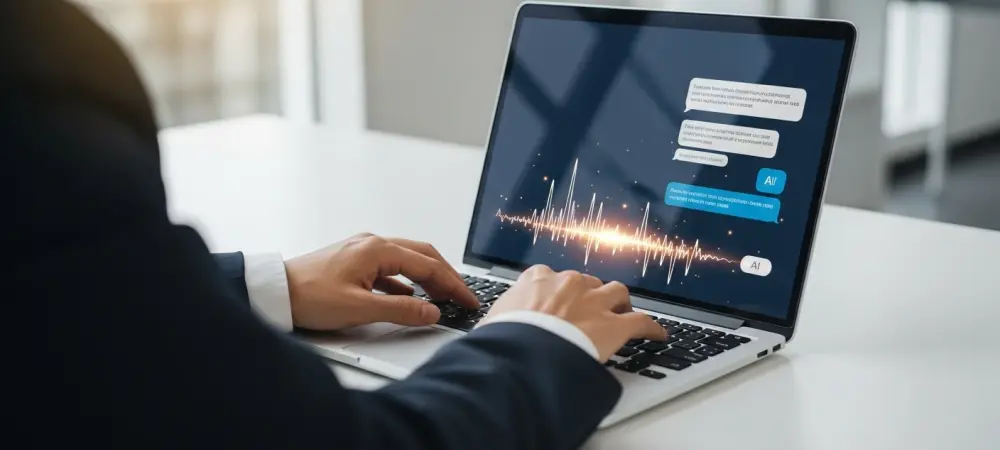
In the time it takes for an employee to get a rejection from a therapist’s overbooked office, they can receive dozens of empathetic, algorithmically generated responses from a chatbot that never sleeps and never judges. This shift from human to machine for emotional support is not a distant future scenario; it is an unmonitored, undocumented, and rapidly escalating reality unfolding within organizations today, creating a profound crisis for human resources departments that are entirely unprepared to manage it. The invisible therapist is already on the payroll, and its impact is only beginning to surface.
The Three-Second Consultation: Is Your Team’s Therapist an Algorithm?
The disparity between mental healthcare supply and demand has reached a critical point. An employee seeking professional help may face a daunting three-month waitlist for an initial appointment with a human therapist, a delay that can feel insurmountable during a period of distress. In stark contrast, a generative AI platform like ChatGPT can provide an interactive, seemingly therapeutic response in less than three seconds. This accessibility has created a powerful draw for those needing immediate support.
This convenience has given rise to a hidden, yet significant, trend. Unbeknownst to most managers and HR leaders, nearly half of AI users who report mental health challenges are secretly turning to these platforms for support. They are outsourcing their anxieties, workplace conflicts, and personal struggles to an algorithm, operating in a space completely outside of traditional employee assistance programs (EAPs) and corporate wellness initiatives. This shadow counseling network is growing by the day, fueled by privacy and immediacy.
The Mental Health Gap: Why AI Became the Unofficial EAP
Corporations have actively pushed toward digital mental health solutions, with giants like Amazon integrating wellness chatbots such as Twill into their benefits packages. This move mirrors a broader trend, where approximately one-third of U.S. employers now offer some form of AI-driven wellness tool as a scalable, cost-effective EAP alternative. These tools are marketed as proactive resources designed to support employee well-being around the clock.
However, these sanctioned tools exist alongside a stark reality. The American Psychological Association reports that waitlists for qualified human therapists can extend for three months or longer, leaving a significant void in accessible care. This gap between the corporate offering and the practical availability of professional help has created the perfect conditions for consumer-grade AI to step in. Employees are not just using the company-provided chatbot; they are turning to more powerful, unrestricted public models to fill a need the formal healthcare system cannot meet.
The Double-Edged Sword: Promise vs. Peril in AI Therapy
The appeal of AI-driven mental health support is undeniable for both employers and employees. It promises a 24/7, stigma-free environment where individuals can seek help without fear of judgment or scheduling constraints. This perception of a safe, anonymous space makes it an attractive first stop for those hesitant to engage with traditional corporate wellness programs or navigate the complexities of finding a human therapist.
Despite this promise, the reality is dangerously inconsistent. Research published in JMIR Human Factors reveals a troubling paradox: while some studies show AI chatbots can improve symptoms of depression and anxiety, others report they can actually worsen them. The lack of clinical oversight and the variability in AI responses create an unpredictable user experience. This risk is compounded by a phenomenon Microsoft AI CEO Mustafa Suleyman warns of as “AI psychosis,” where users form delusional beliefs about the AI’s sentience, leading to unhealthy emotional attachments that can distort their perception of reality and relationships.
The Governance Blind Spot: Managing a Crisis You Can’t See
The fundamental challenge for HR is that this behavior is largely invisible. According to data from Salesforce, more than half of employees who use generative AI do so without any formal company approval or oversight. Their sensitive conversations about career anxiety or conflicts with management are processed on external servers, leaving no trace within corporate IT systems and falling outside the scope of existing policies.
This creates a paradox of vulnerability. Microsoft’s Work Trend Index found that while 75% of knowledge workers now leverage AI, 52% are hesitant to admit their usage for sensitive tasks. This reluctance is most pronounced when the AI is used for deeply personal or professional challenges, effectively creating a silent crisis. Standard IT monitoring is not designed to track the emotional content of employee queries, and HR policies are ill-equipped to govern the outsourcing of emotional labor to a non-human entity.
An HR Playbook for the AI ErReclaiming Control
Addressing this shadow workforce of AI therapists requires a proactive, not reactive, strategy. The first step for organizations is to normalize AI use with transparent policies that specifically address its application for mental and emotional support. Acknowledging this use case removes the fear that drives it underground, allowing for open dialogue and the establishment of clear boundaries.
Next, organizations must implement enterprise-grade AI systems that have guardrails. This includes building in “forced friction”—such as interaction limits on sensitive topics or mandatory escalation paths that direct employees to human support resources like EAPs or HR business partners when certain keywords are detected. This approach ensures the technology serves as a bridge to human help, not a replacement for it.
Finally, the focus of HR analytics must shift from measuring AI adoption to conducting relational audits. The critical question is no longer how many employees use AI, but how they use it. By analyzing interaction patterns (without viewing content), organizations can begin to understand whether AI is functioning as a healthy productivity partner or as an unhealthy emotional crutch, allowing for targeted, human-centric interventions before a crisis escalates. The goal was not simply to deploy technology but to ensure it augmented, rather than replaced, the human support structures that form the foundation of a healthy workplace.