

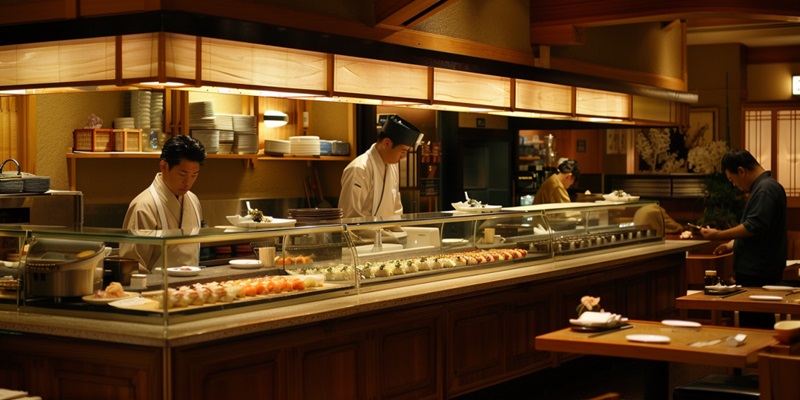
In a landmark ruling that underscores the commitment of Australian regulatory bodies to clamp down on labor exploitation, the Federal Court of Australia has levied unprecedented penalties against the Sushi Bay group for the underpayment of migrant workers. The court’s decision includes substantial fines totaling $13.7 million, with Sushi Bay itself fined $3.2 million, Sushi Bay ACT $5.8 million, Auskobay $2.3 million, and Auskoja $2.4 million. Even the group’s CEO, Yi Jeong "Rebecca" Shin, was held personally accountable, bearing a $1.6 million fine. Most of these entities are currently in liquidation, reflecting not only their financial mismanagement but also their failure to meet basic legal labor standards. A glaring $650,000 in unpaid wages impacts 163 employees, with workers deprived of minimum award rates, casual loadings, annual leave loadings, overtime, and penalty rates for weekends and public holidays. The breaching of fundamental worker rights and the systemic pressure on employees to return part of their wages further illustrate the severe exploitation occurring within these businesses.
Judicial and Regulatory Perspective on Worker Exploitation
Judge Anna Katzmann played a pivotal role in this ruling, emphasizing the egregious nature of the violations committed by Sushi Bay’s senior management. Her verdict sends a strong message that the exploitation of workers, especially vulnerable migrant employees, will not be tolerated in Australia. Highlighting the absence of mitigating factors in this case, Judge Katzmann underscored the need for significant penalties to act as a deterrent, not just for Sushi Bay, but for other businesses contemplating similar practices. The verdict was unequivocal: the exploitation was intentional, sustained, and conducted at the highest levels of management.
Fair Work Ombudsman Anna Booth further condemned the Sushi Bay group’s actions, labeling the exploitation as "reprehensible." Booth pointed out that migrant workers are particularly susceptible to such mistreatment due to their potential lack of awareness about their entitlements or fear of retribution. The ombudsman’s strong stance aligns with broader regulatory efforts to safeguard vulnerable workers and maintain fair labor standards across industries. By setting this precedent, the Federal Court and the Fair Work Ombudsman are asserting their commitment to eradicating systemic exploitation and ensuring a fairer workplace for everyone.
Implications and Industry-Wide Impact
The $13.7 million penalty imposed on the Sushi Bay group surpasses the previous record fine of $10.34 million set against the Commonwealth Bank and CommSec for underpaying employees over $16 million. This stark contrast illustrates the judiciary’s increasing vigilance in confronting labor law violations, particularly those affecting vulnerable segments of the workforce. Such a substantial fine not only penalizes the offending companies but also serves as a stark warning to others in the industry contemplating similar misconduct.
The judgment against Sushi Bay is not just about financial restitution for the workers who were wronged. It is a crucial step in an ongoing effort to challenge and change the norms around worker exploitation in Australia. The legal action signifies that both the court system and regulatory bodies are willing to impose severe consequences for breaches of labor laws. By holding top executives personally accountable for these violations, the ruling also places additional pressure on corporate leaders to ensure compliance with fair labor practices, reinforcing a zero-tolerance approach to exploitation.
Broader Social and Economic Ramifications
In a landmark decision highlighting Australia’s dedication to combatting labor exploitation, the Federal Court of Australia has imposed record-breaking penalties on the Sushi Bay group for underpaying migrant workers. The court mandated hefty fines amounting to $13.7 million, distributed among Sushi Bay, which owes $3.2 million; Sushi Bay ACT, fined $5.8 million; Auskobay, responsible for $2.3 million; and Auskoja, owing $2.4 million. CEO Yi Jeong "Rebecca" Shin wasn’t spared either, incurring a $1.6 million fine personally. Many of these companies are now in liquidation, underscoring their financial mismanagement and disregard for basic labor laws. A staggering $650,000 in unpaid wages affects 163 employees, who were denied minimum award rates, casual loadings, leave loadings, overtime, and penalty rates for weekends and public holidays. Workers faced systemic exploitation, including pressures to return portions of their wages, highlighting severe violations of fundamental worker rights within these businesses.