

The rapid expansion of the digital marketplace has transformed seasonal spikes from manageable retail events into volatile operational hurdles that can jeopardize a company’s long-term health. While the convenience of clicking a button to order products has become a consumer standard, the back-end logistics often rely on an outdated strategy of aggressive, short-term recruitment. This reflexive response to demand surges—particularly during high-traffic periods like the spring home improvement rush—often creates a façade of scalability. However, beneath the surface of increased headcount lies a complex web of hidden costs, ranging from diminished service quality to the erosion of corporate culture. Understanding why this traditional model is failing is essential for any enterprise aiming to thrive in an increasingly unpredictable economy.
From Stability to Volatility: The Evolution of Seasonal Staffing
Historically, the retail industry operated within predictable annual cycles, allowing businesses to plan their inventory and labor needs months in advance. The rise of e-commerce has fundamentally dismantled this predictability, replacing steady growth with hyper-reactive demand influenced by social media trends and immediate weather shifts. In sectors like outdoor living and home renovation, a single week of sunshine can trigger a 40% spike in orders. Traditional hiring models were never designed to handle such rapid fluctuations with the precision required by modern logistics. Consequently, the reliance on a revolving door of temporary workers often leaves businesses ill-equipped to manage the technical complexities of contemporary fulfillment centers.
The Mechanics of Operational Decay
The Training Trap: The Illusion of Productivity
The most immediate friction point in reactive staffing is the “training trap,” a phenomenon where the pursuit of speed actually slows down the operation. When an e-commerce business floods its warehouse with temporary labor to meet a surge, it inadvertently cannibalizes its own efficiency. Permanent, high-value employees must step away from specialized tasks to oversee and instruct the newcomers. This diversion of talent often leads to a net loss in productivity during the most critical weeks of the year. Instead of a seamless expansion of capacity, the business experiences a period of administrative bloat where the time spent managing the workforce outweighs the actual output generated by the additional staff.
The Annual Erosion: Loss of Institutional Knowledge
A significant yet frequently overlooked consequence of the seasonal hiring cycle is the systematic destruction of institutional memory. Every time a short-term contract concludes, the internal investment made in training that individual effectively vanishes. This creates a redundant annual loop where managers must re-explain basic protocols and brand-specific nuances every few months. Without a stable workforce, a company cannot achieve compounding efficiency, where staff become faster and more accurate through years of experience. This lack of continuity forces the operation into a state of perpetual “Day One” competency, where the same mistakes are repeated because no long-term memory exists to prevent them.
Systems vs. Individual Knowledge: The Scalability Gap
Reliance on a temporary workforce often masks a more fundamental issue: an architectural dependence on tribal knowledge rather than standardized systems. Many small and medium-sized e-commerce firms operate with workflows that exist only in the minds of a few veteran employees. If a process is so complex that a temporary hire cannot perform it without constant intervention, the problem is not the worker, but the system itself. True scalability in the modern market requires building resilient, plug-and-play infrastructures that can absorb demand shocks without needing a desperate influx of manual labor. Addressing this gap is the difference between a business that survives a peak and one that scales through it.
The Shift Toward Algorithmic Staffing and Lean Resilience
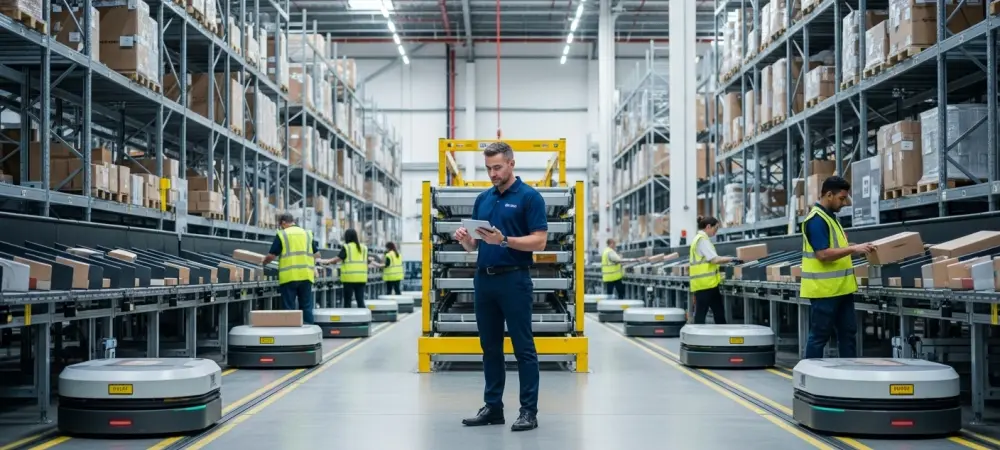
Forward-thinking organizations are now moving away from reactive hiring in favor of tech-driven structural design. The current trend involves utilizing predictive analytics to forecast demand with high precision, allowing for more consistent, year-round staffing levels. We are also seeing a transition toward “lean resilience,” where automation handles repetitive tasks, thereby reducing the need for massive seasonal headcounts. Regulatory changes and the rising cost of temporary labor are making it more attractive for businesses to invest in a highly skilled “skeleton crew” that can be augmented by robotics rather than more people. This transition ensures that the core of the business remains stable regardless of external market volatility.
Building a Resilient E-commerce Infrastructure
To break the cycle of seasonal panic, businesses must prioritize capacity-by-design through several strategic adjustments:
- Stabilize Baseline Staffing: Instead of staffing for the slowest months, companies should hire closer to their average annual demand. This reduces the friction of onboarding and lowers the long-term costs of errors and lost productivity.
- Process Simplification: Every manual task should be audited for complexity. If a process requires extensive explanation, it must be automated or simplified to ensure it is resilient to turnover.
- Maintain Talent Reservoirs: If temporary staff are necessary, fostering long-term relationships with a consistent group of “alumni” workers can help preserve a shred of institutional knowledge across seasons.By shifting the focus from headcount to system integrity, companies can achieve sustainable growth that is not dependent on the availability of local labor markets.
Prioritizing Systems Over Staffing Cycles
The analysis showed that the traditional reliance on temporary labor acted more like a bandage than a solution for e-commerce volatility. It was clear that the “training trap” and the loss of institutional memory created a legacy of inefficiency that hindered long-term scaling efforts. Successful leaders recognized that people were not a substitute for robust, documented processes. To maintain a competitive edge, businesses pivoted toward proactive operational architecture, investing in permanent talent and automation. These strategic shifts ensured that seasonal peaks served as opportunities for growth rather than catalysts for burnout. Moving forward, the industry prioritized building systems capable of performing under pressure, proving that lasting success was found in structural resilience.