

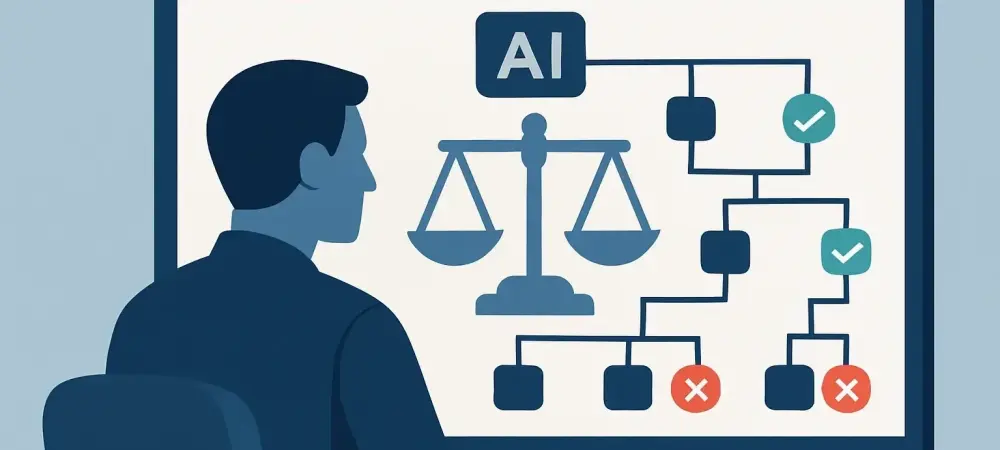
Algorithms are now making life-altering employment decisions, silently shaping careers and livelihoods by determining who gets an interview, who receives a job offer, and who is flagged as a potential risk. This shift from human intuition to automated processing has prompted a wave of legal scrutiny, introducing the critical term “consequential decisions” into the compliance lexicon. As states forge ahead with new rules, the federal government is pushing back, creating a complex and volatile environment for businesses. This analysis explores the current state-level legal landscape, the emerging federal response, and the significant compliance challenges facing employers in this new era of recruitment.
The Rise of AI in Hiring and Regulatory Scrutiny
The Growing Footprint of AI in Recruitment
Employers have rapidly adopted artificial intelligence tools to streamline the hiring process, driven by the promise of enhanced speed, consistency, and efficiency. These systems are now commonplace, performing tasks that range from sorting thousands of résumés in minutes to ranking candidates based on proprietary criteria, scheduling interviews, and even flagging potential risks associated with an applicant. The goal is to identify the best talent faster while reducing the administrative burden on human resources teams.
However, this widespread integration of AI into critical employment functions has not gone unnoticed by lawmakers. The same tools celebrated for their efficiency are now at the center of a new wave of legal scrutiny. As algorithms take on more responsibility for who enters the workforce, state legislatures have begun to question their fairness, transparency, and potential for bias, triggering a regulatory movement aimed at holding employers accountable for the automated systems they deploy.
Defining Consequential Decisions a New Legal Frontier
At the heart of this regulatory push is the concept of a “consequential decision,” a term pioneered in Colorado’s landmark AI Act. The law provides a foundational legal definition, describing it as a decision that has a material effect on a person’s access to, or the terms of, essential services like employment, housing, education, or finance. These are the high-stakes judgments that can profoundly shape an individual’s opportunities and economic future.
In the context of hiring, this definition has immediate and practical implications. An AI system that automatically rejects an applicant’s résumé based on its analysis, a platform that automates the scoring of video interviews, or a tool that issues a final adverse action notice following a background check are all making consequential decisions. Under the emerging legal frameworks, these automated actions are no longer just internal operational choices; they are regulated events that carry specific compliance obligations for transparency and fairness.
The Current State by State Regulatory Maze
Pioneering States Colorado California and Texas
Colorado stands at the forefront of this movement with the nation’s first comprehensive AI governance framework focused squarely on consequential decisions. The law mandates that developers and deployers of high-risk AI systems implement robust risk management policies, conduct detailed impact assessments, and provide clear notifications to individuals affected by automated outcomes. While the law’s effective date was delayed to allow for further refinement, its core principles have set a high bar for corporate responsibility. In contrast, California has leveraged its existing anti-discrimination laws to regulate automated-decision systems. The state’s Civil Rights Department finalized regulations clarifying that the Fair Employment and Housing Act applies to AI used in hiring. These rules impose some of the country’s most detailed obligations regarding bias testing, transparency, and the necessity of human oversight, integrating AI governance into a familiar civil rights framework. Texas, however, has charted a different course with its Responsible Artificial Intelligence Governance Act, which takes a more hands-off approach to private-sector hiring. While it prohibits intentional discrimination, TRAIGA refrains from imposing mandates for audits or disclosures, reflecting a state-level desire to prioritize innovation over prescriptive regulation.
The Unfolding Legislative Wave Across the Nation
The year 2025 has seen a significant surge in legislative activity, with lawmakers in states like Alaska, Connecticut, Illinois, and New York proposing bills to regulate AI in consequential decisions. While these proposals vary in scope, many echo the foundational structure established in Colorado, requiring algorithmic transparency, impact assessments, and safeguards for systems deemed high-risk. This nationwide momentum indicates a growing consensus that the use of AI in employment warrants a dedicated regulatory response.
The journey of Virginia’s HB 2094 serves as a compelling case study of this trend. The comprehensive bill, which would have imposed clear obligations on developers and deployers of high-risk AI, garnered strong bipartisan support and successfully passed both legislative chambers. Although it was ultimately vetoed by the governor, its progress demonstrates the persistent political will behind such legislation. Even where these bills have not yet become law, they are shaping the conversation and signaling to employers that the era of unregulated AI in hiring is rapidly coming to an end.
Federal Intervention The Push for a National Framework
The 2025 Executive Order a Preemption Strategy
While states have been leading the regulatory charge, the federal government has responded with a decisive push for a national framework. In December 2025, a new Executive Order was signed to directly counter what the administration termed a “patchwork” of burdensome state AI laws. The order asserts that a single, uniform national standard must take precedence over dozens of differing state-level regulatory regimes to avoid stifling innovation and creating legal chaos.
The order outlines several key actions to achieve this goal. It directs the Department of Commerce to identify state laws that impose what it considers problematic mandates and establishes a Department of Justice task force to challenge such laws in court. Furthermore, the order threatens to withhold discretionary federal funding from states that do not suspend enforcement of their AI laws and directs federal agencies like the FCC and FTC to develop preemptive national standards for disclosure and consumer protection. A federal legislative proposal is expected to follow, but until Congress acts, this tension between state and federal authority will define the legal landscape.
The Compliance Burden for Employers
This fractured regulatory environment creates immense operational challenges for employers, particularly those operating across state lines. HR teams are now tasked with navigating a maze of differing legal requirements where the very definition of “AI” can vary significantly from one jurisdiction to another. What is considered a permissible use of an algorithm in one state could easily become a compliance liability in a neighboring one, demanding a highly sophisticated and adaptable compliance strategy.
The burden extends to managing third-party relationships. Companies that rely on vendors for applicant tracking systems, background screening platforms, or other AI-driven hiring tools must now conduct rigorous due diligence. They need to ensure these third-party systems meet the disclosure, fairness, and audit standards required in every jurisdiction they operate in. This responsibility for vendor compliance adds another layer of complexity, as employers may be held liable for the opaque or biased systems they deploy, regardless of who built them.
Future Outlook Navigating Legal Uncertainty and Best Practices
The Road Ahead Continued Legal and Political Conflict
The future of AI hiring laws will likely be characterized by continued tension between state-led regulation and federal preemption efforts. This conflict creates a prolonged period of legal uncertainty for employers, who are caught between complying with existing state laws and anticipating a potential federal override. The risk of inaction is substantial, as noncompliance with enforceable state laws can trigger regulatory investigations, costly lawsuits, and significant reputational damage.
Until Congress passes a uniform national policy, this uncertainty will persist as the defining feature of the AI regulatory landscape. Courts and regulators are unlikely to accept ignorance as a defense, especially when opaque algorithms are used to make high-stakes employment decisions. In this environment, the responsibility for ensuring fairness and transparency shifts squarely to the employer, making proactive governance not just a best practice but a legal necessity.
A Proactive Compliance Roadmap for Employers
To navigate this complex terrain, employers should begin by taking a detailed inventory of their AI use. This means identifying every tool that supports employment decisions, from simple résumé parsers and automated schedulers to more advanced risk-flagging and interview-scoring systems. A comprehensive understanding of the technology in use is the essential first step toward managing its associated risks.
Once inventoried, each system must be assessed against current and pending state and federal policies to determine if it qualifies as high-risk or triggers obligations related to consequential decisions. Following this risk assessment, employers should audit these tools for bias and transparency, evaluating their data inputs and decision outputs to ensure fairness. Implementing meaningful human review processes is critical, as is updating candidate disclosures to provide clear notice of AI use and offer mechanisms for appeal or correction where required by law. Finally, continuous monitoring of legal developments is crucial, as the next major compliance obligation could emerge from either a state capitol or Washington, D.C.
Conclusion Embracing Responsibility in the Age of AI Hiring
The convergence of rapid AI adoption in hiring, the rise of state-level regulations focused on consequential decisions, and an assertive federal counter-response created a complex and uncertain legal landscape for employers. This period was defined by a foundational shift, where the use of algorithms in recruitment moved from being a purely operational matter to a highly regulated activity. In this new environment, the principles of transparency, human oversight, and documented compliance became foundational pillars for lawful hiring practices. It became clear that technology did not remove responsibility but rather shifted it, demanding greater diligence from employers. The companies that proactively built ethical and compliant AI governance frameworks were best positioned not only to navigate the regulatory maze but also to inspire confidence and lead with integrity in an increasingly automated world.