

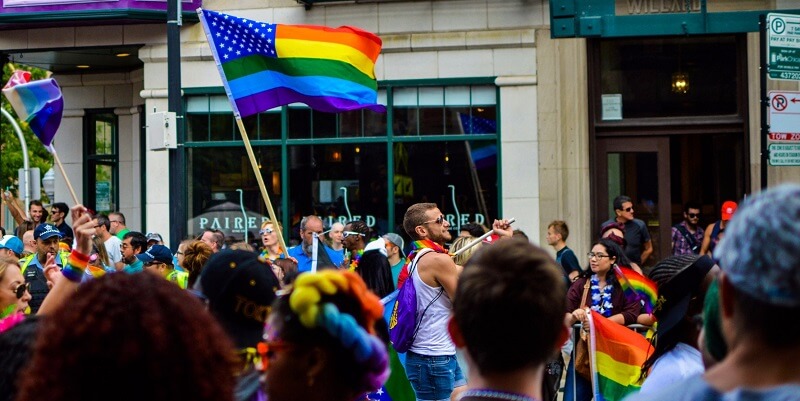
The labour movement has experienced a resurgence in recent years, with left-wing voices gaining momentum and pushing for progressive change in workplaces across various industries. One organization at the forefront of this movement is Left Voice, an all-volunteer socialist publication that has taken the initiative to mobilize a contingent in support of queer workers’ rights. This article explores the interconnected issues faced by workers and queer individuals, highlighting the significance of the growing left-wing presence in labour activism.
The role of Left Voice in labour activism
Left Voice, as an all-volunteer socialist publication, has played a crucial role in advocating for the rights of workers and challenging oppressive capitalist structures. With their recent mobilization of a socialist contingent, they have demonstrated their commitment to standing in solidarity with queer workers and fighting for their rights. The fact that Left Voice operates solely on volunteer efforts emphasizes the dedication and passion of the individuals involved in this important cause.
Intersection of workplace and queer challenges
It is essential to recognize that the issues faced by workers and queer individuals stem from the same oppressive system. In both realms, people are subjected to discrimination, exploitation, and marginalization. By acknowledging the collective struggle, we can create a stronger movement that addresses the interconnected challenges faced by these groups. This intersectionality is crucial for building alliances and fostering empathy among diverse communities.
Creating LGBTQ+ inclusive workplaces
There are workplaces where a significant majority of employees identify as queer individuals. In these environments, there is often a vibrant sense of community and acceptance. These workplaces serve as an inspiring example of what can be achieved when inclusivity is prioritized. However, there is still a pressing need for more inclusive workplaces across the board, where LGBTQ+ individuals feel safe, supported, and valued.
The labor movement’s recent revitalization
The labor movement has historically been a champion for workers’ rights, though it has sometimes lagged in its support for LGBTQ+ rights. However, in recent years, there has been a notable shift, with more unions organizing and advocating for LGBTQ+ rights. This revitalization demonstrates the growing recognition that workers’ struggles and the fight for LGBTQ+ equality are intertwined. By uniting and emphasizing solidarity, the labour movement can be a powerful force for positive change.
Critique of “Rainbow Capitalism”
While some companies eagerly embrace the public image of supporting LGBTQ+ rights during Pride Month, their performative allyship often masks deeper issues. Starbucks, for example, has been notorious for exploiting LGBTQIA+ individuals economically, prioritizing profit over the well-being and empowerment of marginalized communities. This critique highlights the need to dismantle the capitalist structures that perpetuate exploitation and instead work towards truly inclusive and equitable systems.
Taking Ownership of Our Liberation
True liberation can only be achieved by the oppressed themselves. It is essential to recognize that we hold the power to liberate ourselves and create meaningful change. By embracing collective action and advocating for our rights as workers and queer individuals, we can challenge oppressive systems and foster a more inclusive society. It is through this self-liberation that we pave the way for a better future for all.
Education Workers and LGBTQ+ Representation
One arena where the fight for LGBTQ+ rights continues to play out is within the education system. Legislative attacks on LGBTQ+ representation in schools pose a significant threat to progress. Olivia Wood, an education worker, hopes to combat this by urging education workers to take a stand against such attacks. Going on strike can be a powerful tool to protect LGBTQ+ representation and advocate for an inclusive curriculum.
Inclusion of trans healthcare in union contracts
Transgender individuals often face significant barriers to healthcare. In many cases, access to necessary healthcare services is not covered by insurance or workplace benefits. To address this issue, there is a growing demand for labour contracts to explicitly include coverage for transgender healthcare. Additionally, recognizing and respecting an individual’s gender identity in the workplace is vital to creating a safe and supportive environment.
Organizing for Change
One example of grassroots organizing is the campaign led by Aguilar in his workplace. Aguilar, with the support of his union, the Association of Labour Unions (ALU), is taking a stand against the lack of response from his bosses regarding the harassment faced by his transgender co-workers. This campaign showcases the power of collective action and demonstrates how supporting queer workers strengthens the labor movement as a whole.
As the labour movement gains momentum in its support for LGBTQ+ rights, it becomes increasingly crucial to sustain this progress and continue advocating for change. Solidarity among workers and queer individuals is essential in dismantling oppressive systems and creating inclusive and equitable workplaces. Through collective action, education, and ongoing grassroots campaigns, we can build a more just society where the rights and dignity of all workers, regardless of their sexual orientation or gender identity, are respected and protected. Only by standing together can we truly strengthen the labour movement and achieve meaningful progress for queer workers everywhere.