

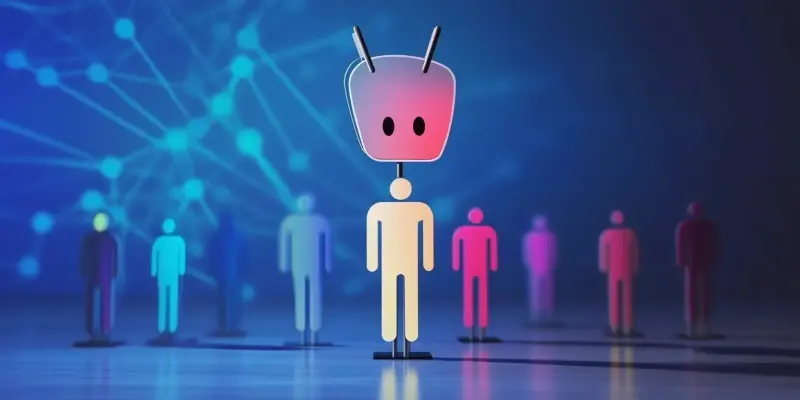
The hiring process, fundamental to organizational success, has traditionally been plagued by inefficiencies and limitations. With recent advancements in Artificial Intelligence (AI), the recruitment landscape is experiencing a transformative shift. Incorporating AI into hiring procedures addresses longstanding challenges, offering a path to more effective and fair assessments.
The Shortcomings of Traditional Hiring Methods
Resource-Intensive and Low Validity
Traditional recruitment methods, which heavily rely on interviews and written tests, are often time-consuming and expensive. Despite the significant investment, studies indicate that these techniques frequently fail to accurately predict a candidate’s on-the-job success, as they do not closely replicate actual work environments. This disconnect between the hiring process and real job performance can lead to poor hiring decisions, contributing to turnover and inefficiency, and undermining organizational goals.
The crux of the issue lies in the fact that these traditional methods often lack the depth and realism to fully gauge a candidate’s potential. Static tests might assess theoretical knowledge or test-taking skills, but they fall short in evaluating critical on-the-job abilities. Interviews can be heavily influenced by a candidate’s presentation skills or the interviewer’s biases, further compromising their predictive validity. As a result, there is a growing consensus among HR professionals and researchers that more dynamic and contextually relevant assessment tools are needed to improve hiring outcomes.
Simulation Challenges
While efforts are made to create job-specific simulations during interviews and assessments, these attempts often fall short. Candidates are usually required to imagine or roleplay scenarios, which do not provide the realism necessary to truly evaluate their capabilities. There is a need for more reliable simulation techniques to enhance the hiring process. Additionally, interviewers are generally not trained actors, and their attempt to emulate job-specific scenarios may lack authenticity, further diminishing the effectiveness of these simulations.
Moreover, constructing robust simulations is both time-consuming and resource-intensive, often requiring substantial input from subject matter experts to design scenarios that adequately reflect job responsibilities. Even then, static simulations often fail to capture the dynamic and evolving nature of real workplace environments. The lack of real-time feedback and the absence of authentic interaction with multiple elements in these scenarios further limit their utility. Therefore, without a more practical, scalable, and immersive approach, traditional simulations are unlikely to meet the needs of modern recruiting.
AI as a Solution in Hiring
Dynamic Work Simulations
AI has emerged as a solution to the limitations of traditional hiring methods, offering realistic and dynamic work simulations. By simulating actual job tasks, AI allows candidates to demonstrate their skills and problem-solving abilities in a setting that closely mirrors real work conditions, providing more accurate assessments. These AI-driven simulations are interactive and can adapt in real-time based on a candidate’s responses, making them much more effective at evaluating competencies and soft skills than static tests or roleplays.
Furthermore, AI can handle vast amounts of data and analyze performance with precision, offering insights that human assessors might overlook. It can track nuanced behaviors, assess multitasking abilities, and offer objective evaluations free from human bias. AI also has the advantage of consistency; it can deliver the same assessment experience to every candidate, ensuring fairness and uniformity in evaluations. This capability not only improves the quality of the assessments but also enhances their scalability, allowing organizations to conduct thorough evaluations even with high volumes of applicants.
Case Study: Athena’s Approach
Athena, a company specializing in hiring and training executive assistants, exemplifies the successful integration of AI into the recruitment process. By combining traditional static tests with AI-driven simulations, they create scenarios that reflect real job tasks, such as managing emails or organizing events. These simulations are coupled with chatbot interactions to assess critical skills like attention to detail and problem-solving. In doing so, Athena can closely replicate the working environment and evaluate candidates in a context that mirrors their potential future job as accurately as possible.
In an initial assessment of over 550 candidates who underwent both AI simulations and static tests, there was an 83.4 percent overlap in rejections by both methods, suggesting a high level of agreement between the tools. However, any discrepancies between the AI and static tests could indicate areas for further investigation to determine which tool provides better outcomes. Athena follows up this process with one final human interview to ensure compatibility, although these interviews rarely change the decision made by the AI and static tests. By integrating AI, Athena successfully enhances both the efficiency and accuracy of its hiring process.
Broader Applications and Industry Adoption
Diverse Roles and Major Companies
The potential applications of AI in recruitment extend beyond executive assistants. AI simulations can be tailored for various roles, including sales, trading, and human resources. Prominent companies such as Amazon, Unilever, and Siemens are innovating their hiring processes by leveraging AI to analyze resumés, conduct video interviews, and simulate job-specific tasks. For example, sales professionals can undergo negotiation simulations, while HR candidates might face scenarios involving conflict resolution. This ability to customize AI simulations for different roles significantly enhances their utility and effectiveness.
By adopting AI-driven tools, these companies strive to enhance both the efficiency and accuracy of their hiring processes. These simulations not only assess technical skills but also provide a clearer picture of how candidates handle real-world challenges. Through AI, companies can ensure a more rigorous evaluation process, mitigate biases, and make data-driven decisions. Consequently, this leads to better matches between candidates and roles, reducing turnover rates and fostering a more productive workforce. The widespread adoption of AI across various industries marks a pivotal shift towards more effective, equitable, and modern hiring practices.
The Evolving AI Market
Emerging startups are entering the AI recruitment market, providing solutions that enhance hiring tactics for larger firms. These services range from interactive simulations to personalized feedback, further demonstrating the versatility and scalability of AI in recruitment. Companies such as HireVue and Pymetrics are developing sophisticated platforms that leverage machine learning and data analytics to refine candidate assessments. These startups often bring innovative approaches and specialized expertise, enabling larger firms to implement cutting-edge technologies without the need for extensive in-house development.
Additionally, AI-driven platforms support continuous improvement through the collection and analysis of vast amounts of data. This feedback loop allows for the constant refinement of simulation algorithms, increasing their accuracy and effectiveness over time. The competitive landscape among AI startups is fostering rapid advancements in the field, leading to the development of increasingly sophisticated and user-friendly recruitment tools. Hence, organizations can leverage these advancements to stay ahead in the competitive talent market, ensuring they attract and retain the best candidates.
Considerations and Challenges
Accuracy and Job Understanding
To create effective AI simulations, a precise understanding of the actual tasks employees will face is crucial. Often, job descriptions lack the necessary detail, and leaders may not fully comprehend daily responsibilities. Ongoing refinement and monitoring of AI tools are essential to ensure they yield positive hiring outcomes. Without this understanding, AI simulations may fail to accurately reflect job demands, leading to mismatches and potentially overlooking qualified candidates who excel in less apparent but critical areas of the job.
Furthermore, there are risks associated with over-reliance on AI. If not properly configured and regularly updated, AI systems might perpetuate existing biases or make unintended errors in candidate evaluations. This reinforces the need for human oversight and continuous calibration of these tools to ensure they remain relevant and fair. Collecting feedback from both candidates and hiring managers can provide valuable insights for tuning the algorithms and enhancing the realism and accuracy of the simulations.
Continuous Improvement and Adoption
The hiring process is crucial for any organization’s success, yet it has historically been fraught with inefficiencies and limitations. However, recent advancements in Artificial Intelligence (AI) are revolutionizing recruitment, offering fresh solutions to longstanding issues. By integrating AI into hiring practices, companies can tackle these challenges head-on, resulting in more efficient and fair evaluations.
AI-driven tools can sift through countless resumes in a fraction of the time it would take a human and identify the best-fit candidates based on data-driven insights. This not only speeds up the hiring process but also minimizes human biases, leading to fairer hiring decisions.
Moreover, AI can analyze candidate interactions during interviews, providing deeper insights into their suitability for the role. It can even predict job performance and cultural fit with greater accuracy than traditional methods. These advancements in AI are paving the way for a more streamlined, equitable, and effective hiring landscape, ensuring organizations can better tap into diverse talent pools and make more informed hiring decisions.