

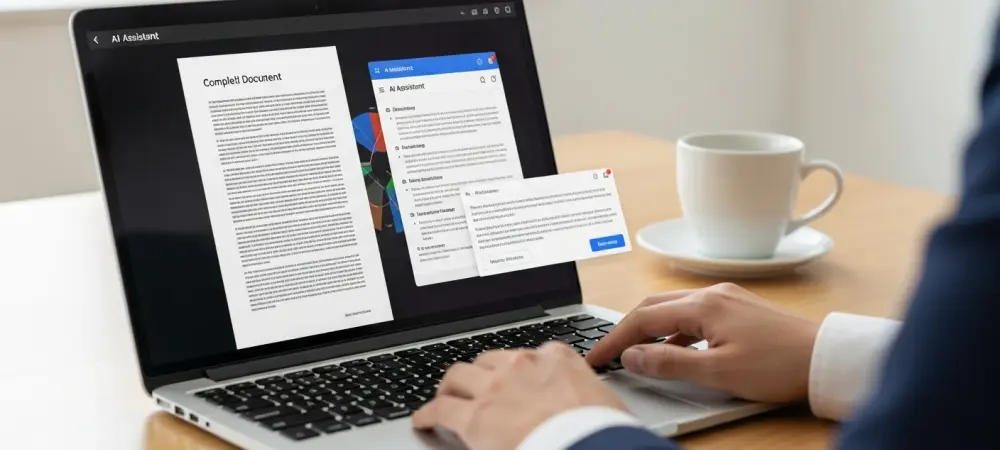
The initial ninety days of employment, long a period defined by human-led training and mentorship, are undergoing a quiet revolution driven not by HR policy but by the new hires themselves. A significant majority of employees entering new roles now discreetly leverage artificial intelligence to navigate the complexities of their new environment. This proactive adoption signals a fundamental change in how professionals approach learning and integration, creating a hybrid onboarding experience where digital assistance complements, and sometimes substitutes for, traditional human guidance. This emerging trend is reshaping expectations and forcing organizations to reconsider the structure and support systems that define an employee’s crucial first few months.
The Dawn of a New Onboarding Era
The modern onboarding process is evolving from a strictly linear, human-managed sequence of events into a dynamic, multi-faceted ecosystem. Traditionally, a new employee’s journey was guided almost exclusively by their manager and the HR department through scheduled meetings, training sessions, and manual-based learning. Today, that model is being disrupted by the introduction of AI-powered tools, which act as an on-demand resource for the new hire. This shift creates a hybrid landscape where official company-led onboarding runs in parallel with an employee’s self-directed, AI-assisted learning.
This new era is defined by the interaction between four key components: the new employee seeking immediate answers, the manager providing high-level guidance, the HR department overseeing formal integration, and the AI assistant offering instant, granular support. Technology is no longer just a backdrop for work; it has become an active participant in the initial job experience. This integration allows new hires to fill knowledge gaps in real-time, reducing their reliance on colleagues for minor queries and fundamentally altering the rhythm and efficiency of their first weeks on the job.
Decoding the AI-Onboarding Trend
How AI is Reshaping the First 90 Days
New employees are leveraging AI in practical and specific ways to accelerate their assimilation into a company. The most common application involves using AI to summarize lengthy documents like project briefs or internal reports, a task reported by 55% of users. Close behind is the drafting or proofreading of emails, with 52% of new hires using AI to ensure their communications are professional and clear. Beyond administrative tasks, AI is also a key tool for understanding unfamiliar software (42%), decoding company-specific acronyms and jargon (20%), and even rehearsing for important meetings (30%), allowing employees to build competence without constant supervision.
The drivers behind this behavioral shift are twofold, stemming from a need for both speed and psychological safety. A significant 60% of new hires believe they can receive faster help from an AI assistant than from a manager or HR. This desire for on-demand information reflects the fast-paced nature of modern work. Moreover, AI provides a non-judgmental space for inquiries. An overwhelming 74% of employees admit to asking AI a question they would feel uncomfortable posing to a human colleague, suggesting that AI serves as a confidential tutor for topics they may perceive as too basic or sensitive to raise with a person.
The Tangible Impact on Performance and Confidence
The adoption of AI during onboarding is yielding measurable benefits in both employee output and self-assurance. Data shows that 60% of new hires who use AI feel more efficient at finding and processing information, enabling them to contribute more quickly. This increased efficiency is closely linked to a greater sense of autonomy, with 51% reporting that AI makes them feel more independent in their new role. Consequently, this leads to a significant boost in self-belief, as 50% feel more confident in their ability to complete onboarding tasks successfully.
This trend is not a fleeting phenomenon but rather a precursor to a new standard in corporate training. Employee expectations are rapidly aligning with the capabilities of technology. A strong majority of employees (75%) anticipate that AI will become an integral part of formal HR onboarding programs within the next five years. This sentiment indicates a clear demand for more technologically integrated support systems and suggests that companies failing to incorporate these tools may soon be seen as lagging behind.
Balancing Automation with the Human Touch
Despite the clear advantages of AI integration, a primary challenge is emerging: the risk of creating a depersonalized and isolating experience for new hires. The onboarding process is as much about building social connections and cultural understanding as it is about learning job functions. Over-reliance on automated tools could strip away the organic interactions that help a new employee feel like part of a team, potentially hindering long-term engagement and a sense of belonging.
This concern is reflected in employee sentiment, with a substantial 68% worrying that an excessive focus on AI could diminish the crucial human element of joining a company. While AI can answer factual questions with unparalleled speed, it cannot replicate the empathy of a manager, the camaraderie of a team lunch, or the nuanced cultural insights shared by a seasoned colleague. These human interactions are vital for building trust and integrating an individual into the social fabric of the workplace, a function that automation is not equipped to fulfill.
Crafting a Framework for Responsible AI Integration
To harness the benefits of AI without sacrificing the human connection, companies must move toward establishing clear policies and best practices. Organizations need to create a framework that guides employees on how to use AI tools responsibly and effectively during their onboarding. This includes providing clarity on what constitutes appropriate use, from generating ideas to verifying information, ensuring that AI is used as a tool for enhancement rather than a replacement for critical thinking.
Beyond establishing guidelines, this framework must also address critical issues of data security and compliance. When new hires use external AI platforms, they may inadvertently expose sensitive company information. Therefore, company policies should specify which tools are approved and outline protocols for handling confidential data. By proactively creating these standards, organizations can mitigate risks while empowering employees to leverage AI assistants safely and productively, ensuring that the technology aligns with broader company objectives and values.
The Future of Onboarding Augmentation Not Replacement
The future trajectory of workplace onboarding points toward a model where AI acts as a powerful supplement rather than a substitute for human interaction. The technology is best positioned to handle logistical, repetitive, and information-retrieval tasks, thereby freeing up managers and HR professionals to focus on higher-value activities like mentorship, strategic coaching, and fostering a welcoming culture. This division of labor allows each element—human and machine—to contribute where it is most effective.
This collaborative vision is supported by the enduring value employees place on human guidance. Research reveals that nearly half of new hires (46%) still trust their manager more than an AI tool for support during their critical first 90 days. This statistic underscores a fundamental truth: while AI can provide answers, it cannot provide wisdom, context, or a sense of psychological safety. The manager’s role in building trust, offering personalized feedback, and navigating complex interpersonal dynamics remains irreplaceable.
A Strategic Blueprint for Tomorrow’s Workforce
The evidence made it clear that artificial intelligence has fundamentally redefined the new-hire experience. By filling knowledge gaps, offering on-demand assistance, and enabling a greater degree of self-sufficiency, AI has become an indispensable co-pilot for employees navigating their first months on the job. This shift has created a more efficient and confident workforce from day one.
Ultimately, the most successful organizations proved to be those that embraced a blended onboarding strategy. The path forward involved strategically leveraging AI to streamline informational tasks while intentionally preserving and enhancing human connection. This balanced approach not only boosted operational efficiency but also fostered a supportive and engaging culture, ensuring that new employees felt both empowered by technology and welcomed by their team.