

Ling-yi Tsai has spent decades at the forefront of the HRTech revolution, guiding global organizations through the intricate process of merging human potential with technological advancement. With an extensive background in HR analytics and talent management, she is a sought-after voice for companies looking to modernize their recruitment and onboarding frameworks. Her deep understanding of the Fair Labor Standards Act (FLSA) and its intersection with remote work technology makes her an ideal guide for navigating the evolving legal landscape of the American workplace. In this discussion, we explore the nuances of recent federal guidance that promises to reshape how hourly employees balance their time between the office and the home.
The conversation explores the transformative impact of recent Department of Labor opinion letters, specifically focusing on how midday commutes are now classified under federal law. We examine various workplace scenarios involving nonexempt employees who split their days to avoid traffic or accommodate personal responsibilities, such as school runs or home maintenance. The dialogue also touches on the security these rulings provide to employers who were previously hesitant to offer flexibility, the specific 20-minute rule regarding rest breaks, and the technological distinctions between incidental tasks like receiving a page and core duties like scheduling clients. Through these themes, the interview highlights a shift toward a more employee-friendly version of hybrid work that maintains strict compliance with labor standards.
When an employee chooses to split their day between the office and home to avoid the stress of a two-hour daily rush-hour commute, what specific legal hurdles have historically made employers hesitant to approve such a schedule?
In the past, the biggest hurdle was the fear that any travel occurring after an employee had already started their workday would be viewed as “compensable time.” For a nonexempt employee scheduled from 9 a.m. to 5 p.m., the continuous workday rule often suggested that once the clock started, the employer was on the hook for every minute until the clock stopped. This created a massive financial risk for companies if a worker wanted to spend 30 minutes driving home at 10 a.m. to finish their shift remotely. Employers were terrified that a 10:30 a.m. arrival at a home office would mean they owed the worker for that half-hour spent behind the wheel. The recent DOL opinion letter, FLSA2026-9, provides a huge amount of security by clarifying that these midday trips are just “ordinary commutes” if they primarily benefit the employee. It allows a worker to log off at 10 a.m., drive for 30 minutes in much lighter traffic, and resume their 7.5-hour schedule without the company fearing a lawsuit over unpaid travel time.
How does the recent Department of Labor clarification regarding “ordinary commutes” change the everyday reality for managers who are trying to oversee a nonexempt workforce?
For managers, this clarification acts as a green light to finally embrace the flexibility that was previously reserved for salaried staff. Before this, a manager might have had to say “no” to a loyal employee who needed to be home for a sick child or a maintenance worker, even if the work could easily be done from a laptop. Now, because the DOL has stated that travel between home and the primary worksite can be excluded from recorded work time, managers can focus on output rather than tracking a GPS signal. According to the SHRM 2026 Employee Benefits Survey, we already see that 45% of employers offer flextime during core business hours, and this ruling will likely push that number higher. It takes the pressure off the “continuous workday” trap and acknowledges that a person can be fully relieved of work-related tasks during a midday drive. This transition allows for a much more human-centric approach to scheduling where the 20 or more minutes spent traveling are seen as personal time, just like a bona fide meal break.
In the scenario where an employee volunteers for extra work on a short-staffed project but wants to perform those hours at home before their office shift, what should organizations consider to ensure they are staying compliant?
When an employee takes on extra hours, like in Scenario 2 of the DOL letter, the focus must remain on whether the commute that follows is “ordinary” or “extraordinary.” Even if the employer requires the worker to arrive at the office earlier than their usual 9 a.m. start, the commute itself remains noncompensable because it is a normal incident of employment. The organization must have robust timekeeping policies to ensure that the work performed at home is captured accurately, but they don’t have to worry about paying for the drive to the office afterward. It’s a sensory shift for the worker, too—starting the day in a quiet home office at 6 a.m. to help the team, then making a standard commute, and finally joining the hustle of the office. The DOL’s conclusion didn’t even depend on the work being voluntary; even if mandated, that travel time stays off the books as long as the employee is relieved of duties. This provides a strategic advantage for handling short-staffed projects without blowing the budget on travel pay that doesn’t produce actual work.
What are the potential pitfalls for an employer if they fail to distinguish between a “midday commute” and travel that is “integral and indispensable” to the job, especially for field technicians?
The pitfalls are expensive and legally taxing, as seen in the distinctions made in FLSA2026-10. If a field service engineer is simply receiving pages while driving an employer-provided vehicle, that time is usually not compensable because it’s incidental to the commute. However, the moment that technician has to start calling clients to schedule appointments or coordinating with other engineers, the drive becomes “integral and indispensable” to their principal work activities. This is work that constrains the employee so much that they cannot use the time effectively for their own purposes, and that makes it compensable. Attorneys like Claire Deason have pointed out that employers must review their operational practices to ensure they aren’t accidentally turning a commute into a paid work session. If you have a technician spending 45 minutes on the phone while stuck in traffic, you’re looking at significant hourly pay and potential overtime that must be recorded. It’s about the “continuous workday” versus a true break where the employee is free to listen to a podcast or grab a coffee.
If an employee relies on public transportation, like a city bus, and needs to finish their workday at home because of the transit schedule, how does this ruling affect their compensation and the employer’s responsibilities?
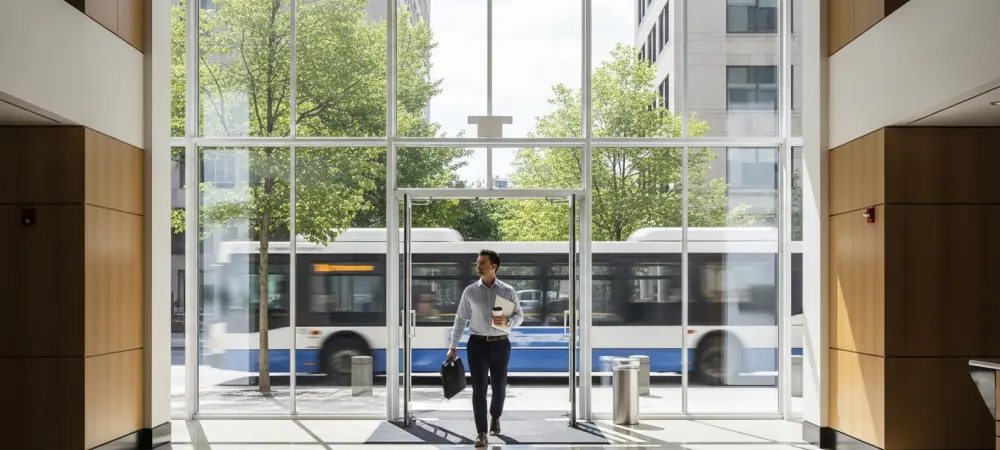
This scenario, highlighted in Scenario 3, is a perfect example of how the law accommodates the logistical realities of the modern workforce. If an employee has to leave the office at 4 p.m. to catch the last bus but still has an hour of work to finish, they can commute home and log back in to complete their tasks. The DOL has clarified that the time spent on the bus is an ordinary commute and therefore not work time, even if the employee is finishing their day with overtime hours later that evening. This is a massive win for equity, as it doesn’t penalize those who don’t have the luxury of a personal vehicle. The employer simply needs to ensure that the 20 or more minutes the employee spends on the bus are truly “off-duty” and that no work is being performed during the transit. It creates a seamless transition from the office environment to the home environment, allowing the worker to manage their life without the employer incurring costs for the time spent on public transit.
Looking at the specific limitations mentioned by attorney Russell Bruch, what types of travel or gaps in the day still remain strictly compensable despite these new opinion letters?
It is vital to remember that these opinion letters don’t give employers a free pass on all travel. As Russell Bruch noted, travel from one worksite to another during the workday—like driving from a satellite office to the main headquarters—remains strictly compensable. Additionally, any work actually performed while traveling, such as a conference call while driving, must be paid. Short rest breaks of approximately 20 minutes or less also remain compensable because they are generally viewed as benefiting the employer by allowing the worker to recharge. The “midday commute” only qualifies as non-work time if it is a genuine, ordinary commute that primarily benefits the employee’s desire for flexibility or personal needs. If the travel is extraordinary or dictated by a sudden employer requirement that doesn’t fit the “normal” commute pattern, the company could still find itself responsible for that time. Employers must stay vigilant and ensure that any gaps in the workday qualify as either an ordinary commute, a meal period, or true off-duty time.
What is your forecast for hybrid work for nonexempt employees?
I forecast that we are entering an era of “Radical Flexibility” for the hourly workforce, where the rigid 9-to-5 “continuous workday” model will be replaced by fragmented, task-oriented schedules. As more organizations realize that 45% of their peers are already offering flextime, the competitive pressure to provide these “midday telework” options will become a primary tool for talent retention. We will see a surge in specialized time-tracking software designed to handle these split shifts, ensuring that the 30-minute commute and the 30-minute lunch are clearly demarcated from the 7.5 hours of actual labor. Technology will bridge the gap, allowing field technicians and office staff alike to move fluidly between locations without creating a compliance nightmare. Ultimately, the focus will shift away from where an employee is sitting and toward the specific “integral and indispensable” tasks they are performing, making the American workplace more adaptable and efficient than ever before.