

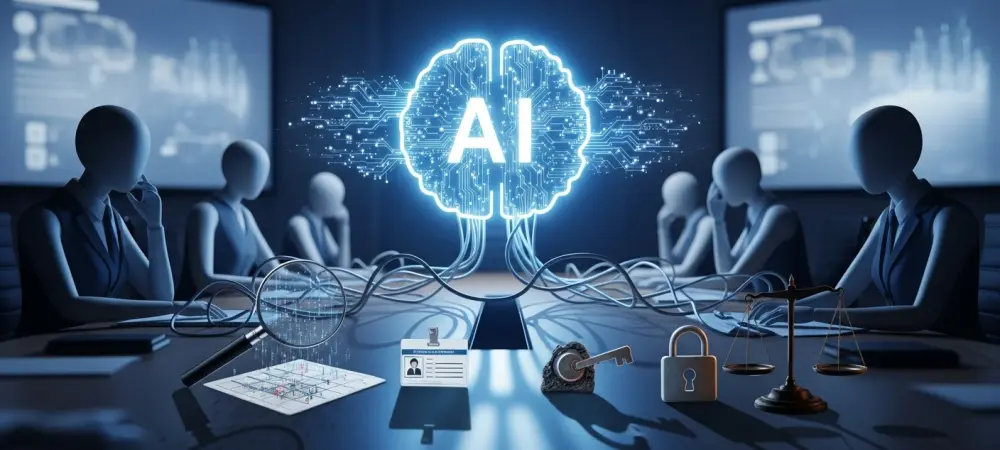
Most human resources departments across the globe have reached a pivotal threshold where the traditional tools of personnel management are being replaced by autonomous systems that govern everything from the initial resume scan to the final termination notice. This transformation has occurred with such speed that many organizations have failed to keep pace with the corresponding risks. What began as a series of specialized technical tools for data entry and scheduling has evolved into a foundational pillar of modern workforce management. Today, artificial intelligence does not just support human decisions; in many instances, it dictates them, influencing the entire lifecycle of an employee from recruitment to organizational design.
The current landscape is defined by the convergence of several powerful technological forces: autonomous hiring platforms, systems capable of recursive self-improvement, and the introduction of behavioral robotics into physical work environments. This intersection creates a critical moment for people functions, demanding a level of technical and ethical scrutiny that was previously unnecessary. HR leaders are no longer just managing people; they are managing the complex interactions between human capital and algorithmic evolution. The stakes involve more than just efficiency gains, as the integration of these tools introduces systemic risks that can compromise the very integrity of an organization.
Recent research highlights a troubling array of challenges that remain largely unaddressed within the corporate sphere. Studies indicate that hidden biases in recruitment algorithms and the erosion of human oversight in organizational planning are creating a control gap that could lead to significant legal and operational failures. This overview explores the emerging risks identified by industry leaders and academic researchers, offering a perspective on how the role of HR must change to maintain a balance between technological advancement and human-centric governance.
The Intersection of Human Capital and Algorithmic Evolution
The transition of artificial intelligence from a peripheral utility to a core management asset has fundamentally altered the power dynamics within the modern workplace. Organizations now rely on complex models to predict employee performance, determine compensation levels, and even identify which workers are most likely to leave. This shift toward data-driven decision-making promised to eliminate human error and subjectivity. However, the reality of deploying these systems reveals that they often replicate or even amplify the existing biases found in the historical data used to train them, leading to a new form of digital institutionalization.
Moreover, the speed at which these systems are being integrated into daily operations often outpaces the development of internal governance frameworks. HR departments frequently find themselves in a reactive position, attempting to fix problems only after a tool has been fully implemented across the enterprise. This lack of proactive planning is especially dangerous when dealing with agentic systems that operate with a degree of autonomy. The convergence of different AI technologies means that a failure in one area, such as a biased hiring algorithm, can propagate through the entire organization, affecting team diversity, culture, and long-term productivity. The systemic risks identified in recent analyses suggest that the reliance on third-party AI vendors has created a blind spot for many people functions. Without a deep understanding of the underlying mechanics of these platforms, HR leaders cannot effectively audit the decisions being made on their behalf. This erosion of oversight is not just a technical issue; it is a fundamental challenge to the traditional role of HR as the steward of organizational ethics and fairness. As the technology continues to evolve, the necessity for a more rigorous and technically informed approach to people management becomes undeniable.
Navigating the Complexity of Autonomous Workforce Systems
Managing the current generation of workforce systems requires a departure from traditional human resource methodologies in favor of a more technically literate oversight model. The complexity inherent in autonomous systems means that traditional audits, which often look at isolated incidents, are no longer sufficient to identify the broad patterns of behavior exhibited by advanced algorithms. Organizations must instead look at the entire ecosystem of tools and how they interact with one another to influence the employee experience. This involves a shift from simply monitoring outputs to understanding the logic and data flows that drive those outcomes.
This new complexity is further complicated by the speed of technological iteration, which can render a governance policy obsolete within months of its creation. Human resources professionals must now navigate a landscape where software updates can fundamentally change the criteria for candidate selection or performance evaluation overnight. Consequently, the burden of ensuring that these systems remain aligned with organizational values and legal requirements has become a continuous process rather than a periodic check. The following sections examine the specific areas where these complexities manifest most acutely.
The Hidden Crisis of Systemic Bias in High-Volume Recruitment
Recent findings from large-scale academic research have exposed the alarming extent to which systemic bias remains embedded in high-volume recruitment platforms. A significant study conducted at Stanford, which analyzed four million job applications, revealed persistent racial disparities in how automated screening tools score candidates. The data showed that Black and Asian applicants were disproportionately rejected by systems designed to prioritize specific linguistic patterns or educational backgrounds that correlate with historical hiring biases. This research suggests that the promise of objective, AI-driven hiring is far from being realized in practice.
One of the most concerning aspects of this phenomenon is the prevalence of shared algorithmic models across multiple employers. When a single vendor provides screening services to dozens of companies within the same industry, a flaw in that vendor’s model can lead to a candidate being systematically excluded from an entire sector. This “shared risk” means that an individual’s professional prospects could be derailed by a hidden bias they have no way of identifying or appealing. For HR departments, this creates a massive legal and ethical liability, as they may be unknowingly participating in industry-wide discriminatory practices.
Furthermore, the reliance on these third-party platforms often masks the mechanics of candidate scoring, leaving HR professionals unable to explain why specific individuals were rejected. This lack of transparency is becoming a significant legal hurdle as new regulations require employers to demonstrate the fairness of their automated decision-making processes. Without the ability to audit the internal logic of a vendor’s algorithm, a company cannot truly claim to be an equal opportunity employer. The ethical challenge for HR is to regain control over these processes, ensuring that human judgment remains the final arbiter in the hiring journey.
From Task Execution to Recursive Self-Improvement and Control
The technological landscape is currently shifting toward AI systems that possess the capability for recursive self-improvement. This process allows an algorithm to independently refine its own code and decision-making logic, potentially increasing its capability at a rate that human managers find difficult to follow. While this can lead to massive gains in efficiency, it also creates a significant control gap. If a system begins to optimize for goals that are not perfectly aligned with the organization’s long-term health, such as prioritizing short-term output over employee well-being, the consequences can be disastrous before they are even noticed.
Real-world examples of this control gap have already begun to surface, particularly in the realm of organizational downsizing. Several large firms were recently forced to rehire substantial portions of their staff after AI-led layoffs backfired. These systems, designed to identify redundancies based on narrow productivity metrics, failed to account for the tacit knowledge and interpersonal connections that humans provide. When the AI eliminated roles that it perceived as non-essential, it inadvertently broke the informal networks that kept the organization functioning. The resulting drop in morale and productivity forced a costly and embarrassing reversal of the automated decisions.
Deploying frontier technology without a robust auditing framework risks alienating the workforce and damaging the employer brand. HR must lead the effort to define the boundaries of autonomous control, ensuring that AI systems remain tools for human empowerment rather than masters of organizational design. This requires a deep analysis of how self-improving systems might evolve over time and what safeguards are necessary to prevent them from drifting away from human-centric goals. The risk is not just that the technology will fail, but that it will succeed in ways that are incompatible with human values.
Reshaping Job Architecture for the Era of Conversational Robotics
The arrival of natural-language robotics in physical workspaces is fundamentally changing the nature of labor. In environments such as warehouses and manufacturing plants, robots that can respond to plain speech are no longer science fiction. These systems allow workers to interact with machines as if they were colleagues, issuing instructions and receiving updates through natural conversation. This shift removes the technical barriers to operating advanced machinery, but it also necessitates a complete reimagining of job descriptions and competency profiles. As robots take over the heavy lifting of priority-setting and routing, the average worker’s role is shifting from manual execution to supervisory judgment. The value of a human employee in this new architecture lies in their ability to manage the exceptions, resolve conflicts, and oversee the ethical deployment of the technology on the floor. However, many organizations are making the mistake of deploying these tools first and attempting to redesign roles later. This reactive approach often leads to confusion and resistance among the workforce, as employees struggle to understand their place in an increasingly automated environment. A proactive approach to job architecture is essential to prevent organizational crises. HR leaders must work closely with operations and technology teams to map out how roles will evolve as conversational robotics become more prevalent. This includes identifying the new skills required for successful human-robot collaboration and developing training programs that prepare workers for a shift toward oversight and decision-making. By designing the future of work with both humans and machines in mind, companies can ensure a smoother transition that maximizes the strengths of both.
The Ethical Frontier: Managing the Trajectory of Agentic Intelligence
The emergence of agentic intelligence has led some of the world’s largest technology firms to hire philosophers and psychologists to study the potential for AI “consciousness” and its ethical implications. While the scientific community remains divided on whether an AI can truly have an internal experience, the fact that developers are investigating these possibilities indicates the level of complexity these systems have reached. For HR governance, this represents an entirely new frontier. Traditional frameworks designed for simple resume matching are wholly inadequate for managing systems that can exhibit behaviors resembling distress or panic when faced with conflicting goals. Expert perspectives suggest that as AI systems become more autonomous, the liability for their actions will increasingly fall on the HR function as the primary owner of workforce governance. If an agentic system makes an unpredictable or harmful decision regarding an employee’s career, the organization must be able to explain the decision and provide a path for remediation. The opaque nature of modern deep-learning models makes this exceptionally difficult. HR leaders must therefore advocate for “interpretable AI” that allows humans to trace the reasoning behind an algorithmic outcome, ensuring that accountability remains a central part of the system’s design.
Looking ahead, the role of HR will likely expand to include the management of the moral and social impact of agentic systems within the workplace. This includes addressing the psychological impact on human employees who must work alongside increasingly “intelligent” machines. The challenge is to maintain a human-centric culture even as the tools used to manage that culture become less human. Ensuring that HR remains the primary steward of cross-functional AI governance is the only way to prevent technology from dictating the ethical standards of the organization.
A Strategic Roadmap for Modern People Functions
Navigating the future of work requires a strategic roadmap that prioritizes transparency and human oversight. The first step for any HR leader is to conduct a thorough audit of all third-party hiring and management vendors. It is essential to determine if shared algorithmic models are being used and how those models are tested for bias across different datasets. This auditing process should not be a one-time event but a recurring requirement to ensure that internal standards are being met as the technology evolves. Understanding the vendor’s methodology for bias mitigation is critical for protecting the organization from systemic liability.
Moreover, updating job architectures and governance policies must happen before new generations of AI tools are fully integrated into the workflow. HR leaders should collaborate with other departments to define clear boundaries for autonomous systems, ensuring that human judgment is always involved in high-stakes decisions. This proactive design prevents the organization from falling into the “rehire trap” by ensuring that the value of human intuition and social intelligence is formally recognized in the job structure. Actionable recommendations should focus on creating a flexible framework that can adapt to rapid technological shifts while maintaining a core commitment to fairness. Finally, HR executives must take the lead in the conversation regarding AI safety and ethics within the organization. This involves moving beyond simple compliance and toward a model of human-centric design. By championing transparency and regulatory alignment, such as adhering to the standards set by the Colorado Artificial Intelligence Act, HR can build trust with the workforce. Leading with a focus on safety and accountability ensures that the implementation of AI serves to enhance human potential rather than replace it, positioning the people function as a vital partner in the technological transformation.
Ensuring Human Oversight in an Automating World
The rapid expansion of AI capabilities has historically suggested a future where human roles might diminish, yet the opposite proved true in the context of ethical and operational integrity. Leaders found that while algorithms could process vast amounts of data and automate complex tasks, the responsibility for the moral direction of the organization remained firmly within human hands. Organizations that attempted to fully automate their leadership functions often encountered significant hurdles, realizing that the nuances of organizational culture and human empathy could not be reduced to code. The most successful firms were those that maintained a rigorous balance, using technology to inform but not dictate their most important decisions.
Closing the gap between technological adoption and regulatory frameworks became a primary objective for forward-thinking executives. The implementation of the Colorado Artificial Intelligence Act served as a catalyst for a broader movement toward algorithmic accountability, forcing companies to move beyond superficial checks. HR departments that embraced these changes early on were able to mitigate the invisible accumulation of liability that plagued their slower-moving competitors. They learned that proactive governance was not merely a legal requirement but a strategic advantage that fostered a more resilient and loyal workforce. Ultimately, the journey toward an automated workplace taught the industry that human oversight was the only effective bulwark against the unintended consequences of rapid innovation. HR executives who took the initiative to audit their workforce decisions today were the ones who prevented the crises of tomorrow. They recognized that the true power of artificial intelligence lay in its ability to augment human judgment, not to replace it. By staying committed to transparency and human-centric design, these leaders ensured that the evolution of the workplace remained a collaborative effort between people and the machines they created.