

The Shifting Paradigm of Remote Employee Protection
The modern workplace has effectively dismantled the traditional four-walled office, leaving a significant portion of the global workforce to operate in isolation across diverse and often unpredictable environments. In this current landscape, lone worker safety has undergone a radical transformation, moving far beyond a simple administrative checkbox or a basic compliance requirement. It has now become a central pillar of corporate Environmental, Social, and Governance (ESG) strategies, reflecting a broader commitment to ethical operations and sustainable growth. Organizations recognize that the safety of the individual is no longer just a legal obligation but a core value that influences investor confidence and brand reputation.
The significance of this evolution is underscored by an increasingly stringent legal environment where the burden of proof has shifted squarely onto the shoulders of the employer. Courts and regulatory bodies now demand evidence of proactive risk mitigation rather than reactive response, making the moral imperative to protect a mobile and distributed workforce a top-tier executive priority. As remote roles continue to proliferate, from community healthcare providers to field engineers in the energy sector, the demand for sophisticated protection has never been higher. This shift is fueled by a growing understanding that a worker’s physical distance from the headquarters should not equate to a distance from organizational care. This transition is being accelerated by a convergence of high-tech breakthroughs that are redefining the boundaries of what is possible in personal protection. By integrating satellite connectivity, artificial intelligence-driven monitoring, and holistic safety ecosystems, the industry is moving toward a future where “dead zones” are eliminated and emergency responses are instantaneous. These innovations provide a preview of a more resilient safety culture where technology does not just track location but actively predicts and prevents harm. The following analysis explores how these specific frontiers are reshaping the way organizations fulfill their duty of care in an increasingly connected world.
Emerging Technological Frontiers and Market-Leading Innovations
Beyond Cellular Limits: The Ascent of Multi-Layered Connectivity
The historical reliance on standard cellular networks has often been the Achilles’ heel of remote worker protection, particularly for those operating in rural or geographically isolated regions. Today, the industry is witnessing a critical shift toward hybrid systems that blend traditional mobile applications with advanced satellite hardware and SMS fallback protocols. This multi-layered approach ensures that the safety net remains intact even when a primary data connection fails. Providers like Vismo and StaySafe have been at the forefront of this movement, utilizing low-power wide-area networks (LPWAN) to maintain constant communication in areas that were previously considered unreachable. Data from recent deployments suggests that the integration of satellite technology has drastically reduced the frequency of “check-in” failures in high-risk environments. For example, by leveraging satellite-enabled devices, field operatives in the oil and gas industry can maintain a lifeline regardless of terrestrial infrastructure. However, the adoption of these systems involves a complex calculation of satellite hardware costs versus the catastrophic risks associated with connectivity failure. While the initial investment for satellite-capable devices is higher, the cost of a single missed emergency signal in a high-stakes scenario far outweighs the expense of the technology.
Furthermore, the transition to these hybrid networks allows for more consistent tracking and geofencing capabilities. Organizations are no longer forced to choose between a low-cost app and a high-cost satellite phone; instead, they can deploy intelligent software that automatically switches communication paths based on signal strength. This seamless transition between cellular and satellite networks ensures that the worker remains protected without needing to manually adjust their equipment. As connectivity becomes more ubiquitous, the expectation for 100 percent coverage has become a standard requirement for any serious safety program.
The Human-in-the-Loop: Professional Monitoring vs. Automated Alerts
While automated notifications and app-based alerts offer a baseline level of security, the industry is placing a renewed emphasis on professional oversight through 24/7 Alarm Receiving Centers (ARCs). The core of response excellence lies in the “middle mile”—the critical period between the moment an alarm is triggered and the arrival of emergency services. Automated systems often suffer from “alert fatigue,” where supervisors may overlook a notification among a sea of routine digital pings. In contrast, professional monitoring centers staffed by trained operators provide a level of critical thinking and emotional intelligence that algorithms cannot yet replicate.
Leading providers such as SoloProtect and Peoplesafe have demonstrated the value of this human element by managing the entire escalation process. When a worker activates a discreet alarm, a trained professional can listen to the audio in real-time, assess the level of threat, and communicate directly with local emergency dispatchers. This intervention is especially vital in social or medical emergencies where the worker may be unable to speak or provide their own location. The ability of an operator to bypass standard emergency queues using specialized protocols can save several minutes, which often determines the outcome of a life-threatening incident.
Moreover, professional monitoring mitigates the risks associated with false alarms, which can drain organizational resources and lead to complacency. By filtering out accidental triggers before they reach emergency services, ARCs ensure that when an alert is escalated, it is a genuine emergency requiring immediate action. This balance between high-tech sensing and human judgment represents the gold standard for high-risk roles. It provides workers with the confidence that a real person is watching over them, rather than just a silent line of code in a cloud-based server.
Industrial-Grade Protection: Hazard Sensing and Wearable Tech
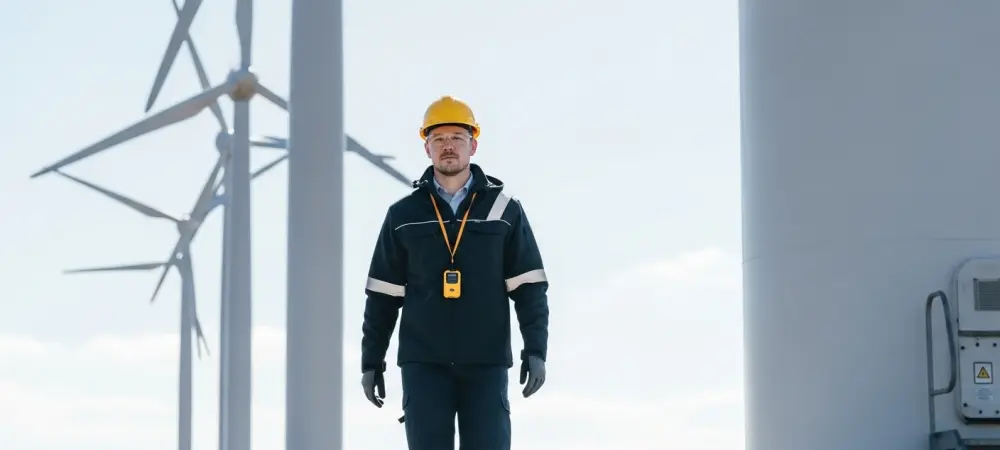
The rise of specialized hardware has challenged the assumption that a smartphone app is a universal solution for every lone working scenario. In heavy industries like construction, utilities, and chemical processing, workers face physical hazards that a standard phone is ill-equipped to detect. This has led to the development of ruggedized sensors and discreet wearable devices, such as the ID badge systems pioneered by SoloProtect. These devices are designed to be used in high-confrontation roles where pulling out a phone would be dangerous or in high-hazard environments where “intrinsically safe” equipment is a mandatory requirement to prevent explosions. Platforms like Aware360 have successfully integrated reactive sensor technology to provide “man-down” detection that functions automatically. Using sophisticated accelerometers and gyroscopes, these sensors can distinguish between a worker simply bending over and a genuine fall followed by a period of non-movement. This automation is a game-changer for workers who may be rendered unconscious by a medical event or an environmental hazard like a gas leak. By removing the need for a manual SOS trigger, these devices provide a safety layer that persists even when the worker is incapacitated.
The necessity of purpose-built hardware is further supported by the need for durability in extreme weather and harsh industrial conditions. Standard consumer electronics often fail in extreme cold or high-moisture environments, whereas industrial-grade safety wearables are tested to rigorous standards. These devices often feature long battery lives and simplified interfaces that can be operated while wearing gloves, ensuring that safety tech remains functional when it is needed most. For many organizations, the move toward specialized hardware is an acknowledgment that the right tool for the job is rarely the most convenient one, but rather the most reliable one.
The Unified Safety Ecosystem: Integrating EHS and Enterprise Data
A significant trend currently reshaping the industry is the move of lone worker safety out of its traditional silo and into broader Environmental, Health, and Safety (EHS) software suites. Organizations are beginning to view safety data not just as a tool for emergency response, but as a source of strategic insight. By centralizing data from various safety devices and platforms, companies can identify “near-miss” patterns that were previously invisible. This integration allows for a more holistic view of risk, where information from lone worker alarms is combined with training records, site incident reports, and even weather data. Predictive analytics are becoming a key benefit of this unified approach, as centralizing safety data allows organizations to refine their risk assessments in real-time. For example, if a particular geographical area or time of day consistently triggers high levels of alerts, safety managers can proactively adjust schedules or increase staffing levels. This shift from reactive to proactive safety management transforms the safety platform into a tool for operational efficiency. Instead of simply responding to accidents, the technology helps create a feedback loop that continually improves the working environment for everyone involved.
Speculation regarding the future of these ecosystems suggests that the integration will eventually extend to broader enterprise management systems, such as HR and payroll. This would allow for automated safety check-ins to be synced with shift starts and ends, ensuring that no worker is ever “off the radar” while they are on the clock. By embedding safety tech into the daily workflow, it becomes a seamless part of the employee experience rather than an additional burden. The goal is to create an environment where safety is woven into the fabric of the organization, supported by data-driven insights and a culture of continuous improvement.
Strategic Blueprints for Implementation in 2026
The complexity of the current technological landscape requires a strategic approach to implementation that prioritizes the matching of technology to specific environmental risks and incident types. Organizations must conduct rigorous risk assessments that look beyond the technical specifications of a device and focus instead on the practical realities of the worker’s daily routine. High levels of technical complexity can often lead to low adoption rates if the tools are too cumbersome or difficult to use. When safety managers evaluate potential solutions, calculating the total cost of ownership (TCO) is a critical step that must include more than just the initial purchase price or monthly subscription fee. A comprehensive TCO analysis accounts for ongoing hardware maintenance, the cost of regular training for staff, and the recurring professional monitoring fees that ensure a high-quality response. Furthermore, it should consider the potential costs of inaction, such as legal fees, insurance premiums, and the loss of productivity following a major safety incident. By viewing safety tech as a long-term investment rather than a short-term expense, organizations can build more resilient programs that stand the test of time. Actionable recommendations for 2026 also emphasize the importance of worker engagement in the selection process. Employees are more likely to adopt and consistently use safety technology if they feel it was chosen with their specific needs in mind. Pilot programs and feedback loops allow organizations to test different form factors and software interfaces before committing to a full-scale rollout. This user-centric approach ensures that the chosen technology becomes an asset to the worker, providing peace of mind and protection without hindering their ability to perform their duties efficiently.
The Future of Duty of Care in a Connected World
The shift in the legal and ethical landscape has made the implementation of reliable, multi-layered safety solutions a non-negotiable standard for any organization with remote staff. While technology provides the essential tools for protection, the success of any safety initiative ultimately depended on the seamless marriage of hardware reliability and human intervention. The transition toward integrated ecosystems and professional monitoring has demonstrated that safety is most effective when it is proactive rather than reactive. Organizations that recognized this shift earlier have found themselves better positioned to navigate the complexities of a distributed workforce while maintaining a strong commitment to their employees.
The evolution of lone worker protection was characterized by a move away from simple compliance toward a deeper understanding of the individual’s role within the corporate culture. By prioritizing the safety of the individual, companies fostered a sense of security and loyalty that extended across the entire workforce. This ethical foundation served as a catalyst for broader organizational resilience, as workers who felt protected were more engaged and productive. The lessons learned during this period of technological advancement showed that the duty of care was not just about avoiding litigation, but about building a sustainable and human-centric business model.
Ultimately, the strategies and technologies adopted during this era redefined what it meant to be a responsible employer. The focus on multi-layered connectivity, professional oversight, and data integration provided a blueprint for a future where risk was managed with precision and compassion. By investing in the safety of those who worked alone, organizations proved that their most valuable asset was indeed their people. This commitment to personal security became a hallmark of the most successful enterprises, setting a new benchmark for corporate responsibility that will continue to influence industry standards for years to come.