

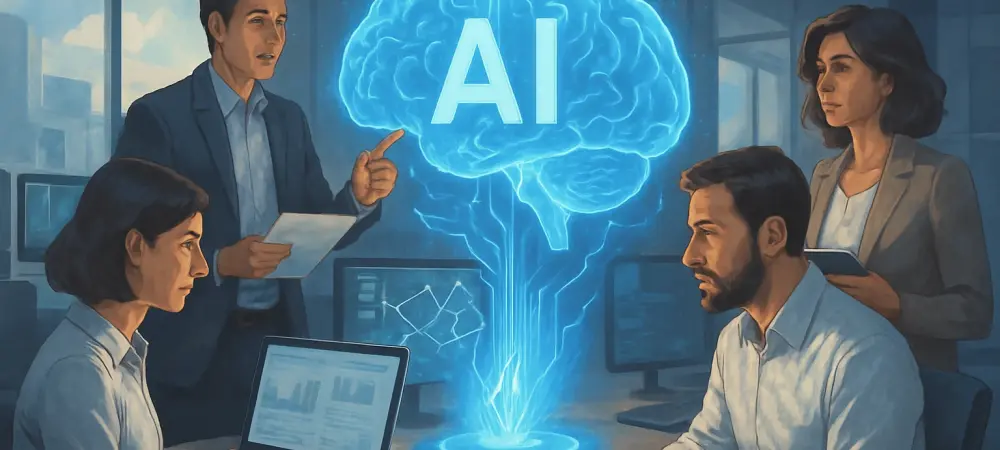
The workplace is undergoing a seismic shift, with artificial intelligence (AI) automating tasks at an unprecedented pace while human skills like creativity and empathy remain irreplaceable. As technology reshapes industries, a staggering projection suggests that by 2026, over 50% of business operations could be driven by AI systems, raising critical questions about how employees and organizations can adapt to a landscape where machines and people must coexist. This roundup gathers insights, opinions, and strategies from various industry leaders, analysts, and workforce experts to explore how AI and human capabilities will redefine workplaces by 2026. The purpose is to provide a comprehensive view of emerging trends, contrasting perspectives, and actionable advice for navigating this transformative era.
Understanding the Forces Transforming Workplaces
AI’s Role: From Support Tool to Workflow Core
Insights from technology analysts highlight AI’s transition from a peripheral tool to a central architect of workplace processes. Many note that automation and predictive analytics are now being integrated into the foundation of operations, such as self-regulating supply chains that adapt to market fluctuations in real time. This shift is seen as a game-changer for efficiency across sectors like manufacturing and logistics.
However, opinions diverge on AI’s broader implications. Some business consultants express optimism, pointing to data showing that AI adoption could boost productivity by 40% in certain industries by 2026. Others caution about the risk of significant job displacement, particularly in administrative and routine roles, urging companies to prioritize reskilling initiatives to mitigate these effects.
A contrasting view from operational strategists emphasizes the need for ethical AI deployment. They argue that without transparent guidelines, automation could erode trust among employees who fear being replaced by machines. This perspective underscores a balanced approach, where technology serves as an enabler rather than a sole decision-maker.
Human Skills: The Unmatched Advantage in Automation
Workforce development experts stress the rising value of human-centric skills as automation handles repetitive tasks. Traits like empathy, strategic thinking, and creative problem-solving are increasingly sought after, especially in fields such as healthcare and education where personal interaction remains paramount. Many point to hiring trends that prioritize these abilities over technical expertise alone.
Differing opinions emerge on how to cultivate these skills. Some HR professionals advocate for company-led training programs that focus on emotional intelligence and adaptability, citing successful case studies from tech firms that have revamped their learning modules. Others believe individuals must take initiative, leveraging online platforms to build competencies that set them apart in a competitive market.
A unique perspective from career coaches highlights the risk of skill gaps in slower-adapting industries. They warn that without proactive investment in human development, sectors like retail and hospitality could face talent shortages by 2026. This insight calls for a collaborative effort between organizations and employees to bridge potential divides.
Hybrid Ecosystems: Merging Physical and Digital Workspaces
Industry observers note the evolution of workplaces into connected ecosystems, driven by hybrid and remote work models. Many predict that by 2026, a majority of global companies will adopt fully integrated digital platforms to support flexible arrangements. Tools for virtual collaboration are becoming indispensable, enabling teams to operate seamlessly across geographies.
Perspectives on productivity in these setups vary widely. Some management consultants argue that hybrid models enhance work-life balance, citing studies showing improved employee satisfaction. They believe this fosters a stronger company culture despite physical distances. Others, however, caution that prolonged remote work might weaken interpersonal bonds, suggesting regular in-person engagements as a countermeasure.
A less common viewpoint from organizational psychologists focuses on mental well-being in digital workspaces. They emphasize designing virtual environments that prioritize personal health, such as scheduled breaks and access to wellness resources. This approach aims to ensure connectivity does not come at the expense of individual needs.
Career Shifts: Adapting to New Realities and Retirement Trends
Analysts tracking employment trends discuss the dual impact of AI on job landscapes, noting declines in clerical roles while opportunities grow in human-touch fields like nursing and technology. Many agree that career planning must now account for rapid changes, with an emphasis on continuous learning to stay relevant through 2026 and beyond.
Views on retirement are evolving as well, with some labor economists introducing the concept of “soft retirement.” They describe a trend where aging workers transition to part-time or advisory roles, supported by gig economy platforms. This shift is seen as beneficial for both individuals seeking flexibility and companies valuing experienced talent.
A distinct opinion from workforce planners addresses organizational strategies for these changes. They suggest tailored mentorship programs to retain older employees’ expertise while integrating younger workers skilled in emerging technologies. This balanced framework aims to harmonize generational dynamics in a rapidly shifting employment scene.
Practical Strategies for Thriving by 2026
Insights from business leaders distill the importance of blending AI adoption with a people-centric approach. For employees, upskilling in areas like critical thinking and digital literacy is recommended as a way to remain indispensable. Many suggest exploring AI tools to enhance personal productivity, such as using automation for time-consuming tasks.
For organizations, the consensus leans toward fostering cultures that value flexibility and empathy. HR specialists advocate for integrating technology in ways that empower rather than alienate staff, such as using data-driven insights to personalize employee experiences. This strategy is viewed as key to attracting and retaining top talent.
A practical tip from tech advisors focuses on actionable steps for implementation. They propose starting with pilot programs to test AI solutions in specific departments, while simultaneously training teams on interpersonal skills. This dual focus ensures a smooth transition into tech-heavy environments without losing the human element.
Reflecting on Collective Wisdom
Looking back, the roundup of diverse opinions revealed a shared understanding that AI and human skills shape a pivotal balance in workplaces approaching 2026. The varied perspectives underscored both the transformative power of technology and the enduring need for human connection. Moving forward, individuals are encouraged to seek out learning opportunities that align with emerging demands, such as online courses in AI applications or workshops on emotional intelligence. Organizations, on the other hand, should consider investing in systems that support hybrid models while prioritizing employee well-being through structured support initiatives. As the workplace continues to evolve, staying informed through industry reports and thought leadership platforms will be essential for maintaining a competitive edge in this dynamic landscape.