

The New Frontier of Corporate Integration and the Digital Workplace
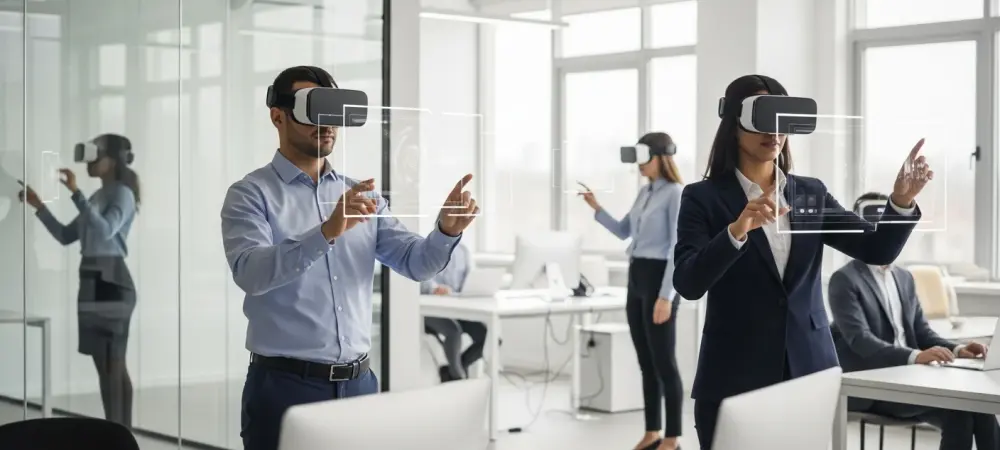
Corporate environments are rapidly discarding the constraints of flat video calls to embrace a spatial reality where new hires step directly into the heart of a digital culture. This transition from traditional 2D remote onboarding to immersive 3D environments represents a fundamental shift in how organizations facilitate the integration of new talent. By moving beyond the screen, companies are creating a sense of presence that was previously impossible in a decentralized work model. The current workplace now relies on experiential learning where the environment itself serves as a teacher, providing a depth of engagement that static presentations cannot replicate.
The immersive onboarding ecosystem is a multifaceted industry that encompasses high-fidelity Virtual Reality, Augmented Reality overlays, and accessible browser-based 3D platforms. Each of these technologies serves a specific purpose in the modern corporate toolkit, allowing for a tiered approach to digital integration. While VR offers the most profound sense of immersion, web-based environments ensure that every employee can participate regardless of their hardware access. This diversity within the ecosystem allows companies to scale their onboarding efforts across vast geographical distances without sacrificing the quality of the newcomer’s experience.
Key market players and innovative startups are currently defining the landscape of the digital twin office, creating pixel-perfect replicas of physical corporate campuses. These virtual spaces allow employees to navigate familiar hallways and meeting rooms, even if they are working from a different continent. This technological push is not merely about aesthetic replication; it is about reinforcing the psychological contract between the worker and the firm. A spatial sense of belonging is critical for modern workforce retention, as it grounds the employee in a shared reality that fosters loyalty and professional identity from day one.
Emerging Trends and the Data-Driven Growth of Virtual Training
Innovative Shifts in Digital Engagement and Social Interaction
Modern onboarding strategies have moved toward gamification and active participation, effectively ending the era of passive video-based learning modules. Interactive simulations now require new hires to complete tasks within the virtual world, turning standard compliance training into an engaging scavenger hunt or a collaborative puzzle. This approach ensures that information is not just heard but practiced in a context that mimics real-world challenges. By transforming the learning process into a series of interactive achievements, organizations are seeing much higher levels of knowledge retention and enthusiasm among their latest recruits.
The power of spatial audio technology has become a cornerstone of organic social bonding within these digital environments. Unlike traditional video conferencing where only one person can speak at a time, spatial audio allows for localized sound, enabling natural conversations to occur in clusters. This technology facilitates the “hallway chats” and spontaneous interactions that are vital for building a cohesive team culture. When an avatar moves closer to a colleague, their voice naturally grows louder, encouraging the type of informal networking that was lost during the initial shift to remote work.
Safe-space roleplaying represents another significant advancement, utilizing AI-driven avatars to help employees practice high-stakes interactions. New hires can now rehearse difficult client negotiations or sensitive management scenarios in a controlled environment without the fear of real-world repercussions. These simulations provide immediate feedback and allow for repetitive practice until the employee feels confident in their skills. This method of training bridges the gap between theoretical knowledge and practical application, ensuring that the workforce is prepared for the complexities of their specific roles.
Market Projections and the Economics of Immersion
Growth indicators in the HR technology sector point to a rapid adoption of VR and 3D training tools starting in 2026 and continuing through the end of the decade. Enterprises are increasingly allocating significant portions of their training budgets to immersive platforms, recognizing them as essential infrastructure rather than optional luxuries. This investment is driven by the need to maintain a competitive edge in a labor market that highly values flexibility and modern digital tools. As the technology becomes more affordable and user-friendly, its presence in the corporate world is expected to become a baseline standard for any global organization.
Forward-looking performance metrics are evolving from simple completion rates to sophisticated behavioral analytics and engagement tracking. In a 3D environment, HR leaders can analyze how long an employee spends interacting with specific training materials or how they navigate social spaces. These data points provide an objective view of a new hire’s integration process, highlighting areas where they might need additional support. By tracking these behavioral markers, companies can refine their onboarding programs in real-time to better meet the needs of their evolving workforce. The ROI of immersive experiences is becoming increasingly clear through reduced turnover and accelerated time-to-productivity. While the initial setup costs for a virtual campus can be high, the long-term savings associated with more efficient training and higher employee satisfaction are substantial. Employees who feel a strong connection to their company culture and receive high-quality training are far less likely to leave within their first year. Consequently, the metaverse is proving to be a powerful economic tool for organizations looking to optimize their human capital and streamline their operational costs.
Overcoming Implementation Barriers and Hardware Logistics
The debate between hardware fidelity and accessibility continues to shape how companies deploy their virtual onboarding strategies. While VR headsets offer the highest level of immersion, the scalability of browser-based 3D worlds provides a practical solution for organizations with limited budgets or widely distributed teams. Finding the right balance often involves a hybrid approach, where high-stakes training is conducted in VR while daily collaboration occurs via standard laptop interfaces. This flexibility ensures that the benefits of the metaverse are accessible to all employees, regardless of their technical proficiency or location.
Logistical hurdles in global distribution remain a significant challenge for companies committed to high-fidelity immersive training. Shipping, maintaining, and updating thousands of headsets for an international workforce requires a robust supply chain and dedicated technical support. Some organizations have addressed this by establishing regional hardware hubs or partnering with specialized logistics firms to manage the lifecycle of their equipment. As the technology matures, these logistical processes are becoming more streamlined, making it easier for smaller firms to adopt hardware-intensive training models.
Combating virtual motion sickness and the phenomenon known as Zoom fatigue is a priority for designers of these digital spaces. Technological advancements in refresh rates and field-of-view optics have significantly reduced the physical discomfort sometimes associated with VR. Furthermore, the design of virtual offices now focuses on ergonomics and visual variety to ensure sustained engagement without overwhelming the user. By creating comfortable and intuitive environments, companies are ensuring that the digital workplace is a place where employees want to spend their time rather than a source of technological strain.
Navigating the Regulatory Landscape and Data Privacy Standards
The collection of biometric data, including eye movement and gestures, has brought privacy compliance to the forefront of the metaverse discussion. Organizations must navigate a complex regulatory landscape to ensure that the data collected during virtual training is used ethically and stored securely. Transparency with employees regarding what is being tracked and for what purpose is essential for maintaining trust. As governments introduce new standards for digital privacy, HR departments must remain vigilant to ensure their immersive platforms comply with both local and international laws.
Security protocols for digital headquarters are being strengthened to meet the highest corporate cybersecurity standards. Protecting intellectual property and sensitive company information within a 3D environment requires advanced encryption and multi-factor authentication. These virtual offices are treated with the same level of security as physical corporate networks, ensuring that proprietary data remains confidential. As the metaverse becomes a central hub for daily operations, the focus on building unbreachable digital boundaries has become a top priority for IT security teams.
The push for universal protocols for interoperability is gaining momentum as companies seek to move seamlessly between different metaverse platforms. Developing industry standards allows for a more integrated experience, where assets and identities can be transferred across various virtual environments. This interoperability is crucial for a future where different departments or partner organizations might use different software solutions. By advocating for open standards, the tech community is working toward a more cohesive and functional digital landscape that benefits all participants.
The Future Trajectory of Talent Management in the Metaverse
Virtual campuses are evolving from simple onboarding tools into permanent digital headquarters that serve as the central hub for daily collaboration. These spaces are no longer just for new hires; they have become the primary location for team meetings, town halls, and creative brainstorming sessions. This shift marks the rise of the permanent digital office, where the physical constraints of geography are entirely removed. As these campuses grow in complexity, they provide a persistent and evolving environment that mirrors the growth and change of the company itself. Mainstream integration is already being validated by success stories from industry leaders like Accenture, Walmart, and Bank of America. These organizations have successfully scaled immersive technology to reach thousands of employees, proving that the metaverse is a viable tool for global business operations. Whether it is training retail associates for high-pressure events or helping consultants build empathy through simulated client interactions, the applications are diverse and effective. These success stories serve as a roadmap for other firms looking to modernize their talent management strategies and improve their employee experience.
Disruptors on the horizon, such as Mixed Reality and haptic feedback, are set to further revolutionize the next generation of employee training. MR allows for a seamless blend of the physical and digital worlds, enabling employees to interact with virtual objects while remaining aware of their actual surroundings. Haptic technology adds the sense of touch to the experience, making manual tasks in a virtual environment feel incredibly realistic. These advancements will continue to push the boundaries of what is possible in a digital workplace, making the training experience even more impactful and lifelike.
Strengthening the Corporate Fabric through Immersive Technology
Spatial memory and deep social connection significantly reduced the early-stage turnover that previously plagued remote organizations. By providing a tangible sense of place, the metaverse allowed employees to build lasting mental maps of their company’s culture and values. The immersion provided by these digital worlds successfully replaced the sterile experience of flat-screen interactions with a vibrant, living community. Organizations that prioritized these immersive connections found themselves with a more engaged and committed workforce that felt integrated into the team from the very beginning.
Practical steps for HR leaders now involve a deliberate transition from mere information delivery to intentional world-building. This requires a shift in mindset where the onboarding process is viewed as a holistic journey rather than a checklist of tasks. Investing in user-friendly platforms and prioritizing the social aspects of digital interaction became the standard for successful talent management. By focusing on the employee’s experience within the digital space, companies were able to create environments that were not only functional but also genuinely inspiring and supportive. The metaverse established itself as a permanent strategic pillar in human resources by placing culture and connection at the forefront of the digital era. It was no longer viewed as a technological gimmick but as an essential medium for building a unified global workforce. As the boundaries between physical and digital offices continued to blur, the organizations that thrived were those that embraced the potential of immersive technology. The verdict remains clear: a culture-first future depends on the ability to connect people across any distance through the power of shared, immersive experiences.