

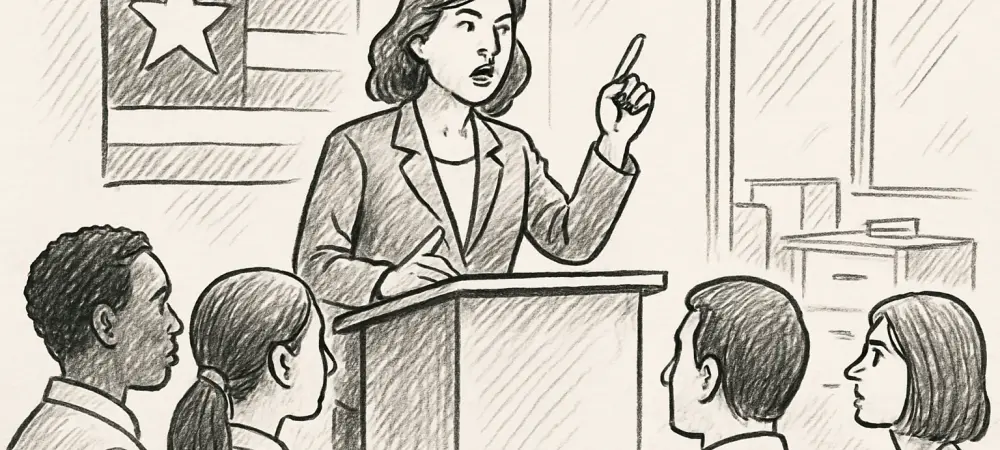
In today’s polarized climate, a single comment about a controversial policy during a virtual team meeting can ignite a firestorm among employees, leaving Human Resources (HR) professionals scrambling to restore calm. Imagine a Slack channel buzzing with heated debates over a recent election result, or an employee’s social media post on a divisive issue causing friction with coworkers. These scenarios are no longer hypothetical but daily challenges for organizations striving to maintain harmony. As political discourse seeps into professional spaces through digital platforms and casual conversations, HR faces an uphill battle to balance free expression with a cohesive, respectful work environment. This growing tension sets the stage for a deeper exploration into managing such sensitive dynamics.
The Rising Tide of Political Speech Challenges for HR
Navigating political speech has emerged as a critical issue for HR departments across industries. With societal divisions sharper than ever, even a passing remark in a break room or a shared meme online can escalate into conflict, disrupting team dynamics. The stakes are high—unresolved tensions risk damaging morale, productivity, and even the company’s public image if disputes spill over into the public eye.
The complexity intensifies with the shift to hybrid work models, where digital communication blurs the line between personal and professional spheres. A 2025 survey by the Society for Human Resource Management revealed that 62% of HR professionals reported an increase in political discussions at work compared to just two years prior. This trend underscores the urgent need for HR to develop strategies that address these challenges head-on, ensuring workplaces remain inclusive amid rising polarization.
Why Political Expression Demands Attention in Professional Spaces
Beyond isolated incidents, the surge in political discourse reflects broader societal shifts that HR cannot overlook. Polarization, amplified by constant news cycles and social media echo chambers, often spills into professional settings, creating friction among diverse workforces. This environment challenges HR to safeguard employee well-being while maintaining operational focus, as unresolved conflicts can sap engagement and hinder collaboration.
Moreover, legal implications loom large. Unchecked political expression risks violating anti-discrimination laws or state-specific protections, potentially leading to costly lawsuits. A poorly handled situation could also tarnish an organization’s reputation if perceived as biased or oppressive. Thus, addressing political speech is not just about quelling arguments—it’s about protecting the very foundation of trust and compliance within a company.
Unpacking the Core Obstacles in Handling Workplace Political Speech
One major hurdle for HR lies in the patchwork of state laws governing political expression. In California, for instance, robust protections under the Labor Code shield employees from retaliation for off-duty political activities, like attending protests, yet on-site expressions using company resources can still be disciplined. Meanwhile, states like Texas offer minimal safeguards, leaving employers with broader discretion but also greater legal ambiguity. Non-compliance in stricter jurisdictions can result in penalties or litigation, demanding that HR tailor policies to local regulations.
Another challenge arises from federal anti-discrimination laws, which remain non-negotiable despite evolving political directives. Recent executive orders, such as those curbing diversity initiatives among federal contractors, add layers of complexity to compliance efforts. HR must navigate these mandates while ensuring that policies do not inadvertently discriminate, a tightrope walk that requires constant vigilance and legal expertise.
Finally, social media stands as a volatile arena for conflict. A public post criticizing a policy might offend a colleague, sparking workplace tension, yet disciplining for off-duty online activity carries legal and reputational risks. With 58% of employees admitting to sharing political views online, according to a 2025 Pew Research study, HR faces the daunting task of setting boundaries that respect privacy while curbing disruption. Each of these obstacles demands a nuanced approach to avoid missteps.
Voices of Expertise on Navigating Political Speech
Insights from legal experts shed light on crafting effective responses to these dilemmas. Benjamin R. Buchwalter and Jacqueline Gerson, employment law specialists from a prominent San Francisco firm, emphasize the necessity of policies grounded in legal clarity. They argue that vague or inconsistent rules can expose companies to lawsuits, particularly when employees perceive bias in enforcement. Their advice centers on aligning guidelines with both state and federal laws to create a defensible framework.
A real-world scenario brings these principles to life. Consider a manager overseeing a team meeting where a discussion on a new government policy turns heated, with accusations of insensitivity flying between staff members. The manager, unprepared for such a clash, struggles to redirect the conversation, risking deeper divisions. This situation highlights the need for training and clear protocols, as experts suggest, to equip leaders with tools to de-escalate tensions without suppressing dialogue.
Such perspectives underscore a critical point: managing political speech is not about silencing employees but about fostering an environment where disagreements don’t derail professionalism. These expert voices, paired with practical examples, provide a grounded understanding of the issue’s real-world impact, reinforcing the importance of preparation over reaction.
Practical Steps for HR to Address Political Expression
To tackle political speech effectively, HR must adopt a proactive stance with clear, actionable strategies. Start by auditing workplace policies to ensure alignment with state-specific laws and federal mandates, revisiting them regularly to adapt to new regulations or executive orders. This prevents legal blind spots and builds a foundation of compliance that can withstand scrutiny.
Training managers to handle sensitive discussions is equally vital. Equip them with skills to defuse politically charged situations without appearing partisan, emphasizing neutrality in enforcement. Additionally, focus disciplinary actions on behavior—such as harassment or disruption—rather than the content of political opinions, minimizing the risk of legal challenges tied to perceived bias.
Lastly, establish firm social media guidelines that encourage respect and caution employees about the visibility of their posts to coworkers. Document every incident and decision with detailed business justifications to defend against claims of unfair treatment, and always weigh the public perception of actions, even if legally sound. These steps create a roadmap for HR to maintain a balanced, respectful workplace while navigating the complexities of political expression.
Reflecting on Solutions Forged Through Challenge
Looking back, the journey of addressing political speech in professional settings revealed a landscape fraught with legal, social, and ethical hurdles. Each heated exchange or policy misstep tested HR’s ability to uphold fairness while preserving workplace unity. The strategies developed—ranging from tailored legal compliance to manager training—served as critical tools in turning potential conflicts into opportunities for dialogue.
Moving forward, HR professionals are encouraged to stay ahead of evolving laws and societal trends by fostering open communication channels with employees. Building a culture of respect, supported by robust documentation and consistent policy enforcement, emerged as the cornerstone of success. As new challenges arise, the commitment to adaptability and empathy promises to guide organizations toward lasting harmony in an ever-divided world.