

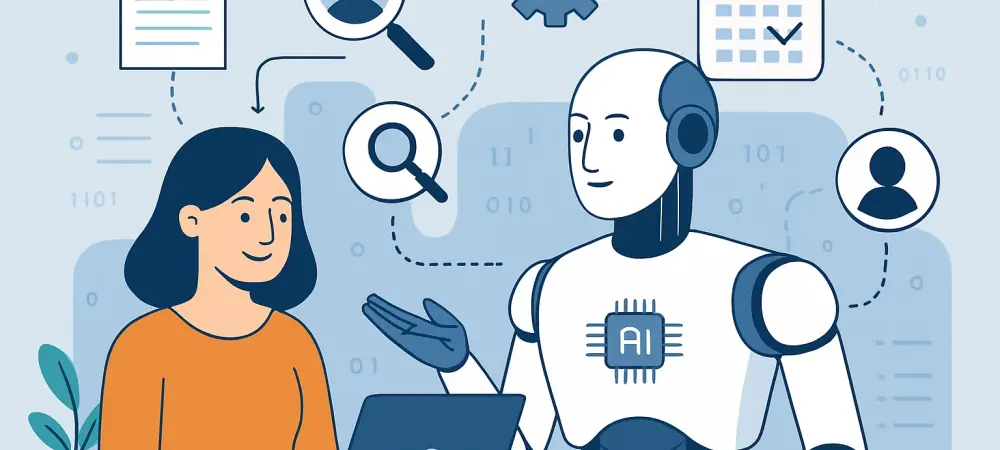
I’m thrilled to sit down with Ling-Yi Tsai, a true trailblazer in the realm of HR technology. With decades of experience under her belt, Ling-Yi has been instrumental in helping organizations transform their HR processes through innovative tools and strategies. Her expertise in HR analytics and technology integration—spanning recruitment, onboarding, and talent management—makes her the perfect person to discuss how AI is reshaping the HR landscape. Today, we’ll explore how technology can alleviate repetitive workloads, the practical impact of AI tools on HR teams, and the balance between automation and human oversight, along with the exciting opportunities that emerge when time is freed up for strategic initiatives.
Can you share some insights into the early challenges your HR team faced with repetitive tasks?
Absolutely. Early on, we noticed that a significant chunk of our team’s time was consumed by repetitive, low-risk tasks. Things like responding to standard policy questions or handling routine inbox queries were eating up hours. While these tasks are crucial for employees and the organization, they weren’t the best use of our skilled HR professionals’ time, especially with the high demand for more strategic input elsewhere. This repetitive workload often left little room for focusing on initiatives that could drive bigger impact or build team skills.
What ultimately led to the decision to bring in an AI assistant for managing the HR advisory inbox?
It really came down to workload volume and the need to meet both business and employee expectations. We were stretched thin, and I could see the team struggling to balance routine queries with more meaningful work. The tipping point was realizing we needed a solution that could handle the repetitive stuff efficiently while freeing up space for higher-value projects. I had been following advancements in AI for HR applications through industry discussions and case studies, and it became clear that an AI assistant could be a game-changer for us.
Could you walk us through the process of how the AI assistant handles incoming queries?
Sure, it’s quite fascinating. Once a query hits the national HR advisory inbox, the AI assistant jumps into action, drafting a response in about 30 seconds. It pulls relevant data from external sources like Fair Work Australia for things like awards or agreements, as well as from our internal policies. After the draft is ready, a team member reviews it, makes any necessary tweaks, and then sends it out. This human-in-the-loop approach ensures the response is accurate and tailored while still leveraging the speed of AI.
What kind of impact has the AI assistant had on the HR team’s daily workload?
The impact has been tremendous. We estimate it’s saving us around 1,950 hours annually, which is a massive relief. For individual team members, like one of our HR business partners, it’s cut down about 40% of the time spent on repetitive queries. This has shifted how we approach our roles—there’s now breathing room to think strategically, tackle bigger projects, and engage more deeply with the business. It’s not just about time saved; it’s about redirecting that time to where it matters most.
With this newfound time, what types of higher-value work has the team been able to prioritize?
It’s been exciting to see the shift. We’ve been able to dive into projects that were previously on the back burner due to time constraints—like developing educational content for employees and leaders. We’re also spending more time coaching and supporting our organizational leaders, which has strengthened our partnerships across the business. These initiatives not only build our team’s skills but also add significant value to the organization as a whole.
How did you ensure that human oversight remained a critical part of the AI-assisted process?
From the start, we knew humans had to stay in the driver’s seat. Having team members review and edit the AI’s drafts was non-negotiable—it ensures quality, context, and a personal touch in every response. We were cautious about the risk of over-reliance on AI, so we designed the system to complement, not replace, human judgment. Our goal was to use AI as a tool to enhance efficiency while still encouraging the team to grow their critical thinking and problem-solving skills.
What’s your forecast for the future of AI integration in HR processes?
I’m incredibly optimistic about where this is headed. I think we’ll see AI becoming even more sophisticated in handling nuanced HR tasks, from personalized employee support to predictive analytics for talent management. But the key will be maintaining that human element—AI should empower HR professionals, not sideline them. Over the next few years, I expect we’ll see a deeper synergy between technology and human expertise, creating workplaces that are more efficient, engaged, and people-centric.