

Running a bustling restaurant or a high-end salon requires more than just excellent customer service; it demands a precise mastery of complex financial logistics behind every paycheck. The Friday afternoon rush is often overshadowed by the looming dread of manual calculations for tips and varied hourly rates. For service industry leaders, modern software provides a vital escape from the administrative quagmire of traditional accounting methods.
Efficient payroll management is the backbone of any successful hospitality venture. Accuracy ensures that staff members remain focused on the customer experience rather than worrying about their compensation. By automating the most tedious aspects of wage distribution, businesses can transform a source of stress into a seamless routine that supports growth.
Moving Beyond the Manual Math of Tips and Hourly Differentials
The service industry operates on a unique financial rhythm where employees often juggle multiple roles, each with a different pay scale. A bartender might earn a lower base wage while receiving tips, whereas a kitchen staff member receives a higher hourly rate without gratuities. Calculating these differentials accurately is essential for maintaining employee trust and ensuring legal compliance.
Managing these variables manually often leads to errors that can disrupt daily operations and employee satisfaction. Implementing a dedicated system allows for the simultaneous tracking of diverse income streams, preventing discrepancies and ensuring that every team member is paid exactly what they earned regardless of their specific shift duties.
The Financial Pressure: Regulatory Compliance in the Service Sector
Small businesses in the hospitality and wellness sectors are increasingly caught between high costs of third-party payroll providers and the risk of significant IRS penalties. As tax regulations evolve, the shift toward affordable, in-house financial control has become a necessity rather than a luxury. Business owners must reclaim their margins while ensuring every Social Security contribution is calculated to the cent.
Maintaining compliance is not just about avoiding fines; it is about building a sustainable business model. The transition to localized accounting helps owners stay ahead of federal requirements without the need for an expensive consultant, fostering a deeper understanding of the company’s financial health and allowing for more informed growth decisions.
Streamlining Operations with Automated Tax Calculations and Document Generation
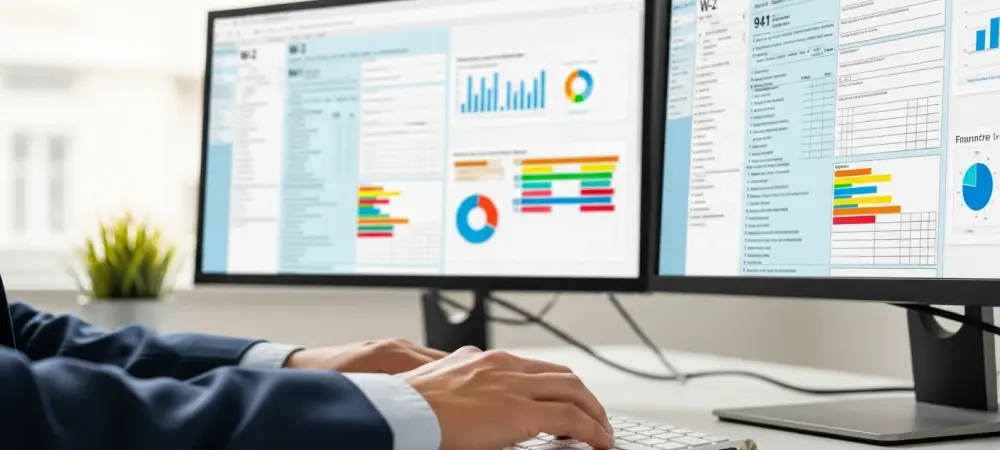
The 2026 edition of ezPaycheck transforms administrative hurdles into automated workflows by handling federal withholding and employer unemployment taxes instantly. Beyond simple wage processing, the system generates essential forms such as the W-2, W-3, 940, and 941. This functionality turns the software into a digital accountant that stays current with the latest IRS requirements.
Furthermore, the ability to generate these documents in-house significantly reduces the time spent on year-end tax preparation. Instead of scrambling to compile data during busy seasons, managers produce accurate records with a few clicks. This automation ensures that the business remains compliant with the Department of Labor throughout the fiscal year.
Evaluating the Economic Impact of the Flat-Rate Subscription Model
Industry data suggests that per-employee fees can quickly bloat the overhead of businesses with high turnover, but this software counters that with a flat rate of $169. This fixed-cost approach allows for unlimited payroll processing across multiple companies and accounts. Independent owners benefit from a predictable budget and the flexibility to scale without facing financial penalties for adding new staff.
In contrast to traditional services that charge per check, a flat-rate model provides long-term financial clarity. This is particularly beneficial for seasonal businesses that may double their staff during peak months. By eliminating variable costs, owners can reinvest those savings into marketing, inventory, or facility improvements.
A Framework: Deploying ezPaycheck 2026 Across Diverse Business Environments
To successfully integrate this software into daily operations, businesses can leverage its cross-platform compatibility for both Windows and Mac environments. Owners can establish custom payroll schedules—ranging from daily to monthly—and utilize flexible check-printing features. These tools cover both employee compensation and general business expenses, creating a unified management hub.
Multi-user environments also benefit from optional network access, which allows for collaboration between administrative staff and owners. This connectivity ensures that payroll data is updated in real-time, reducing the risk of redundant data entry. By centralizing these tasks, the software becomes a cornerstone of the business’s overall operational strategy.
The adoption of such a system provided a clear path toward long-term operational stability. Managers found that prioritizing localized control over financial data eliminated the unpredictability of expensive third-party services. Looking ahead, establishing a robust digital foundation ensured that small businesses remained agile and compliant in an increasingly complex regulatory landscape.