

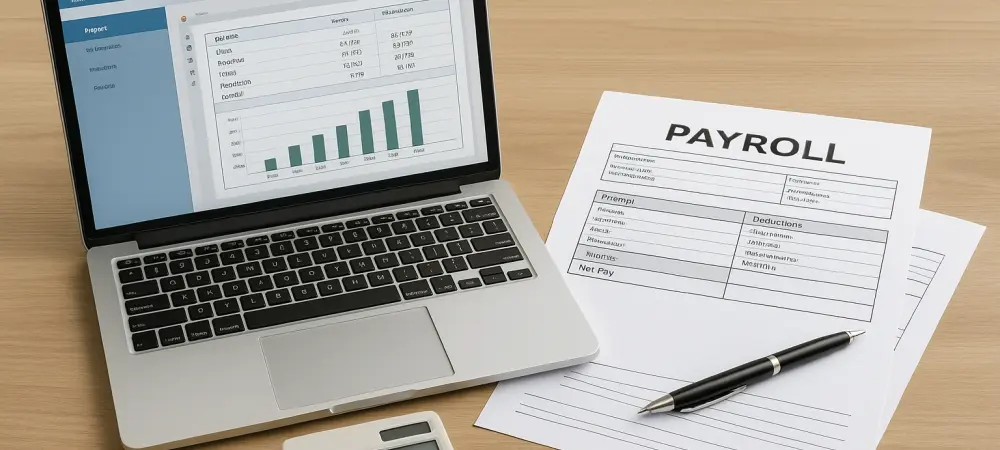
The modern accounting firm often finds its profit margins eroded by the very digital services intended to streamline operations, specifically the recurring per-employee fees that bloat annual expenses. This trend toward subscription-heavy models has forced a re-evaluation of how financial data is managed. Consequently, the shift from third-party outsourcing toward localized, automated solutions represents a strategic move to reclaim fiscal control. By utilizing internal payroll engines, organizations can mitigate the volatility of SaaS pricing and maintain a more consistent overhead structure in 2026.
Introduction to ezPaycheck and the In-House Payroll Movement
In-house payroll management has evolved from a labor-intensive chore into a streamlined, high-efficiency operation. This transition is driven by the realization that localized software can offer the same robust features as expensive external providers without the associated “per-check” tax. EzPaycheck stands at the forefront of this movement, providing a flat-rate alternative that appeals to small businesses and tax professionals who prioritize predictable operational costs.
The software functions on the principle of data sovereignty, allowing users to keep sensitive employee information on local hardware rather than in the cloud. This architecture not only enhances security but also speeds up processing times by removing the latency of web-based interfaces. As more firms seek to reduce their reliance on third-party ecosystems, the focus has shifted toward tools that offer professional-grade compliance within a self-managed environment.
Technical Capabilities and Core Functionalities
Automated Tax Calculation and Multi-State Compliance
The primary tax engine within the software is designed to handle the intricate nuances of federal, Social Security, and Medicare withholdings with high precision. It simplifies the often-daunting task of multi-state compliance by integrating tax tables for all 50 states and the District of Columbia. This automation ensures that as state laws fluctuate, the system remains aligned with current requirements, preventing the costly errors associated with manual data entry.
Modern tax management requires a system that can interpret complex regional tax codes without requiring a specialist for every update. The implementation of a centralized calculation logic allows the software to apply specific state rules automatically based on employee location. This unique implementation serves as a safeguard, ensuring that small business owners remain compliant even when operating across diverse geographic borders.
Versatile Payment Structures and Reporting Tools
Beyond basic salary calculations, the technology accommodates a wide variety of compensation models, including piece rates, mileage reimbursements, and hourly wages. This versatility is essential for industries with non-traditional labor structures, such as agriculture or logistics. By providing a unified interface for diverse pay types, the software eliminates the need for multiple disparate tools to manage a single workforce. The reporting suite is equally comprehensive, capable of generating critical tax forms like 940, 941, W-2, and W-3 directly from the processed data. The ability to print these documents on blank or pre-printed stock offers a level of flexibility that many competitors lack. This functional depth ensures that accounting firms can deliver end-to-end service to their clients, from initial paystub generation to final year-end reporting.
Emerging Trends in Payroll Optimization
A significant trend currently shaping the industry is the shift toward mid-year transitions to leaner software platforms. Businesses are increasingly abandoning the “wait until January” mentality, choosing instead to cut operational fat immediately when they identify bloated overhead costs. This proactive approach to efficiency allows firms to improve their bottom line mid-quarter rather than waiting for a new fiscal cycle to begin.
The debate between flat-rate pricing and per-employee SaaS fees has also intensified. While subscription models often offer lower entry costs, they become prohibitively expensive as a company grows. In contrast, the flat-rate model utilized by ezPaycheck empowers firms to scale their workforce or client list without incurring additional software penalties. This trend is influencing industry behavior, as more professionals seek out software that rewards growth rather than taxing it.
Real-World Applications for Accounting and Small Business
Small accounting firms have successfully deployed this technology to transform payroll from a low-margin necessity into a profitable service line. By managing multiple client accounts under a single installation, these firms can offer competitive pricing to their clients while maintaining healthy internal margins. The built-in PDF paystub generation further enhances professional presentation, allowing small businesses to provide digital documentation that rivals that of much larger corporations.
Unique use cases include non-profit organizations and specialized startups that require granular control over their fiscal reporting. These entities utilize the software’s local database to maintain strict confidentiality while ensuring that every reimbursement and wage adjustment is documented for audit purposes. This real-world reliability has made the technology a staple for those who require a balance between advanced reporting and user-friendly operation.
Challenges and Technical Hurdles in Payroll Automation
Despite the advancements, localized payroll software faces the ongoing challenge of maintaining compliance with rapidly evolving legislative changes. The transition hurdles for firms moving away from legacy systems can also be significant, particularly when migrating decades of historical data. To mitigate these issues, development efforts must focus on creating intuitive import tools that reduce the friction of adoption for new users.
Technical hurdles also extend to platform compatibility, as the need for seamless operation across both Windows and macOS remains a high priority for modern offices. While multi-user network support has improved, ensuring that data remains synchronized across various workstations without compromising security is a constant area of refinement. These limitations highlight the importance of choosing a software partner committed to frequent, meaningful updates.
The Future of Localized Payroll Software
Looking ahead toward 2027 and 2028, the trajectory for this technology points toward increased integration with broader financial ecosystems and banking APIs. Hybrid-cloud options may emerge, offering the security of local storage with the convenience of remote accessibility for off-site managers. Such developments will likely further level the playing field, allowing small accounting firms to compete more effectively with national payroll giants. Automation will continue to deepen, potentially incorporating more sophisticated data validation tools to preemptively catch filing discrepancies. As the digital landscape becomes more complex, the value of a centralized, objective payroll solution will only grow. This evolution will likely focus on reducing the time spent on administrative tasks, allowing financial specialists to focus more on strategic advisory roles rather than data entry.
Conclusion: Assessment of ezPaycheck’s Impact
The review of ezPaycheck demonstrated that the software provided a necessary equilibrium between sophisticated automation and cost-effectiveness. It was observed that the platform successfully addressed the most common pain points for small businesses, specifically the high cost of per-employee fees and the complexity of multi-state compliance. The technology functioned as a stabilizing force for firms that sought to modernize their workflows without surrendering control to third-party providers. The findings suggested that organizations should have performed a comprehensive audit of their current payroll expenses before deciding on a migration strategy. Transitioning to a localized system was a practical step for those aiming to increase profit margins through 2026. Ultimately, the adoption of such tools indicated a shift toward more autonomous financial management, where firms leveraged technology to reclaim time and resources. Decisions made during the evaluation process highlighted the importance of balancing technical functionality with long-term fiscal sustainability.