

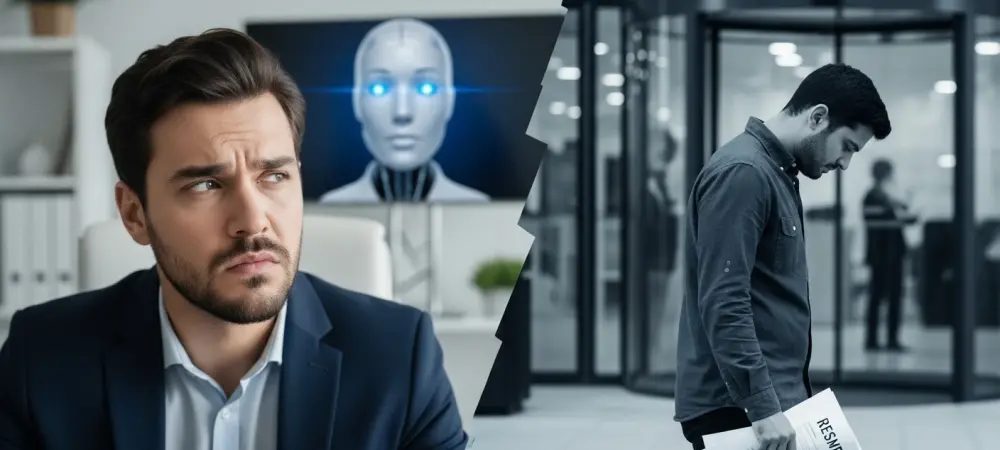
Standing at the precipice of a professional breakthrough, a talented applicant stares into the unblinking eye of a laptop camera, only to realize that no human will ever hear their voice in real time. This sterile encounter marks a pivotal moment where technological efficiency meets a wall of human resistance. Nearly forty percent of job seekers have walked away from an interview process the moment they realized a human was not on the other side of the screen. While companies rush to automate hiring to manage high application volumes, they are inadvertently filtering out the very talent they aim to attract.
This friction raises a critical question for the modern workforce: is the efficiency of an algorithm worth the loss of the human connection that defines a workplace culture? Recent data suggests that an additional twelve percent of candidates have considered dropping out for the same reason. When the digital gatekeeper becomes the primary point of contact, the applicant experience shifts from a conversation to a performance. This shift is driving away top-tier professionals who prioritize mutual respect and cultural fit over the convenience of a software-driven screening process.
The Vanishing Applicant and the Rise of the Digital Gatekeeper
The rapid adoption of artificial intelligence in recruitment has outpaced the development of social and ethical norms within the hiring industry. With two-thirds of candidates already encountering AI-led platforms, the technology is no longer a futuristic concept but a standard gatekeeper for entry-level and executive positions alike. However, this shift has created a significant rift between employer efficiency and candidate experience. As businesses prioritize the speed of data processing, they often overlook the growing frustration of applicants who feel reduced to mere data points.
This mechanized approach leads to a breakdown in the traditional employer-employee trust even before a hire is made. High-volume hiring may be easier with an automated initial pass, but the long-term cost is a diluted talent pool. Many qualified individuals view the lack of human interaction as a red flag regarding the company’s internal culture. When the first interaction with a brand is completely devoid of empathy, potential hires often assume the workplace environment will be equally cold and detached.
Navigating the Friction of the Modern Recruitment Landscape
The primary driver behind the high attrition rate is a profound lack of human interaction, particularly in one-way, pre-recorded video formats. Candidates report a sense of evaluation fatigue when forced to perform for an opaque algorithm rather than engaging in a two-way dialogue. Furthermore, transparency remains a major hurdle for many organizations. Seventy percent of applicants feel that employers are hiding the extent of AI’s role in their evaluation, leading to a sense of distrust.
This perceived lack of honesty regarding what is being measured—whether it be facial expressions, specific keywords, or vocal tone—creates a hostile environment. Candidates are left wondering if they are being judged on their actual skills or on their ability to mimic the traits that an algorithm has been trained to prefer. This psychological pressure drives top-tier talent to seek opportunities elsewhere, favoring organizations that still value the nuances of a live conversation.
Why Candidates are Opting Out of the Automated Interview Loop
Recruitment is currently witnessing a technological arms race where both sides are using automation to gain a competitive advantage. Recent research indicates that roughly twenty-two percent of candidates now use AI tools for real-time assistance to help formulate responses during live assessments. This creates a complex dynamic where neither party feels the process is entirely authentic. Recruiters are using software to judge humans, while humans are using software to mimic the “perfect” candidate profile that the software seeks.
HR experts note that only a small fraction of the workforce, approximately nineteen percent, wants to see AI disappear from the process entirely. Rather, the consensus is a demand for human-in-the-loop oversight to ensure that software complements, rather than replaces, human judgment and empathy. The goal is not to eliminate automation but to ensure it does not become a barrier to genuine connection. When both sides rely solely on scripts and algorithms, the fundamental purpose of an interview—discovering a mutual fit—is completely lost.
The AI Arms Race: How Job Seekers are Leveling the Playing Field
To curb the high dropout rate and maintain a strong employer brand, successful companies realized they had to implement clear ethical boundaries and communication strategies. Organizations began by providing explicit disclosures about when and how AI was used, ensuring candidates understood the criteria for success. This move toward transparency helped rebuild the trust that had been eroded by years of opaque practices. Candidates responded positively when they knew exactly what was being analyzed and why. Prioritizing a hybrid approach—where AI handled administrative scheduling or initial screening but humans led the core interviews—preserved the necessary personal touch. Companies that established ground rules for candidate AI usage helped create a transparent, level playing field that rewarded genuine skill over the ability to manipulate an algorithm. By placing humanity back at the center of the recruitment cycle, these organizations managed to secure the best talent while leveraging the benefits of modern technology.
Restoring Trust through Human-Centric Automation
Leading firms eventually moved toward a model that integrated feedback loops into their automated systems. They surveyed applicants at every stage to ensure the technology remained a help rather than a hindrance. By adjusting the sensitivity of screening tools and reintroducing human oversight, recruiters were able to salvage relationships with high-potential candidates who previously felt ignored. This transition ensured that the digital gatekeeper served as a bridge instead of a wall. Ultimately, the shift back toward human-centric recruitment strategies proved that technology works best when it supports human decision-making. Employers who balanced innovation with empathy saw a marked decrease in applicant abandonment. They successfully demonstrated that while an algorithm can analyze a resume, it takes a human to recognize a future leader. This renewed focus on the candidate experience restored the integrity of the hiring process for a new era of work.