

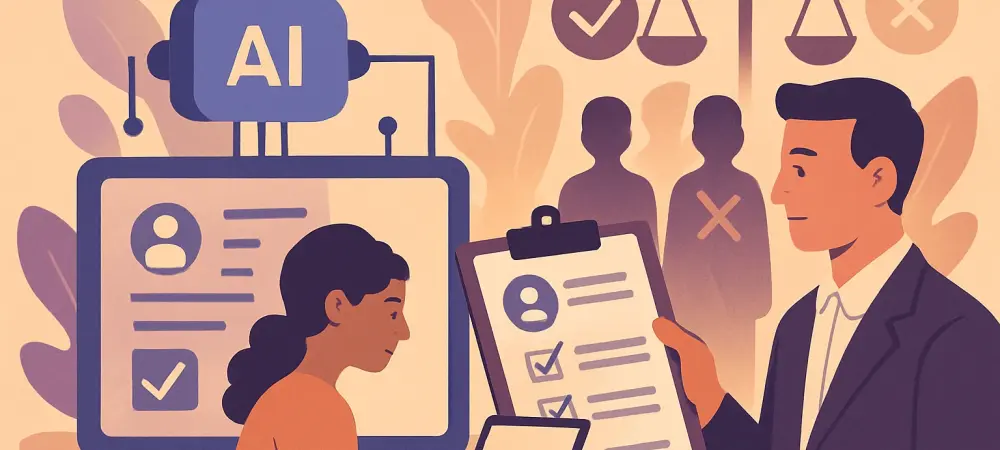
In the rapidly evolving landscape of human resources, artificial intelligence (AI) has emerged as a transformative force, particularly in the hiring process, promising to redefine how talent is identified and recruited. With tools like applicant tracking systems (ATS) and chatbots, companies can streamline operations, cut costs, and handle vast volumes of applications with unprecedented speed. However, this technological leap forward is not without its shadows. As AI reshapes recruitment, it also brings to light profound ethical concerns, from ingrained biases in algorithms to the erosion of human connection in hiring decisions. The allure of efficiency often clashes with the need for fairness, leaving both employers and job seekers grappling with a complex reality. This exploration delves into the dual nature of AI in HR, examining how it boosts productivity while posing significant challenges that demand careful consideration and action. The balance between automation and equity remains a critical puzzle for the industry to solve.
Revolutionizing Recruitment with AI Efficiency
The integration of AI into HR processes has redefined efficiency in recruitment, offering tools that drastically reduce the time and effort required for talent acquisition. Applicant tracking systems, powered by sophisticated machine learning algorithms, can analyze thousands of résumés in mere seconds, pinpointing candidates who match predefined criteria with remarkable precision. This capability allows HR professionals to step away from repetitive, manual tasks and instead dedicate their energy to strategic initiatives such as fostering employee engagement or refining organizational culture. Industry insights suggest that AI could even evolve into a virtual collaborator, managing routine functions like payroll processing and onboarding with seamless accuracy. The potential for such automation to transform HR departments into more dynamic, forward-thinking units is immense, positioning technology as a cornerstone of modern workforce management. Yet, the question remains whether this efficiency truly serves the broader goals of talent identification.
Despite these advancements, the pursuit of efficiency through AI often leaves a significant gap in the candidate experience. Job seekers frequently encounter frustration as their applications seem to vanish into an algorithmic abyss, rejected by systems that prioritize specific keywords or formatting over genuine potential. Before a human recruiter even reviews their credentials, many candidates are filtered out, trapped in what some describe as a digital purgatory. This automated rejection process not only undermines confidence in the fairness of hiring practices but also raises doubts about whether AI can accurately assess the nuanced qualities that make a candidate exceptional. The tension between speed and depth in evaluation becomes evident, as the rush to optimize workflows risks reducing individuals to mere data points. Addressing this disconnect is crucial if AI is to fulfill its promise without alienating the very talent it seeks to attract.
Uncovering Bias in AI Hiring Mechanisms
A critical challenge in the adoption of AI for recruitment lies in its propensity to perpetuate existing biases, often embedded within the data used to train these systems. Since many algorithms rely on historical hiring patterns, they can unintentionally replicate past inequalities, favoring certain demographics while marginalizing others. This issue is particularly pronounced for entry-level candidates, who may be unfairly excluded due to rigid criteria like résumé structure or lack of specific experience that the system deems essential. Such biases not only hinder diversity in the workplace but also limit opportunities for younger workers or those from underrepresented backgrounds. The risk of creating a hiring landscape that mirrors outdated prejudices is real, and without intervention, AI could entrench systemic disparities rather than dismantle them. Tackling this requires a deeper examination of how data shapes algorithmic outcomes.
Compounding the problem of bias is the stark lack of transparency in AI-driven hiring tools, which often leaves candidates in the dark about why they were passed over. Many experience a form of digital “ghosting,” receiving no feedback or explanation after submitting applications, which fosters a sense of disconnection and unfairness. This opacity erodes trust in the recruitment process, as job seekers struggle to understand how decisions are made or how they might improve their chances in future attempts. The impersonal nature of these interactions starkly contrasts with traditional hiring, where human recruiters could offer context or encouragement. As a result, the job market begins to feel like a cold, unapproachable system, where algorithms hold disproportionate power over personal aspirations. Bridging this gap between technology and transparency is essential to restore faith in automated hiring practices.
The Human Toll of AI in Recruitment
Beyond technical flaws, the integration of AI in HR imposes a notable human cost, stirring widespread concern about its impact on employment opportunities. Surveys indicate a growing unease among Americans regarding potential job losses driven by automation, particularly in administrative and entry-level positions where AI tools are increasingly deployed. This anxiety is not unfounded, as younger entrepreneurs and startups often lean heavily on AI to cut costs, automating tasks that once provided stepping stones for new workers. The ripple effect is a shrinking pool of opportunities for those just entering the workforce, creating barriers to career development at a critical stage. The broader implications for economic mobility and workplace diversity are troubling, as automation risks sidelining entire segments of the labor market before they even gain a foothold.
Additionally, the use of AI chatbots for initial candidate screenings introduces a layer of detachment that can undermine the quality of hires. These systems, while efficient, often lack the empathy and contextual understanding necessary to evaluate softer aspects like cultural fit or personal motivation. As a result, candidates who excel on paper may be selected despite misalignment with a company’s values or team dynamics, leading to poor long-term outcomes for both employer and employee. This over-reliance on measurable metrics at the expense of human judgment highlights a fundamental limitation of current AI applications in HR. The absence of a personal touch in these early interactions can leave candidates feeling undervalued, further widening the emotional gap between job seekers and organizations. Striking a balance between automated precision and human insight remains a pressing need.
Diverging Views on AI’s HR Impact
Perspectives on AI’s role in HR span a wide spectrum, reflecting both optimism and apprehension about its long-term effects on the field. On one hand, proponents argue that AI empowers HR teams by handling mundane, time-consuming tasks, thereby enabling professionals to focus on meaningful work like talent development and organizational strategy. This view positions technology as a supportive tool that enhances rather than replaces human effort, potentially revolutionizing how HR contributes to business success. However, critics caution that AI could threaten fairness and job security, particularly if its adoption outpaces the ability to address inherent flaws. The debate underscores a broader tension in the industry about whether AI serves as a liberator of human potential or a disruptor of equitable practices. Navigating these contrasting opinions is vital to shaping a balanced approach to technology in recruitment.
The risks of hasty AI implementation further complicate this discourse, as poorly managed rollouts can expose organizations to significant vulnerabilities. Cybersecurity threats loom large when sensitive candidate data is handled by inadequately secured systems, while skill gaps among HR staff can hinder effective use of complex tools. These challenges highlight the ethical dilemmas faced by professionals tasked with integrating AI: how can speed and innovation be reconciled with the imperative for equity and accountability? Rushed adoption often prioritizes short-term gains over sustainable progress, leaving companies ill-prepared to handle the fallout of flawed algorithms or alienated workforces. A more deliberate, thoughtful strategy is needed to ensure that AI enhances HR without compromising the principles of fairness and human connection at the core of hiring.
Building Ethical Frameworks for AI in HR
To mitigate the challenges posed by AI in recruitment, a proactive approach centered on ethical integration is essential. Enhancing AI literacy among HR staff stands as a foundational step, equipping professionals with the knowledge to understand and oversee automated systems effectively. Coupled with this, regular audits of AI models to detect and correct biases can help ensure that algorithms do not perpetuate harmful patterns. Establishing regulatory frameworks that mandate human oversight in critical hiring decisions further safeguards against over-reliance on technology. These measures collectively aim to create a system where AI serves as a tool for efficiency without undermining fairness or transparency. The path forward lies in fostering a culture of accountability, where technology is harnessed to complement rather than dictate human judgment in the intricate process of talent selection.
A promising solution to many of these issues is the adoption of a hybrid model that blends AI’s analytical precision with human intuition. Such an approach allows for the benefits of automation—speed and scalability—while preserving the nuanced understanding that only a person can bring to assessing potential and fit. This balance could prevent scenarios where candidates are unfairly filtered out or where hires fail to align with organizational ethos due to an overemphasis on data. By prioritizing both technological innovation and ethical responsibility, HR departments can navigate the complexities of AI integration with greater confidence. The emphasis must remain on ensuring that automation supports rather than supplants the human element, preserving the empathy and insight that define meaningful recruitment. Looking back, the journey of AI in HR reflects a struggle to harmonize efficiency with equity, a challenge that demands innovative solutions and a steadfast commitment to fairness.