

Today, we’re thrilled to sit down with Ling-Yi Tsai, a renowned HRTech expert with decades of experience in transforming organizations through technology. With a deep focus on HR analytics tools and the seamless integration of tech in recruitment, onboarding, and talent management, Ling-Yi has guided countless companies through the complexities of change. In this conversation, we’ll explore her insights on the evolving role of AI in leadership, the importance of fostering a dynamic and innovative company culture, the integration of human creativity with AI precision, and the power of trust and servant leadership in driving organizational success.
How do you see AI reshaping leadership in the HR space over the next few years?
I believe AI is going to fundamentally change how leaders in HR operate by automating repetitive tasks like resume screening and employee data analysis, allowing us to focus on strategic decision-making. Beyond that, AI can provide predictive insights—think turnover risks or skill gaps—which help leaders proactively address challenges. However, this shift means leaders will need to sharpen their emotional intelligence and adaptability to balance tech with the human side of HR. The ability to interpret AI-driven data with empathy will be key.
Can you share an example of how AI has already made a significant impact in an organization you’ve worked with?
Absolutely. In one organization, we implemented an AI-powered recruitment tool that analyzed candidate fit based on skills and cultural alignment. It cut hiring time by nearly 30% and improved retention rates because the matches were so much stronger. Initially, there was pushback from the team who felt it undermined their judgment, but through training and transparency about how the tool worked, we turned skepticism into trust. Day-to-day, it freed up recruiters to build relationships with candidates rather than sift through applications.
How do you encourage frontline teams to take ownership of their work, especially with AI tools in play?
I focus on creating an environment where frontline staff feel their input matters. For instance, I’ve worked with teams to co-design how AI tools are used in their workflows, ensuring they’re solving real pain points. AI can empower them by providing data to experiment with new ideas—like identifying onboarding bottlenecks. Ownership comes when they see the direct impact of their contributions. It’s about giving them the reins while ensuring they have the support and training to succeed.
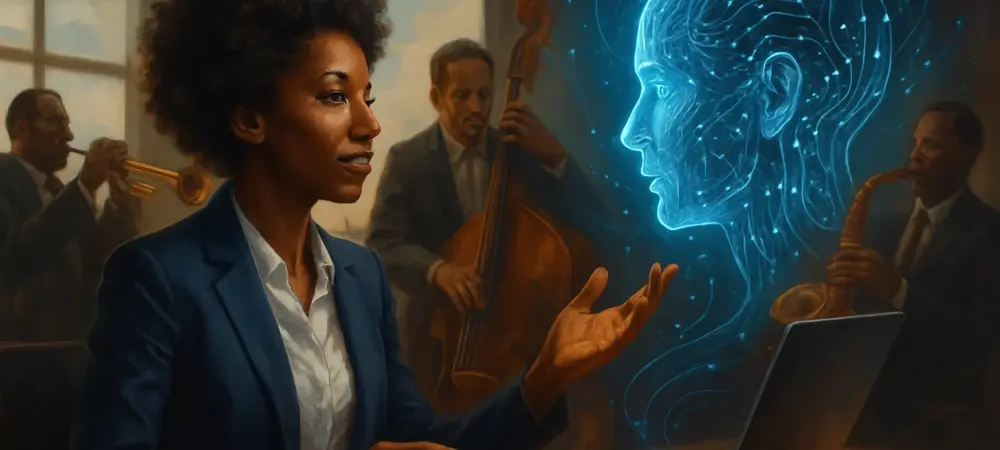
The concept of AI-driven teams operating like jazz music—without a clear conductor but with a playful, creative spirit—has been floated around. Does this resonate with your view of team dynamics?
It does, to a large extent. I’ve seen the most innovative HR teams thrive when there’s a shared structure—like clear goals or metrics—but within that, individuals have the freedom to improvise. To avoid chaos, I encourage regular check-ins and open communication so those spontaneous “riffs” align with the bigger picture. One team I worked with came up with a gamified onboarding process using AI insights completely on their own—it boosted engagement scores and was something no top-down directive could’ve created.
How are you preparing leaders to blend human creativity with AI precision in their decision-making?
I start by helping leaders understand AI as a partner, not a replacement. Through workshops, we explore how AI can handle data-heavy tasks while they focus on the nuanced, human elements like mentoring or conflict resolution. In one case, a leader used AI to identify team performance trends and then paired that with personal conversations to address morale issues— the combo was powerful. To tackle resistance, I emphasize small wins, showing tangible results from AI use, and foster open dialogue about fears or misconceptions.
Creating a safe space for teams to take risks is often highlighted as crucial. How do you build that kind of environment?
It’s all about normalizing failure as part of growth. I encourage leaders to set clear boundaries—think of them as guardrails—so risks are calculated. I’ve seen breakthroughs happen when someone’s allowed to try a new approach, even if it flops. For example, a manager once piloted a new feedback tool that didn’t work out, but the lessons learned led to a much better system later. To protect the business, we always have contingency plans and ensure failures don’t derail critical operations.
What’s your forecast for the role of AI in shaping organizational culture over the next decade?
I think AI will be a cornerstone in building more adaptive and inclusive cultures. It can help identify biases in processes like hiring or promotions and offer insights into employee sentiment at scale, enabling leaders to act swiftly. But the challenge will be ensuring AI doesn’t make things feel mechanical or impersonal. I foresee a future where the best cultures use AI to enhance human connection—think personalized learning paths or wellness programs—while leaders double down on empathy and trust to keep the heart of the organization beating strong.