

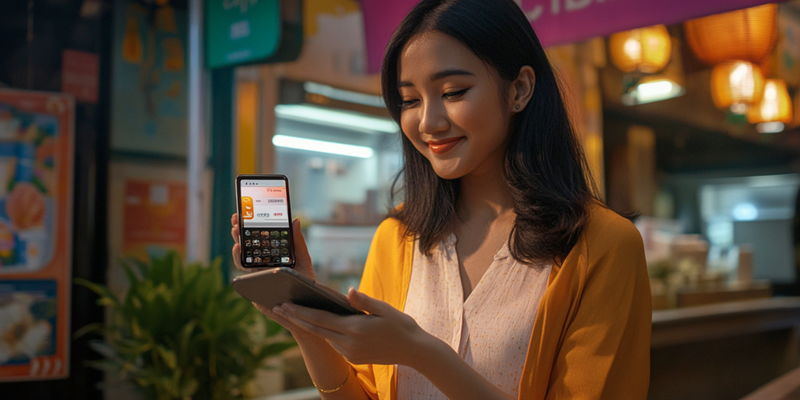
The partnership between Walmart’s fintech subsidiary, PhonePe, and cross-border payments provider Liquid Group aims to revolutionize UPI QR payment services in Singapore, marking a significant stride in the world of financial technology. As the global payments landscape evolves, collaborations like this highlight the increasing importance of seamless, secure cross-border transactions. The collaboration benefits from Liquid Group’s extensive merchant network, enabling PhonePe users, especially Indian travelers, to make payments using UPI conveniently while visiting Singapore. This initiative incorporates UPI QR codes at diverse, tourist-centric locations, offering a modernized and simplified approach to payments.
PhonePe users traveling to Singapore can now utilize UPI QR codes to make secure payments at various points of interest, including Changi Airport, duty-free shops, and popular dining spots like Hard Rock Café, along with sightseeing and transportation services. By integrating UPI into Liquid Group’s platform, this combined effort aims to enhance the travel experience for Indian tourists. The implementation of UPI payments at such a broad range of merchant locations underscores the commitment of both companies to facilitating user-friendly financial transactions, ensuring that Indian visitors can make purchases in Indian rupees.
Enhancing the Travel Experience
Ritesh Pai, CEO of International Payments at PhonePe, expressed excitement about extending the convenience of UPI payments to Indian tourists in Singapore, underscoring that this move will greatly enhance their overall experience. The ease of making payments without worrying about currency exchanges or dealing with foreign transaction fees is a significant advantage for travelers. In a comment aligning well with Pai’s enthusiasm, Alvin Seck, Chief Commercial Officer of Liquid Group, stressed their commitment to creating seamless cross-border payment solutions. Seck emphasized the importance of integrating UPI into Liquid Group’s extensive and varied network of merchants across Singapore.
This partnership not only highlights a technological advancement but also sets a new standard in customer experience by removing potential hurdles associated with international travel and payments. The introduction of UPI QR codes at prominent tourist locations aims to make transactions as frictionless as possible for Indian visitors. This groundbreaking integration between PhonePe and Liquid Group is seen as a strategic move to cater to the growing demands for hassle-free, cross-border financial transactions, eliminating the complexities typically associated with international payments.
Expanding Payment Solutions
Further bolstering the benefits of this collaboration is the PayNow-UPI real-time remittance corridor. This feature enables PhonePe users to receive international remittances without the traditional requirement of providing bank account numbers and IFSC codes, thereby enhancing both convenience and security. The real-time nature of these transactions ensures that funds are transferred quickly and efficiently, adding another layer of benefit for users.
This easier and more secure method of receiving international remittances is particularly beneficial for those who regularly transact across borders. The corridor’s seamless functionality aligns perfectly with the broader objectives of PhonePe and Liquid Group: to simplify complex international financial transactions. By integrating their services, both companies are not only catering to the current market needs but also setting the stage for future innovations in cross-border payments.
Integrating Convenience and Security
Walmart’s fintech subsidiary, PhonePe, has partnered with cross-border payments provider Liquid Group to revolutionize UPI QR payment services in Singapore, marking a significant advancement in financial technology. As the global payments landscape shifts, such collaborations underscore the growing need for seamless, secure cross-border transactions. Tapping into Liquid Group’s vast merchant network, PhonePe, particularly for Indian travelers, simplifies payments using UPI while visiting Singapore. This initiative embeds UPI QR codes at various tourist-centric spots, offering a modern and streamlined payment method.
Travelers using PhonePe in Singapore can now pay via UPI QR codes at locations such as Changi Airport, duty-free shops, and popular eateries like Hard Rock Café, including sightseeing and transportation services. By embedding UPI into Liquid Group’s platform, this joint effort aims to enhance the travel experience for Indian tourists. Implementing UPI payments across a wide range of merchants underscores both companies’ commitment to user-friendly financial transactions, ensuring Indian visitors can make purchases conveniently in Indian rupees, thus enriching their overall travel experience.