

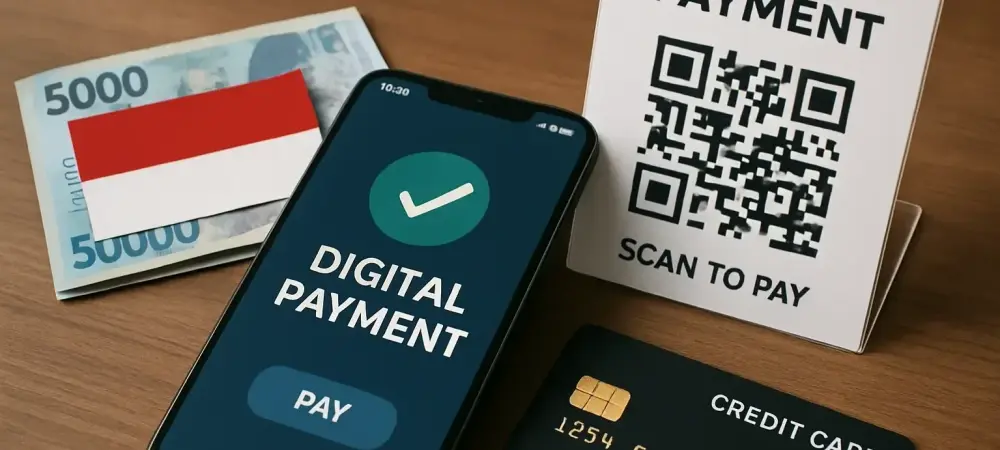
Across the thousands of islands that form the Indonesian archipelago, a quiet revolution is taking place not in the streets but in the very way money changes hands, reshaping the nation’s economic fabric from bustling city markets to remote village storefronts. This profound shift is powered by a rapid and widespread embrace of digital payments, a trend that has moved beyond early adoption into the mainstream of daily commercial life. The transition is creating a dynamic, hybrid economy where digital convenience and traditional commerce are increasingly intertwined.
The Archipelago Goes Digital a Market Snapshot
Indonesia’s digital payment ecosystem has achieved a remarkable scale, becoming a cornerstone of the national economy. Through November of this year, the total volume of digital transactions surged by 41.12%, reaching 4.66 billion individual payments. This figure underscores a deep and growing reliance on cashless methods for everything from daily groceries to significant business transactions, reflecting a fundamental change in consumer and commercial behavior across the country.
The market is led by a mix of established and emerging platforms. Mobile banking remains the workhorse of the system, accounting for the highest volume with 2.79 billion transactions. However, the landscape is diverse, with e-wallets carving out significant market share and driving innovation. The technological foundation for this growth is robust, centered on the national standard Quick Response Code Indonesian Standard (QRIS), which has unified a once-fragmented market. This interoperability, combined with expanding mobile infrastructure and internet penetration, has created the perfect conditions for a digital payment explosion that directly impacts household financial management and fuels the growth of micro, small, and medium-sized enterprises (MSMEs).
Unpacking the Momentum Growth Drivers and Market Projections
The QRIS Phenomenon and Shifting Consumer Habits
At the heart of the current momentum is the meteoric rise of QRIS. This segment has become the fastest-growing component of the digital payment ecosystem, with transaction volumes soaring by an astonishing 143.64% to reach 1.68 billion. This explosive adoption highlights a significant shift in consumer preference toward fast, contactless, and universally accepted payment methods. It demonstrates how a single, interoperable standard can dramatically lower barriers to entry for both merchants and consumers.
While QRIS captures the headlines with its rapid expansion, mobile banking provides a stable, high-volume foundation for the entire digital transaction network. Its steady presence ensures that the core of digital finance remains reliable and accessible. Crucially, this widespread adoption is built on a foundation of increasing digital trust. Enhanced security protocols, coupled with growing user familiarity and confidence in these platforms, have been pivotal in convincing millions of Indonesians to transition from cash to digital alternatives for their daily financial needs.
By the Numbers Performance Metrics and Future Forecasts
The robust performance seen throughout 2025 provides a clear picture of a sector in high gear. The 41.12% year-on-year growth in transaction volume is a testament to the broad-based adoption across various economic segments. This data confirms that digital payments are no longer a niche convenience but an integral part of Indonesia’s economic engine. Looking ahead, Bank Indonesia projects this strong trajectory will continue, forecasting a further 29.7% expansion in 2026. This optimistic outlook is grounded in the sustained momentum of QRIS adoption and ongoing technological innovation. A comparative analysis reveals a striking contrast: while QRIS payments grew by over 143%, traditional mobile and internet banking saw more modest growth of around 16%. This divergence indicates that while the base is solid, the most dynamic energy and future potential lie in accessible, code-based payment solutions.
Navigating the Challenges in a Hybrid Economy
Despite the impressive digital surge, Indonesia remains a hybrid economy where cash is far from obsolete. In a seeming paradox, the demand for physical currency continues to grow, with money in circulation increasing by 13.09%. This reality underscores that the transition is not a simple replacement of cash but rather an expansion of financial tools, with digital and physical currency coexisting and serving different needs within the economy.
Further challenges persist in bridging the nation’s digital divide. While urban centers boast advanced infrastructure and high digital literacy, significant gaps remain in rural and remote areas. Overcoming these disparities in internet access and user education is critical for ensuring that the benefits of the digital economy are distributed equitably across the vast archipelago. Additionally, market fragmentation among various service providers presents an ongoing challenge to achieving a completely seamless and interoperable user experience, a goal that initiatives like QRIS are designed to address.
The Guiding Hand Regulation in a Fast Paced Sector
Bank Indonesia has played a strategic and decisive role in steering the digital payment sector’s rapid development. Rather than simply reacting to market trends, the central bank has actively shaped the industry’s direction by championing standards like QRIS and creating a clear regulatory roadmap. This proactive approach has been instrumental in fostering an environment conducive to innovation while maintaining systemic stability.
A key focus of this regulatory oversight has been the strengthening of the industry’s operational framework. By mandating robust security protocols and establishing clear guidelines for operators, Bank Indonesia has helped build the public trust necessary for mass adoption. This emphasis on creating a secure and reliable ecosystem ensures that as the volume and value of digital transactions grow, the underlying infrastructure remains resilient against threats, protecting both consumers and the broader financial system.
Charting the Future What’s Next for Indonesian Digital Payments
The journey toward a fully cashless society in Indonesia is well underway, but the timeline remains a subject of realistic evaluation. The persistent demand for physical currency suggests that a hybrid model will likely define the economy for the foreseeable future. The long-term potential, however, is undeniable, as digital systems continue to offer greater efficiency, transparency, and convenience for millions of users.
Innovation continues to be a driving force, with potential disruptors on the horizon. The integration of artificial intelligence and machine learning could lead to more personalized financial services, enhanced fraud detection, and new credit scoring models. As technology evolves, so too will the payment landscape, potentially introducing novel methods that further streamline transactions. This ongoing innovation is crucial for deepening financial inclusion, as digital platforms provide a powerful tool for reaching unbanked and underbanked populations, offering them their first formal access to the financial system.
Final Takeaway Sustaining the Digital Transformation
This analysis revealed that Indonesia’s digital payment boom was not a singular event but the result of a powerful convergence of factors. The strategic implementation of the QRIS standard, proactive regulation by Bank Indonesia, and a significant shift in consumer trust were identified as the core drivers that propelled the sector’s remarkable growth. The data from 2025 confirmed this momentum, highlighting both the explosive rise of new technologies and the steady reliability of established platforms.
The outlook for continued expansion remained strong, though the investigation also noted persistent challenges. The coexistence of growing digital and cash economies, alongside the digital divide between urban and rural areas, were recognized as key complexities to manage. The report’s findings ultimately positioned Indonesia not just as a participant but as a leader in the global digital payment revolution, offering a compelling model of how strategic policy and technological innovation can transform a nation’s economy.