

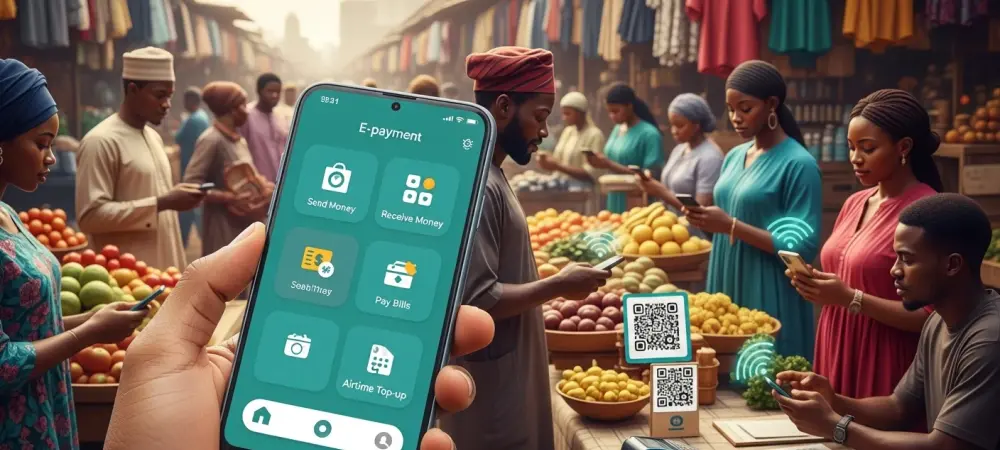
The Nigerian financial landscape, long celebrated for its rapid digital transformation, recently encountered a surprising friction point as total electronic transaction values contracted by nearly two percent in a single month. This dip, amounting to a substantial N2.55 trillion decrease, brought the national total down to N126.98 trillion, marking a rare deviation from the consistent upward trajectory seen over the last few years. While the digital economy has historically proven resilient against local hurdles, the convergence of global geopolitical instability and domestic inflationary pressures has begun to test the limits of consumer spending power. This cooling period serves as a critical indicator that even the most robust financial technology ecosystems are not immune to the broader macroeconomic environment. Understanding the specific drivers behind this contraction requires a deep dive into the shifting behaviors of the Nigerian consumer and the external forces currently reshaping the nation’s fiscal reality.
Economic Stressors and Shifting Transaction Volumes
Macroeconomic Pressures on Consumer Behavior
The primary catalyst for the decline in digital payments stems from a combination of energy-induced inflation and the lingering effects of global tensions, which have collectively increased the cost of living for the average Nigerian. As fuel prices and electricity tariffs climbed during the first half of 2026, household budgets were squeezed, leading to a noticeable reduction in discretionary retail activity across major urban centers. This economic tightening meant that many consumers prioritized essential survival over the frequent, smaller electronic purchases that typically drive volume on digital platforms. Consequently, the overall velocity of money within the digital ecosystem slowed as the purchasing power of the naira continued to face downward pressure from persistent inflationary trends. This environment has forced a more cautious approach to spending, where every digital transfer is weighed against rising costs for basic necessities.
Beyond immediate domestic concerns, the ripple effects of geopolitical volatility in the Middle East have influenced local market sentiments and disrupted global supply chains, further complicating the Nigerian economic outlook. These external shocks often manifest as increased costs for imported goods and services, which are then passed on to a consumer base already struggling with high interest rates. When the cost of capital remains high, businesses are less likely to invest in expansion, and consumers are less likely to utilize credit or spend their savings, resulting in the N2.55 trillion monthly decline reported by the Nigeria Interbank Settlement System. This broader fiscal stagnation has effectively created a temporary ceiling for the e-payment sector, highlighting that technological adoption alone cannot sustain growth if the underlying economic fundamentals are undergoing a period of intense volatility and restricted liquidity.
Divergence in Payment Method Performance
A closer examination of the data reveals a stark contrast in how different payment channels reacted to the economic downturn, with the Nigeria Interbank Settlement System Electronic Fund Transfers experiencing a massive thirty percent drop. This significant decline in NEFT values, falling to N5.40 trillion, suggests a slowdown in corporate and large-value batch settlements, which are often sensitive to shifts in business confidence and operational cycles. Similarly, Point of Sale transactions and traditional cheque usage saw declines of 1.82 percent and over 26 percent respectively, indicating a broad-based retreat from both modern retail touchpoints and legacy banking instruments. These figures reflect a unified contraction across multiple layers of the economy, from high-level institutional transfers to the everyday transactions occurring at local supermarket counters and service stations.
In sharp contrast to these declining figures, the NIBSS Instant Payment platform managed to maintain a level of stability, posting a marginal growth of 0.09 percent to reach N113.78 trillion. The resilience of the NIP platform highlights its role as the backbone of the Nigerian financial system, serving as the preferred method for urgent and essential person-to-person transfers. While other modes of payment faltered, the continued reliance on instant transfers suggests that while total spending may be down, the digital nature of essential transactions remains deeply embedded in the societal fabric. This divergence underscores a critical shift where users are abandoning slower or more cumbersome methods in favor of high-speed, reliable infrastructure, even when their overall financial activity is being curtailed by the harsh realities of the current inflationary cycle.
Future Outlook and Strategic Adaptations
Seasonal Recoveries and Persistent Headwinds
As the market looks toward the mid-year period, analysts expect a moderate rebound in transaction volumes driven by significant cultural and religious events such as the Eid El Kabir celebrations. The anticipated surge in spending related to Hajj travel and festive preparations typically provides a seasonal boost to the retail sector, which should translate into higher activity across mobile banking apps and digital wallets. However, this expected uptick is likely to be tempered by the reality of high interest rates and the continued erosion of real income. The central bank’s efforts to curb inflation through tight monetary policy mean that while transaction numbers may rise due to seasonal demand, the average value per transaction might remain suppressed as citizens find ways to celebrate with more limited financial resources than in previous years.
Furthermore, the long-term trend for Nigerian e-payments remains fundamentally positive, supported by the massive digital shift that began in the early 2020s and accelerated through 2024. The transition toward a cashless society is no longer a mere policy goal but a lived reality for millions of Nigerians who have moved away from physical currency following successive naira redesigns and aggressive fintech penetration. Even with the recent monthly dip, the foundation of the digital economy is stronger than ever, with total transaction values having reached record quadrillion-naira levels recently. The challenge moving forward will be navigating the “new normal” of economic volatility where growth is no longer guaranteed by adoption alone, but is instead dictated by the interplay between technological availability and the actual financial health of the participating population.
Navigating the Path to Financial Stability
To ensure the continued evolution of the e-payment landscape, stakeholders must focus on enhancing the value proposition of digital tools beyond mere convenience. As inflation continues to be a primary concern, fintech providers and traditional banks should explore integrated savings and micro-investment features that help users preserve the value of their funds within the digital ecosystem. By offering high-yield digital accounts or seamless access to inflation-protected assets, financial institutions can encourage users to keep their money within the electronic circuit even during periods of low spending. This shift from a purely transactional focus to a wealth-management and protection focus will be essential for maintaining engagement in an environment where the real purchasing power of the consumer is under constant threat from external and internal forces.
Ultimately, the recent contraction in e-payment values should be viewed as a signal for policy calibration rather than a sign of systemic failure. Future considerations must include the development of more robust offline payment solutions to bridge the gap during periods of infrastructure stress, as well as continued investment in cybersecurity to maintain public trust. As the country moves through the remainder of 2026, the focus will likely shift toward sustainable growth that accounts for macroeconomic shocks. Businesses that adapt their pricing models and services to meet the diminished but more discerning spending habits of the population will be best positioned to thrive. The Nigerian digital economy has proven its ability to scale; now, it must prove its ability to mature and provide stability in the face of a complex and often unpredictable global economic climate.