

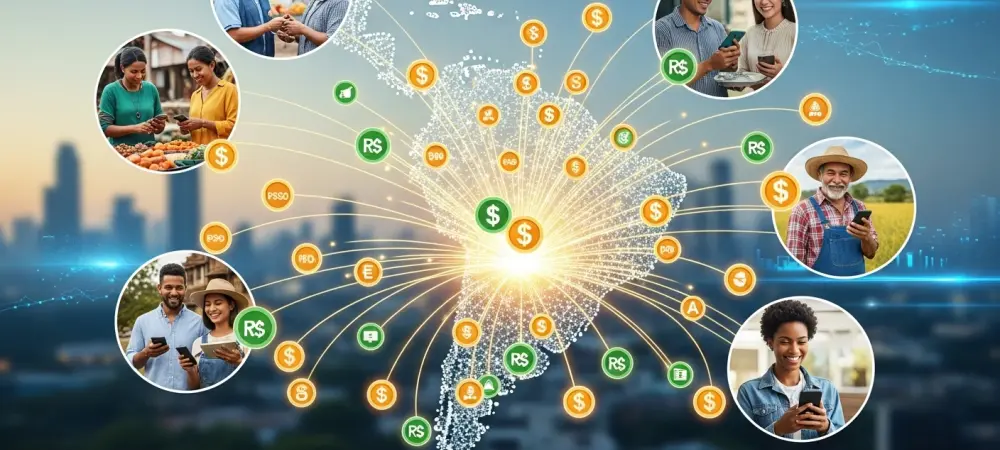
The rapid evolution of Latin American financial ecosystems has transformed real-time payments from a niche convenience into the backbone of a modern regional economy. Across nations like Peru, Chile, and Argentina, the integration of immediate clearing and settlement systems is no longer viewed as an experimental fintech feature but as an essential utility for national development. This transition is characterized by a notable shift in user behavior, where the initial reliance on simple peer-to-peer transfers has given way to complex commercial applications and sophisticated merchant interactions. By optimizing the speed at which capital moves, these nations are effectively removing the friction that historically hindered small businesses and stifled consumer spending. The current trajectory suggests that the maturation of this infrastructure is driving a significant move toward digital-first economies, where financial tools are deeply embedded in the daily lives of citizens, fostering a sense of stability and efficiency previously unseen.
Macroeconomic Advancements and Wealth Generation
The adoption of high-velocity payment rails serves as a potent engine for macroeconomic growth by significantly enhancing market liquidity and reducing the operational costs associated with traditional banking. Financial data indicates that by 2028, the impact of real-time payments will be substantial, with Argentina expected to see a boost of approximately $19.3 billion to its gross domestic product. Chile and Peru are also positioned for significant gains, with projected contributions of $740 million and $376 million, respectively, as these systems become more deeply ingrained in the broader economy. These figures highlight the tangible value of modernizing outdated financial infrastructure to support the needs of a high-speed digital market. By minimizing transaction failures and accelerating the settlement process, businesses can reinvest capital more quickly, thereby stimulating investment and creating a more resilient economic environment that is better equipped to handle the demands of global commerce and local trade.
Beyond the raw numerical growth, the shift toward real-time processing provides a critical foundation for institutional stability and competitive advantage in a globalized world. As financial systems transition from legacy frameworks to modern rails, the overall cost of doing business drops, allowing for more aggressive expansion strategies among local enterprises. This structural efficiency is particularly beneficial for small and medium-sized enterprises that rely on steady cash flow to manage inventory and payroll. In countries like Argentina, where market volatility often necessitates rapid financial maneuvering, the ability to settle transactions instantly provides a crucial buffer against inflation and economic uncertainty. Furthermore, the standardization of these payment protocols encourages foreign investment, as international partners find it easier to integrate with local markets that utilize transparent and efficient technology. This ongoing transformation is redefining the regional economic landscape, ensuring that Latin American nations remain competitive.
Social Equity and the Expansion of Financial Access
One of the most transformative aspects of the current payment revolution is its ability to bridge the gap between formal banking and the millions of historically underserved individuals. The expansion of real-time infrastructure is projected to bring 1.4 million people in Peru and 1.1 million in Argentina into the formal financial sector, providing them with tools for saving and credit that were previously out of reach. In Chile, over 83,000 citizens are expected to gain access to banking services, while Colombia anticipates the integration of 5.1 million people following the widespread rollout of the Bre-B system. This democratization of finance is not merely a byproduct of technological advancement but a deliberate strategic outcome of central bank policies aimed at fostering social equity. By lowering the barriers to entry and providing user-friendly digital interfaces, these systems empower individuals to manage their finances more effectively, leading to increased economic participation and a reduction in the reliance on informal or predatory lending.
The strategic focus has moved toward “everyday commerce,” where the utility of digital wallets and account-to-account transfers becomes a staple of local marketplaces. In Brazil, the Pix ecosystem remains the gold standard for success, demonstrating how a unified and interoperable system can dominate the retail space and set a benchmark for regional neighbors. This transition to merchant-focused applications allowed for better economics in small-value payments, which was a historical pain point for traditional credit card networks. Moving forward, the emphasis should shift toward enhancing cross-border capabilities and ensuring that interoperability standards are maintained across different jurisdictions. Financial institutions and fintech firms must prioritize the development of value-added services that go beyond simple transactions, such as integrated loyalty programs and real-time fraud detection. By focusing on these areas, stakeholders ensured that the benefits of real-time payments were fully realized, creating a sustainable and inclusive digital economy that thrived on innovation.