

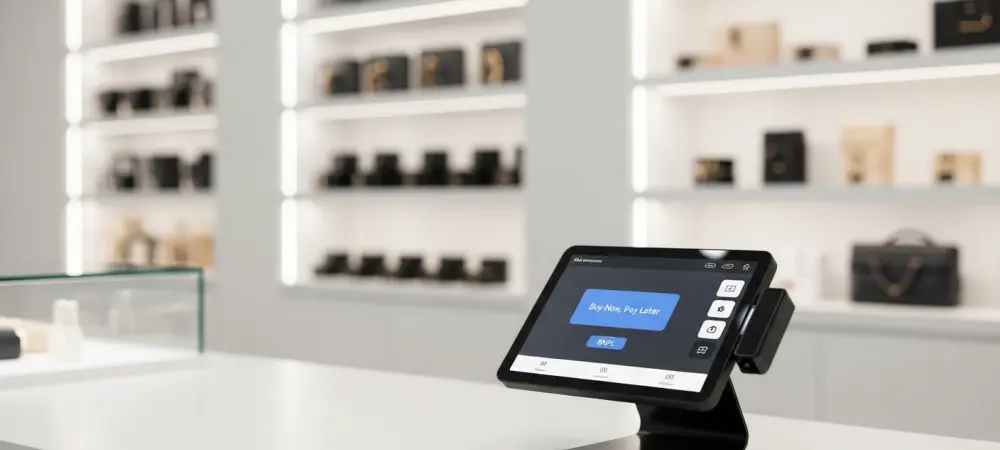
The once-simple act of clicking “complete purchase” has transformed into a complex and strategic moment in the digital marketplace, and no innovation has reshaped this landscape more profoundly than Buy Now, Pay Later (BNPL). This financial tool’s rapid ascent from a niche alternative to a foundational element of global e-commerce is less a story about a novel lending product and more a masterclass in strategic distribution and a deep understanding of consumer psychology. By embedding themselves directly into the digital checkout process, BNPL providers effectively changed the calculus for millions of shoppers, turning purchase hesitation into immediate conversion. This was not merely about offering credit; it was about reframing the very concept of affordability at the critical final stage of a transaction. As the industry moves beyond its initial phase of aggressive growth toward a new era of sustainable profitability, its deep integration into the fabric of online commerce signifies a permanent shift in how consumers shop and merchants compete. The success of BNPL has proven that the most powerful innovations are often not just about what is being sold, but how and where it is offered.
The Strategic Engine of Embedded Distribution
The core genius behind the BNPL explosion was not the invention of installment payments but the revolutionary approach to its distribution. Rather than engaging in a slow, merchant-by-merchant sales cycle, leading providers achieved unprecedented scale by embedding their services directly into the “plumbing” of e-commerce. They forged strategic partnerships with major marketplaces, hosted checkout platforms, and payment processors, effectively becoming a native feature of the digital economy. Affirm’s landmark integration with Amazon and its expansion of Shop Pay Installments across Shopify’s massive global network are prime examples of this model. This approach transformed BNPL from an add-on into a turnkey solution, allowing hundreds of thousands of merchants to activate it with minimal technical effort. By meeting consumers within the trusted, familiar environments where they already shopped, BNPL providers bypassed the need to build a brand from scratch, instead borrowing the credibility of their platform partners to achieve instant normalization and widespread adoption. This ecosystem-centric strategy created a powerful and self-reinforcing network effect that cemented BNPL’s market position. For consumers, encountering a consistent and recognizable installment option like “Pay in 4” across different storefronts reduced cognitive friction and steadily built a new purchasing habit. This familiarity bred trust and made the choice to use BNPL feel less like a financial decision and more like a standard feature of the modern checkout, akin to choosing between a credit card and a digital wallet. For the BNPL providers, each new platform integration unlocked a vast, pre-existing network of merchants, making their services exponentially more valuable and harder to displace. Deals such as Affirm’s arrangement with the payment processor Worldpay underscore this shift away from individual sales toward scalable platform distribution. This strategic embedding is what truly differentiated the winners, proving that in the digital age, owning the point of transaction is often more powerful than owning the product itself.
A Psychological Shift in Consumer Behavior
At its heart, BNPL is a powerful tool of consumer psychology, designed to dismantle the financial and emotional barriers that lead to cart abandonment. It directly confronts the phenomenon of “sticker shock” by reframing a single, often daunting price tag into a series of smaller, more digestible payments. This simple but profound shift in perspective fundamentally alters the purchase decision. A $400 coat no longer feels like a major expenditure but rather four manageable payments of $100. This psychological reframing lowers the immediate commitment, making it especially effective at converting first-time buyers who may be hesitant to trust a new brand or invest in a higher-priced item. By giving consumers the benefit of immediate ownership while aligning payments with their budgeting cycles, BNPL transforms a potential “not now” decision into an immediate “yes, today,” effectively bridging the gap between desire and affordability at the most critical moment of the customer journey.
Recognizing this powerful influence, sophisticated retailers have evolved their approach, treating BNPL not merely as another payment button but as a strategic merchandising and conversion lever. The most successful implementations involve a series of deliberate design choices aimed at maximizing impact. This includes promoting the installment option early in the shopping journey, often directly on the product detail page rather than waiting for the final checkout step. Clear and transparent messaging, such as “Pay $50 today, then three more payments of $50,” is used to build trust and eliminate any confusion about the terms. Furthermore, retailers are setting specific eligibility rules, defining which products or price ranges qualify for BNPL to strategically boost Average Order Values (AOV). The entire process is meticulously optimized for mobile devices, where a seamless, low-friction experience is paramount. This strategic integration allows even mid-sized businesses to offer sophisticated financing options that were once the exclusive domain of large corporations, justifying the higher merchant fees with a measurable lift in sales and customer acquisition.
The Numbers Behind the Takeover
The tangible impact of BNPL is evident in its staggering market penetration and growth metrics. In the United States, installment payments had already captured a significant slice of the e-commerce pie by 2024, accounting for approximately 6% of all online transaction volume. This translates to one out of every seventeen digital purchases being financed through a BNPL service. The user base expanded rapidly, reaching 86.5 million Americans and indicating that more than 30% of the population had become familiar with this payment method. On a global scale, the total payment volume for BNPL transactions hit $316 billion in 2023, with strong projections for continued expansion. These figures illustrate a fundamental shift in payment preferences, moving BNPL from a fringe trend to a mainstream financial tool in a remarkably short period. The data confirms that this is not a niche phenomenon but a widespread behavioral change in how consumers approach spending online.
A granular look at a market leader like Affirm provides a clear picture of the immense scale achieved through platform-centric strategies. During a single fiscal quarter, the company processed an impressive $10.8 billion in Gross Merchandise Volume (GMV) across 41.1 million transactions, serving a growing base of 24.1 million active consumers and 419,000 active merchants. These figures represented year-over-year increases of 42% and 51.2% respectively, showcasing the explosive growth fueled by deep ecosystem integrations. Perhaps most importantly, this expansion was accompanied by a crucial milestone: profitability. Affirm successfully reversed a $100.2 million loss from the previous year, posting an $80.7 million profit. This transition from a “growth-at-all-costs” mindset to sustainable economics marked a significant maturation point for the entire industry, validating the long-term viability of the BNPL business model and signaling its establishment as a permanent fixture in the financial landscape.
Navigating Risks and an Evolving Landscape
The very frictionless nature that made BNPL so appealing to consumers also introduced inherent risks that have drawn the attention of regulators and consumer advocates. The streamlined approval process, often utilizing soft credit checks or alternative data, created a potential for consumers to accumulate debt across multiple services without a consolidated view of their total obligations. This lack of transparency raised serious concerns about overextension and the potential for financial distress. Reporting from early 2025 suggested that as U.S. BNPL transaction volume neared $175 billion, delinquency rates for some loans during certain periods could have been as high as 30%. As the market continues to mature, addressing these challenges through responsible lending practices, transparent disclosures, and improved underwriting models has become a critical imperative for ensuring the industry’s long-term health and maintaining public trust.
The undeniable success of BNPL did not go unnoticed by incumbent financial players, who were compelled to react to this disruptive force. Major credit card issuers and established banks, once dismissive of the model, began integrating their own installment payment features directly into their product offerings, effectively adopting the BNPL playbook to defend their market share. This competitive imitation served as the ultimate validation of installment payments as a structural shift in consumer finance rather than a passing fad. For merchants, this has resulted in a more complex but also more flexible payment stack at the checkout, which might include traditional cards, digital wallets, and multiple BNPL options. The strategic challenge for retailers had shifted to curating a selection of payment methods that maximizes conversion without overwhelming the consumer. This evolving competitive dynamic has ensured that the future of the BNPL space will be defined by an intense focus on owning the customer relationship, achieving sustainable economics through sophisticated risk management, and providing the seamless cross-border functionality required by an increasingly global e-commerce market.