

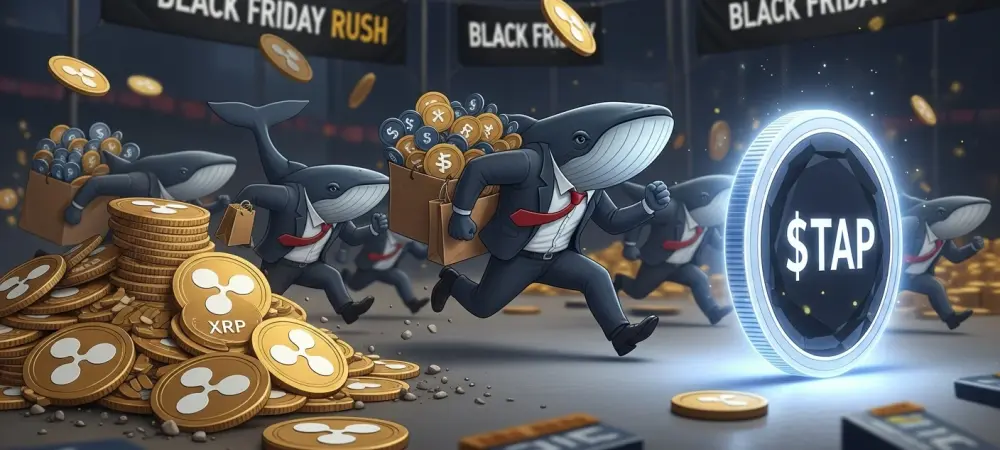
Diving into the dynamic world of cryptocurrency and fintech innovation, I’m thrilled to sit down with Nicholas Braiden, a true pioneer in the blockchain space. As an early adopter and passionate advocate for financial technology, Nicholas has dedicated years to exploring how digital solutions can revolutionize payments and lending systems. With his extensive experience advising startups on harnessing tech for industry advancement, he offers unparalleled insights into the latest trends and opportunities. Today, we’re unpacking the buzz around Digitap ($TAP), the shifting tides for XRP, and the transformative potential of omni-banking, alongside the strategic moves of whale investors and the unique incentives driving presale momentum.
How did you first recognize the potential of fintech projects like Digitap, and what makes $TAP stand out in today’s crowded crypto market?
Well, I’ve been in the blockchain space since its infancy, and what initially drew me to fintech was the promise of dismantling outdated financial barriers. I remember advising a small startup years ago that struggled to integrate crypto payments—the friction was palpable, and it hit me how much we needed unified systems. Digitap caught my eye because it’s not just another token; it’s a functioning omni-bank with a live app on iOS and Android, offering Visa-compatible cards and an insane 124% APY. That’s real utility, something I rarely see at this early stage. Their presale has already raised $2.2 million, which shows whale confidence, especially when you compare it to the stagnating interest in more established coins. It feels like stepping into a bustling fintech hub—there’s energy, innovation, and a clear path to solving problems for both retail users and businesses.
What’s behind the growing whale interest in $TAP, especially when rotating out of assets like XRP, and can you share any specific feedback from investors?
The whale interest in $TAP boils down to timing and upside potential. XRP, trading at $2.19 with a 17% monthly drop, feels like it’s hit a ceiling—many investors I’ve spoken with are frustrated by its limited retail appeal and centralized vibe. I had a conversation recently with a long-time holder who said, “XRP was great for institutional plays, but I’m not seeing the growth anymore; $TAP at $0.0334 with a listing price of $0.14 feels like a no-brainer.” Whales are drawn to early-stage pricing and Digitap’s real-world application—think instant payments and global transfers in one app. The metrics back this up: $2.2 million raised in presale isn’t just hype; it’s a signal of smart money betting on fintech over legacy altcoins. There’s a tangible excitement when these investors talk about getting in before the next price jump—it’s like catching the first wave of something big.
Can you break down how Digitap’s omni-bank platform works for everyday users and businesses, and share any personal observations of its impact?
Digitap’s omni-bank concept is a game-changer because it bridges fiat and crypto seamlessly in a single superapp. For everyday users, imagine downloading the app, linking a Visa-compatible card, and instantly depositing funds—fiat or crypto—and earning a 124% APY on savings without jumping through hoops. Businesses get tools like invoicing, payroll, and international IBANs, all with 24/7 support, which is a lifeline for small firms dealing with cross-border headaches. I recently spoke with a freelance designer who used Digitap for client payments; he was floored by how he could receive crypto, convert to fiat, and pay bills in minutes—he described it as “banking without the bureaucracy.” It’s still early days, but seeing that kind of relief on someone’s face, knowing they’ve bypassed traditional banking delays, tells me this platform is already hitting pain points. The accessibility feels like a breath of fresh air in a stuffy financial world.
XRP’s recent struggles, like the 17% price drop to $2.19 and declining wallet activity, have raised concerns. What’s driving this downturn, and how does it compare to past cycles you’ve witnessed?
XRP’s current slide to $2.19 with a 17% monthly decline is tied to a mix of shrinking network activity and broader bear market pressures. On-chain data I’ve reviewed shows fewer daily active addresses compared to its peak cycles, like when it surged from $0.50 to over $3.00 in late 2024 to early 2025—that’s a stark contrast to the buzz back then. Transaction volume has also dipped, and institutional inflows seem to be drying up, which mirrors what I saw during XRP’s quieter periods a few years ago when regulatory noise scared off momentum. I remember watching traders cling to hope during those lulls, only to see prolonged stagnation. Today, the limited retail appeal—XRP can’t be used at card terminals and lacks fiat-crypto interoperability—feels like a bigger anchor. It’s a sobering reminder that even institutional darlings can lose steam when utility doesn’t evolve, pushing investors to seek fresher plays like fintech-focused presales.
Digitap’s Black Friday 96-hour event with $1 million in prizes is generating hype. What’s the strategy behind these hourly deals, and how do they boost investor engagement?
The Black Friday 96-hour event is a brilliant move by Digitap to create urgency and keep investors glued to the platform. Every hour, for 96 hours, they roll out new limited-time offers—think token bundles, credits, or card-linked perks—which builds this frenetic energy around participation. I was particularly struck by one deal offering bonus tokens with a specific purchase tier; it felt like a treasure hunt, with investors racing to snag it before the hour was up. The strategy here is twofold: it incentivizes early entry at the current $0.0334 price before it climbs, and it turns passive interest into active engagement. I’ve seen firsthand how these timed drops get people talking—one investor I know kept refreshing the app, laughing about how it felt like a crypto Black Friday stampede. With $1 million in prizes on the line, it’s not just a gimmick; it’s a catalyst that’s amplifying Digitap’s momentum at a critical presale stage.
How does Digitap’s zero-KYC framework open doors for the globally unbanked, and can you walk us through the onboarding process for someone new?
Digitap’s zero-KYC framework is a massive unlock for the billions of unbanked or remote workers who’ve been shut out of traditional finance. You don’t need extensive paperwork or a credit history—just a smartphone and WiFi—and suddenly, institutional-grade banking is at your fingertips. The onboarding is refreshingly simple: download the app from iOS or Android, set up a basic profile with an email or phone number, and you’re in. From there, you can store crypto, manage fiat, send transfers, or earn that 124% APY without a gatekeeper asking for your life story. I’ve heard stories from users in rural areas who’ve described it as a lifeline—one guy told me he started freelancing online and got paid in crypto through Digitap, something he couldn’t dream of with local banks. It’s like handing someone the keys to a financial system they’ve been locked out of for years; the empowerment is visceral and honestly inspiring.
With $TAP tokenomics allocating 50% of platform profits to burns and staking rewards, how does this structure build long-term value for holders?
Digitap’s tokenomics are designed to tie value directly to platform growth, which is a smart play for sustainability. With 50% of profits going to token burns and staking rewards, there’s a built-in mechanism to reduce supply over time while rewarding holders—think of it as a dual engine for scarcity and incentive. As the platform gains users, more transactions mean more profits, which then fuel burns that shrink the circulating supply, potentially driving up the $TAP price from its current $0.0334. Staking rewards, meanwhile, encourage holding; I’ve crunched some hypothetical numbers, and if adoption scales, a holder staking now could see significant returns layered on top of price appreciation by the $0.14 listing. I’ve advised projects with similar structures before, and when executed well, it’s like watching a virtuous cycle unfold—users drive revenue, revenue drives value, and holders feel the benefits. It’s a refreshing contrast to tokens with no utility, and I’m eager to see how this plays out as Digitap scales.
What’s your forecast for the future of fintech-driven cryptocurrencies like $TAP in the broader market landscape?
I’m incredibly bullish on fintech-driven cryptocurrencies like $TAP, especially as traditional finance continues to lag in accessibility and innovation. We’re at a tipping point where billions of unbanked and underbanked individuals are coming online, and platforms that merge fiat and crypto with real utility—like Digitap’s omni-bank—could dominate the next wave of adoption. I foresee a market shift where tokens tied to working products and clear use cases will outpace speculative assets, particularly as regulatory clarity emerges over the next few years. If $TAP maintains its trajectory, with presale momentum at $2.2 million and a listing price of $0.14 on the horizon, it could set a benchmark for how fintech tokens redefine value. But I’m curious about the challenges—scaling globally isn’t easy, and competition will heat up. Still, standing in the midst of this revolution, it feels like we’re on the cusp of something transformative, and I can’t wait to see where it leads.