

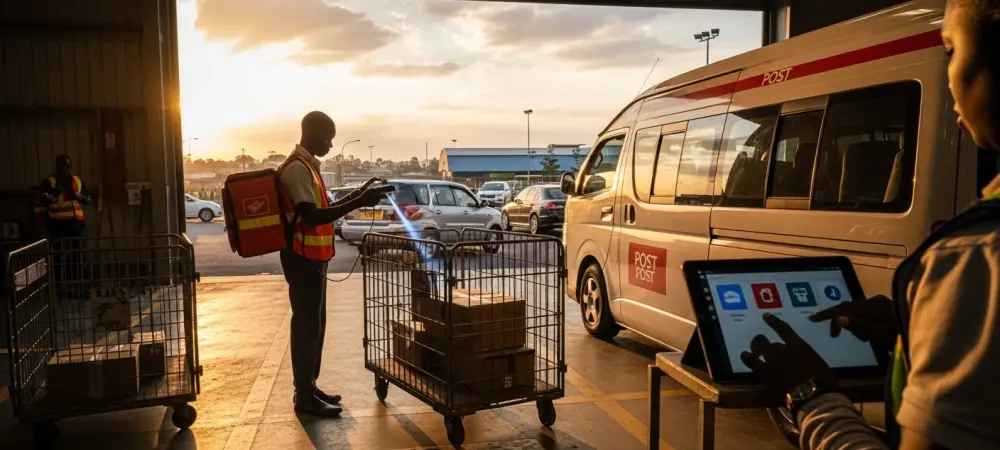
Lead: Turning Counters Into Storefronts
Shutters lift on a weekday morning, and what used to be just a mail counter begins doubling as a digital on-ramp where a boda courier tags outbound parcels, a clerk helps a crafts vendor upload product shots, and an order from a district away blinks on a screen with a promise of next-day delivery. The scene is ordinary and radical at once: Uganda’s post offices are being recast as entry points to a national marketplace, one branch at a time.
The promise feels urgent because demand already outpaced the rails beneath it. Buyers wanted more choice, sellers wanted reach, and both wanted fulfillment that did not punish distance. By plugging e-commerce into a logistics network that already knew every village turn, Postcom aimed to close that gap rather than invent a new one.
Nut Graph: Why This Story Matters
Postcom sits at the heart of Uganda’s Digital Transformation Roadmap as a proof point that public technology can sharpen competitiveness and improve daily service delivery. Instead of a pilot that lives on slides, it packages storefront tools, payments, and fulfillment under a national brand that users already recognize at the counter.
The stakes extend beyond convenience. MSMEs face four familiar bottlenecks—visibility, payment integration, fulfillment, and trust. By converting over 100 post offices into e-commerce access points linked to existing last-mile routes, the platform lowers each barrier in sequence. It also signals export reach to up to 192 countries for eligible products, reframing a neighborhood shop as a potential exporter.
Body: Inside a National Marketplace Built on the Mail
At its core, Postcom functions as a centralized marketplace with built-in order management, standardized packaging tiers, and affordable delivery tariffs. The postal badge provides a trust signal and consistent service standards; the branch becomes the seller’s storefront, pickup site, and returns desk in one. Route optimization rides on schedules already proven by letter carriers, trimming costs where private coverage remains uneven.
Consider a crafts vendor who once relied on weekend foot traffic. At a nearby branch, staff assist with onboarding, product photos, and pricing rules. Orders ping from another district by afternoon; parcels ride a regular postal run by evening; returns, when they happen, come back through the same counter without dispute spirals. Early MSME adopters reported that predictable handoff routines mattered more than flashy app features.
The design deliberately includes services, not just goods. Advisory sessions, repair calls, or training workshops can be listed with booking and payment, bringing sole proprietors into the fold. Alignment with Buy Uganda, Build Uganda nudges local products to the top of search and promotions, turning policy into placement rather than proclamation.
Body: The Policy Engine and the Last Mile
Officials framed the launch as a marriage of government-backed technology and proven logistics—a platform that unlocks demand instead of waiting for it. That posture reflects a broader reform trend in which national postal systems evolve into digital–logistics hybrids to bridge last-mile and trust gaps. Public rails invite private variety: the state sets standards, MSMEs supply supply.
Credibility rests on execution. Clear SLAs, escrow or secure payment options, transparent fees, and reliable returns form the trust stack that turns a listing into a sale. Branch-based merchant drives, fee holidays for first shipments, and district-level training create momentum that apps alone rarely deliver. When branches map catchment areas and set cutoff times aligned to daily runs, on-time delivery rises while cost per order falls.
Export ambition adds another layer. Sellers ready for cross-border trade need HS codes, compliant labeling, and basic documentation; starting with diaspora-heavy corridors reduces risk while feedback tightens packaging and landed pricing. The postal network already knows the handoff points; Postcom makes the commercial handshake visible.
Conclusion: From Launch to Habit
The next move belonged to operators and merchants who turned a platform into routine: list top SKUs or services, test intra-city fulfillment, push to inter-district, then pilot a low-risk export lane. Logistics teams who standardized packaging and synchronized cutoffs with postal runs cut variance where it hurt margins most. Policymakers who sustained branch-based onboarding, dispute timelines, and BUBU-forward campaigns turned early curiosity into durable participation.
What changed was subtle and cumulative. A counter became a gateway, a route became a revenue chain, and a national brand became shorthand for dependable delivery. With execution measured in on-time rates, return ratios, and cost per order, Postcom translated policy into practice and reach into results—one parcel scanned, one service booked, one new market at a time.