

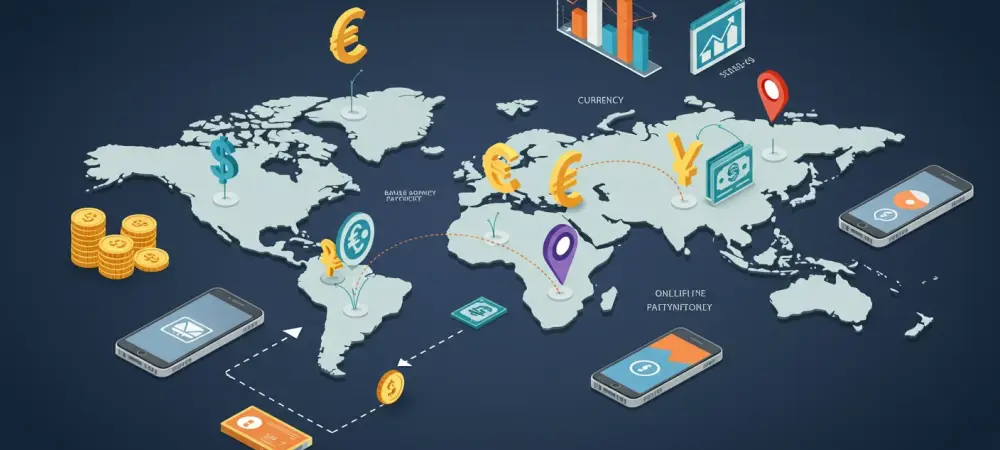
In today’s rapidly evolving global market, businesses and consumers demand flawless transactions across borders. As economies become increasingly interconnected, the need for efficient cross-border payment infrastructures becomes imperative. Technological advancements promise seamless integration, facilitating international commerce. In exploring these developments, we delve into current systems, real-world applications, expert perspectives, and future ramifications.
Current State of Cross-Border Payments
Advancements in Payment Platforms
Cross-border payment systems have witnessed significant evolution recently, experiencing a remarkable shift from traditional banking methods to more integrated technologies. Platforms such as Unified Payment Interface (UPI), WeChat Pay, and newly initiated PayPal World are at the forefront of this transition. UPI, in particular, has risen to become the world’s largest real-time payment system, surpassing giants like Visa in volume and efficiency. WeChat Pay commands approximately 1.3 billion users, emphasizing the global demand for effortless payments.
Practical Implementations in the Industry
The successful integration of cross-border payment solutions is evident through real-world implementations like PayPal World. This platform has shown innovation by enabling users to send payments to others without necessitating a PayPal account on the recipient’s part, thus facilitating easy transactions. For example, U.S. travelers can now transact with Indian merchants via UPI or complete WeChat Pay transactions internationally using PayPal, marking a shift toward streamlined, global commerce.
Expert Insights on Cross-Border Payments
Industry experts provide valuable insights into challenges and prospects within cross-border payment ecosystems. They highlight regulatory hurdles and technological limitations, which still pose significant barriers. However, opportunities abound in aligning these systems to cater to global needs. Regulatory compliance is a critical factor influencing the adoption and expansion of such payment systems. Experts emphasize the importance of robust frameworks that accommodate innovation while ensuring security.
Technology, alongside competition, compels industry leaders to innovate and adapt to a dynamic market. Experts underscore how competitive forces drive enhancements in service offerings, facilitating technology integration. These factors are crucial in shaping the landscape, aiming for unified payment solutions to meet global demands effectively.
Future Prospects and Implications
The advancement of technology promises to revolutionize cross-border payments further, paving the way for potential game-changers in the global payment environment. Emerging technologies enhance both payment accessibility and security, ultimately benefiting consumers and businesses. Unified systems could revolutionize global commerce, reshaping consumer behavior and transforming financial services.
However, widespread integration faces challenges like ensuring accessibility and regulatory adherence. Positive impacts might include increased efficiency in trade, while regulatory concerns could pose significant hurdles. Addressing these challenges will be crucial for the sustained success of such systems, ensuring they are inclusive, secure, and compliant with international norms.
Conclusion
Throughout the article, the exploration of integrated cross-border payment systems reveals their vital role in driving global economic interconnectedness. The strategic move by PayPal and similar platforms toward integration shows significant promise. Since integrated solutions are crucial for advancing trade, facilitating global commerce calls for continuous innovation among stakeholders. By embracing cooperation and technological advancements, industry leaders have the opportunity to redefine cross-border payments, promising transformative potential for international transactions.