

I’m thrilled to sit down with Ibrahim Ajibade, a seasoned research analyst with extensive experience in Web3 startups and financial organizations. With a background in Economics and ongoing studies in Blockchain and Distributed Ledger Technologies at the University of Malta, Ibrahim brings a wealth of knowledge to the table. Today, we’re diving into the recent price movements of Ripple (XRP), the buzz around potential ETF approvals, and what the technical indicators might suggest for the future of this prominent cryptocurrency.
How do you see the recent 3% price jump for XRP on September 7, 2025, fitting into the broader market trends?
That 3% increase was quite notable, especially since XRP emerged as the second-best performer among the top 10 cryptocurrencies that day, just behind Dogecoin. I think a big driver was the growing chatter in the community about potential ETF approvals. When speculation like this picks up, it often fuels short-term price spikes, as we saw with XRP breaching the $2.9 mark. It’s also worth noting that the broader crypto market has been hungry for positive catalysts, and XRP’s momentum reflects that sentiment.
What role do you believe community speculation around ETF approvals played in this price surge?
The community’s excitement was definitely a key factor. Over the past 24 hours leading up to that surge, online discussions within the XRP community were buzzing with anticipation about the SEC’s upcoming decisions on ETF filings. Influencers and analysts were sharing timelines and key dates, which amplified the hype. This kind of speculation can create a self-fulfilling prophecy, where the expectation of good news drives buying pressure, even before any concrete announcements are made.
Can you shed light on the significance of the SEC deadlines for XRP ETF filings between October 18 and 25, 2025?
These deadlines are a critical window for XRP’s trajectory. With multiple asset managers having filings under review, the period between October 18 and 25 could bring clarity on whether XRP ETFs get the green light. If approved, it would likely open the door for institutional investment, which could significantly boost XRP’s legitimacy and price. Even if there’s no approval, the anticipation alone tends to keep the market on edge, often leading to heightened volatility.
Looking at the trading data, how do you interpret XRP’s 3% rally despite a drop in spot market volume on that day?
The data tells an interesting story. Despite a 10.3% decline in spot market trading volume on September 7, XRP still rallied 3%. This suggests the price movement wasn’t driven by traditional buy-and-hold investors but rather by speculative activity elsewhere. The 17% surge in futures trading volume and a 3% increase in open interest point to leveraged traders betting on future price movements, likely tied to the ETF speculation. It shows a disconnect between spot and derivatives markets, which can be a double-edged sword.
Do you think this speculative demand in the futures market can keep pushing XRP’s price upward as the ETF decision window nears?
It’s possible, but not guaranteed. High-leverage speculative demand can sustain momentum in the short term, especially as the ETF deadlines approach and excitement builds. However, it’s a fragile foundation. If spot market activity doesn’t catch up, the rally could lack the depth needed for long-term growth. Leveraged positions are also prone to quick unwinding if negative news hits, so while the demand might push prices up for now, it’s not a stable driver on its own.
From a technical perspective, what are your thoughts on XRP consolidating near $2.88 after this recent rally?
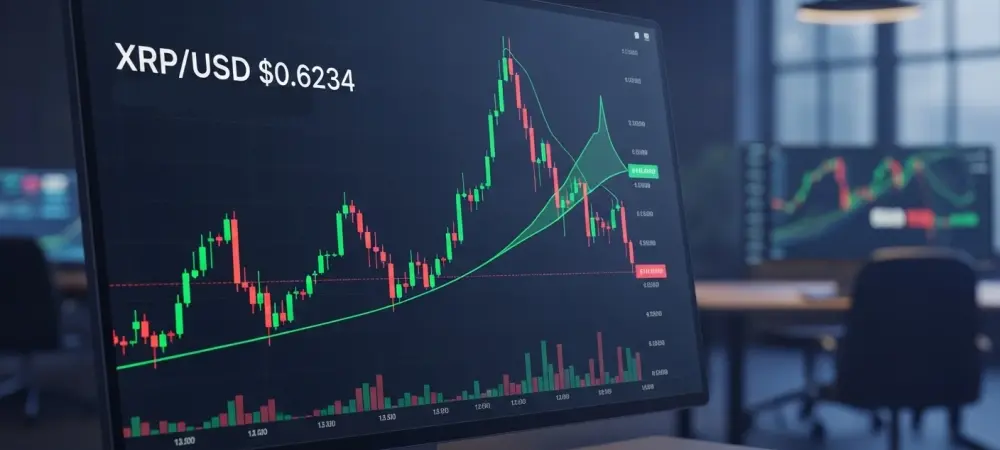
The consolidation around $2.88 is a sign that the market is catching its breath after the 3% intraday rally. Looking at the charts, XRP is stuck between a support level at $2.70 and resistance at $3.07. This range-bound behavior often precedes a breakout, either upward or downward, depending on catalysts. With the ETF speculation still in play, there’s potential for bulls to test that $3.07 resistance soon, but they’ll need more volume to back it up.
What do the current technical indicators suggest about XRP’s potential price volatility in the coming days?
The narrowing of the Bollinger Bands between $2.70 and $3.07 is a classic sign of volatility compression. It means the price is coiling up for a significant move, though the direction isn’t clear yet. Meanwhile, the RSI sitting at 48.3 indicates a neutral stance—neither overbought nor oversold—but it’s edging up from oversold territory, which could hint at growing bullish momentum if buying pressure increases. We’re likely in for some sharp price action once a catalyst emerges.
What risks do you see for XRP if spot market activity continues to lag behind futures trading?
The biggest risk is a lack of fundamental support for the price gains. When futures trading drives the market through leveraged bets, but spot demand isn’t there to anchor the price, you’re looking at a setup vulnerable to rapid reversals. If negative news—like a delay or rejection of ETF filings—triggers liquidations among over-leveraged traders, we could see a steep drop toward that $2.70 support, or even lower to $2.50. It’s a reminder that speculative rallies need real buying interest to hold.
If XRP manages to break above the $3.07 resistance, what price targets should investors keep an eye on?
Breaking above $3.07 would be a strong bullish signal, especially if it’s backed by increased volume. The next immediate target would be around $3.20, as that’s a psychological and historical resistance point. If the momentum continues—say, fueled by positive ETF news—a longer-term target of $3.45 could come into play. That level would represent a significant milestone for XRP and could attract even more attention from both retail and institutional investors.
What is your forecast for XRP’s price movement in the near future, given the current market dynamics?
I think XRP will likely remain range-bound between $2.70 and $3.07 for the next few days unless a major catalyst emerges. The ETF speculation is keeping bullish sentiment alive, but the weak spot market activity is a drag. If we see positive news around the SEC deadlines, a push above $3.07 is very possible, with upside potential to $3.20 or higher. On the flip side, if leveraged positions unwind due to disappointing news or broader market downturns, a drop to $2.50 isn’t out of the question. It’s a coin toss right now, and traders should stay nimble.