

For e-commerce teams tasked with driving revenue, the sophisticated algorithms governing product search results have increasingly become an enigmatic black box, creating a significant barrier to effective management and optimization. The modern digital storefront relies on a complex cocktail of factors to determine product rankings, blending meticulously crafted business rules and promotional boosts with advanced lexical and semantic matching, deep personalization, and powerful AI-driven scoring. While this complexity is designed to enhance the customer experience and drive conversions, it often leaves merchandisers and commerce managers grappling with a fundamental and frustrating question: “Why is this specific product appearing in this position?”. Answering this question typically requires a time-consuming back-and-forth with engineering teams, who must then manually sift through logs and data to reverse-engineer the AI’s logic. This operational friction not only slows down reaction times to market changes but also fosters a disconnect between the business strategists and the technology they depend on, making confident, data-driven decision-making a significant challenge.
Bridging the Gap Between AI and Business Strategy
Translating Complexity into Clarity
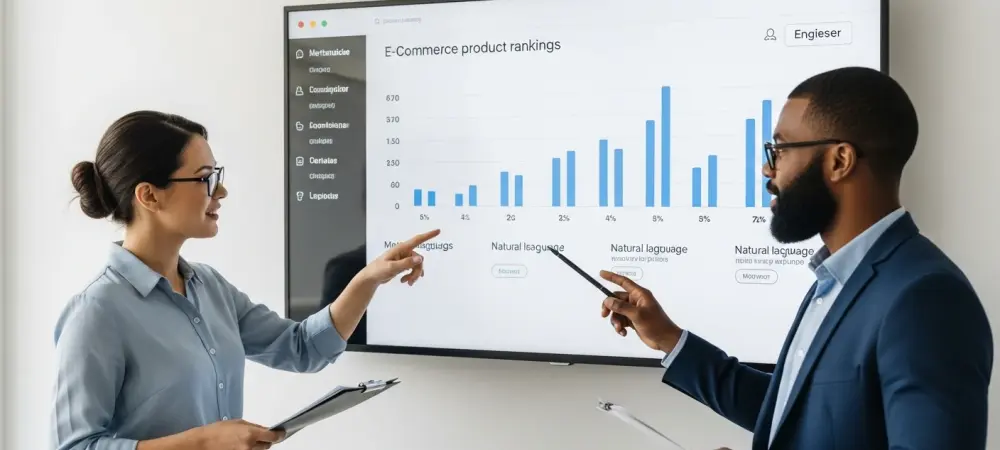
Lucidworks has introduced AI Ranking Insights, an innovative explainability feature embedded within its Commerce Studio platform, designed to dismantle the barriers between complex search algorithms and the business users who manage them. This new capability directly addresses the “black box” problem by translating the intricate, multi-layered logic of product rankings into clear, concise, and easily understandable natural-language explanations. The system operates with a single click, capturing a comprehensive snapshot of scoring and debug data from the Lucidworks Platform for any given search query or product. This raw data is then processed by a specialized large language model (LLM) that has been specifically trained not to generate creative content but to meticulously explain the existing ranking signals. This grounding in real, platform-generated data ensures that the explanations are consistently accurate and current, reflecting the precise logic being applied at that moment. The tool is a significant departure from traditional analytics, which often present users with a daunting array of raw data points, complex charts, or graphs that still require expert interpretation.
The true innovation of AI Ranking Insights lies in its ability to deliver these explanations in a conversational format that is inherently intuitive for non-technical stakeholders. Instead of forcing merchandisers to decipher technical jargon or correlation charts, the tool presents its findings in plain English, directly answering the “why” in a manner that aligns with how business teams think and communicate. This approach effectively democratizes the understanding of search performance, empowering users who are accountable for revenue and customer experience but may not have a deep background in data science or search engineering. By transforming opaque algorithmic processes into a transparent and accessible narrative, the feature allows business users to quickly grasp the interplay between various ranking factors—such as personalization scores, business-defined boosts, and semantic relevance—for any product in the search results. This newfound clarity enables them to understand the direct impact of their strategies and make more informed adjustments without needing to rely on a technical intermediary for every query.
Fostering a Culture of Confident Decision Making
The integration of this explainability tool fosters a more collaborative and efficient work environment by creating a shared language between business and technical teams. When merchandisers can independently access and understand the logic behind AI-driven rankings, the traditional communication silos begin to break down. This shared understanding reduces friction and eliminates the time-consuming process of filing tickets and waiting for technical investigations. Instead, business users are empowered to take greater ownership of the search experience, making decisions with a high degree of confidence because they are based on a clear comprehension of the underlying system mechanics. Trust in the AI is no longer a leap of faith but a product of transparency, which is critical for driving widespread adoption and maximizing the return on investment in sophisticated search technology. This shift allows teams to move from a reactive posture, where they question unexpected results, to a proactive one, where they can anticipate outcomes and strategically fine-tune search relevance to meet specific business goals.
The implications of this enhanced transparency extended far beyond daily operational tasks, fundamentally reshaping how organizations approached their e-commerce strategy. The ability for business teams to directly interrogate and understand the AI’s decision-making process cultivated a more agile and data-literate culture. This environment encouraged experimentation and rapid iteration, as merchandisers could now see the immediate and tangible effects of their adjustments to boosting rules or personalization strategies. The feedback loop between action and outcome was dramatically shortened, allowing for faster optimization cycles and a more responsive adaptation to changing consumer behaviors and market trends. Ultimately, by demystifying the core technology driving their digital shelf, the tool did not just answer a simple question; it empowered the entire commerce team to work more intelligently and cohesively, transforming the AI from a mysterious black box into a powerful and transparent partner in achieving business objectives.
Driving Operational Efficiency and Collaboration
Quantifiable Improvements in Workflow
The implementation of AI-driven explainability delivers immediate and measurable improvements to internal workflows, significantly reducing the operational drag associated with managing complex search systems. The platform has demonstrated the ability to accelerate the investigation and triage of ranking-related questions by as much as 50%. In practical terms, this means that when a key stakeholder, such as a brand manager or marketing lead, questions the placement of a promotional item, a merchandiser can generate an instant, coherent explanation without escalating the issue. This self-service capability eliminates the delays inherent in a typical ticketing system, allowing teams to resolve queries in minutes rather than days. The result is a more agile organization that can respond swiftly to internal feedback and external market dynamics, ensuring that the digital storefront is always aligned with strategic priorities. This rapid-response capability is crucial in the fast-paced world of e-commerce, where the ability to quickly understand and act on performance data is a key competitive differentiator.
Furthering these efficiency gains, the tool has been shown to reduce the amount of engineer hours dedicated to explaining search results by up to 60%. This is a critical benefit, as it frees up highly skilled and valuable technical resources from routine support tasks and allows them to focus on higher-impact initiatives, such as developing new features, improving core algorithms, or innovating on the platform. Concurrently, the clarity provided by the system leads to a 30% reduction in rework cycles that stem from trial-and-error relevance tuning. Previously, merchandisers making adjustments to search rules often had to guess at the potential impact, leading to a series of iterative changes to achieve the desired outcome. With clear explanations of how different signals contribute to the final ranking, these adjustments become far more precise and effective the first time, minimizing wasted effort and ensuring that optimizations are deployed more quickly and with greater confidence.
A New Era of Transparent AI in Commerce
The introduction of this technology marked a pivotal shift away from the era of opaque, “black box” AI systems in the e-commerce sector. It addressed a long-standing challenge by providing a practical and intuitive bridge between the immense power of machine learning and the business professionals responsible for leveraging it. This development was not merely an incremental feature addition; it represented a fundamental re-imagining of the human-AI partnership in a commercial context. By making the intricate decision-making processes of search algorithms transparent and understandable to a non-technical audience, it cultivated a new level of trust and collaboration within organizations. Teams were no longer operating on assumptions or faith in the technology but were equipped with the insights needed to engage with it as a strategic partner. This shift was instrumental in unlocking the full potential of AI-powered search, transforming it from a complex engineering tool into an accessible and powerful business lever. The move toward explainability paved the way for more agile, efficient, and ultimately more successful online retail operations, setting a new standard for what businesses should expect from their technology platforms.