

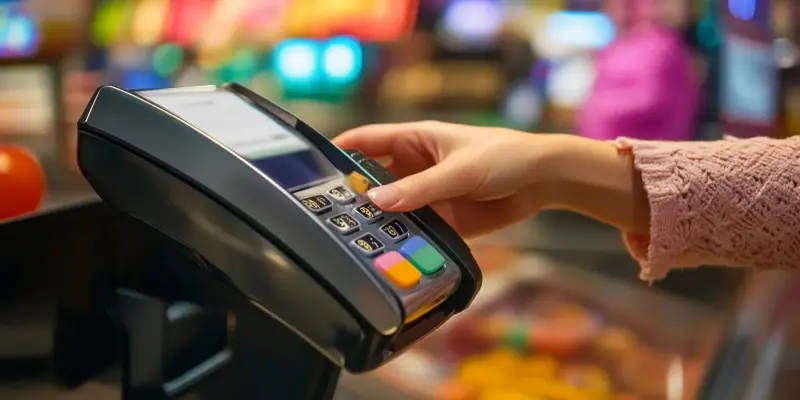
The evolution of technology has significantly transformed the way society interacts with the world around it, one of the most notable advancements being the shift to contactless payments. As industries continue to innovate, near-field communication (NFC) technology has emerged as a leading player, significantly enhancing the efficiency and ease of digital transactions. NFC technology first gained prominence in the U.S. a decade ago with the introduction of EMV chip cards, and its widespread consumer recognition has driven an exponential increase in contactless payments. Recent data from the NFC Forum’s 2024 Annual Report reveals that a staggering 92% of consumers familiar with NFC technology reflect its deep rooting in everyday life.
Consumer Adoption and Preferences
Increasing Reliance on Smart Devices
According to the latest research from ABI, a significant 82% of consumers have employed a smartphone or watch for contactless payments. More intriguingly, 55% of these users now prefer using these devices over traditional credit or debit cards, indicating a noticeable shift from the previous report in 2022. In 2022, only 47% favored smart devices, highlighting a growing trend toward mobile technology. Despite this increasing shift, a noteworthy 45% still express a preference for contactless payment cards. This data clearly illustrates that consumer preferences are evolving, with traditional cards remaining relevant yet increasingly supplanted by more advanced technology.
The breakdown of consumer device preferences uncovers more nuanced trends. Of those utilizing contactless payments, 39% favor smartphones, and 16% opt for smartwatches. These figures have shifted from 2022 when 53% preferred cards, 33% smartphones, and 14% smartwatches. This evolution in payment preferences underscores the importance of NFC technology’s adaptability and highlights the growing trust and convenience associated with smart devices. Both consumers and providers increasingly recognize the multi-application potential of NFC, suggesting the technology’s influence is set to continue expanding.
Beyond Payment Cards: The Trusted Technology
The evolving acceptance and reliance on NFC technology shed light on several underlying factors driving this change. NFC is celebrated for its perceived security, reliability, and convenience, which collectively contribute to its fast-growing footprint in the consumer market. The versatility of NFC technology extends beyond contactless payments, progressively integrating into various aspects of daily life. Consumers can now access product information, utilize digital car or house keys, enhance brand protection, and facilitate warranty registrations through NFC-enabled devices.
This broadening application demonstrates the extensive capabilities of NFC technology. Yet, its adoption rate hinges on customer trust, which has been growing steadily. The transition from traditional payment cards to digital wallets and NFC-enabled applications represents a significant enhancement in the consumer experience, proving it to be not just a fleeting trend but a robust, enduring transformation.
NFC Technology’s Future Prospects
Technology Roadmap and Enhancements
The NFC Forum, driving the agenda for NFC technology advancements since its inception in 2004, identified five critical components in its technology roadmap. These components are designed to enhance user experience and broaden NFC’s application scope. The current NFC range of 5 millimeters is one critical aspect that stands to benefit from future enhancements. By increasing the range to 20 millimeters, usability is expected to improve significantly, allowing earlier and sustained communication between devices, thus reducing the need for precise alignment. This advancement would enhance transaction speed, making the technology even more convenient.
Other significant advancements outlined by the NFC Forum include enabling multipurpose taps, improving reader functionality, enhancing power for NFC wireless charging, and expanding capabilities to support sustainability efforts. Multipurpose taps will allow a single, seamless interaction for multiple functions, such as payment and loyalty program engagement. Improved reader functionality aims to provide more accurate reads under diverse conditions, further amplifying NFC’s utility. Enhancing NFC charging power will enable wireless charging of more substantial devices, expanding usability. Lastly, supporting sustainability efforts aligns NFC’s development with global environmental goals, ensuring that advancements are made responsibly.
Paving the Way for Broader Integration
The evolution of technology has dramatically changed how society interacts with the world, with one of the most notable advancements being the shift to contactless payments. As industries keep innovating, near-field communication (NFC) technology has become a key player, substantially improving the efficiency and convenience of digital transactions. NFC technology made its debut in the U.S. about a decade ago with the advent of EMV chip cards, and its broader consumer recognition has fueled a significant surge in contactless payments. Recent data from the NFC Forum’s 2024 Annual Report shows that an impressive 92% of consumers acquainted with NFC technology highlight its integration into everyday activities. The adoption has been driven by the need for faster, safer, and more convenient payment methods. NFC’s presence is now ubiquitous, playing a critical role in retail, transportation, and various service sectors. As technology advances, the potential for NFC to further streamline and digitize our everyday transactions continues to grow, showcasing its importance in modern commerce.