

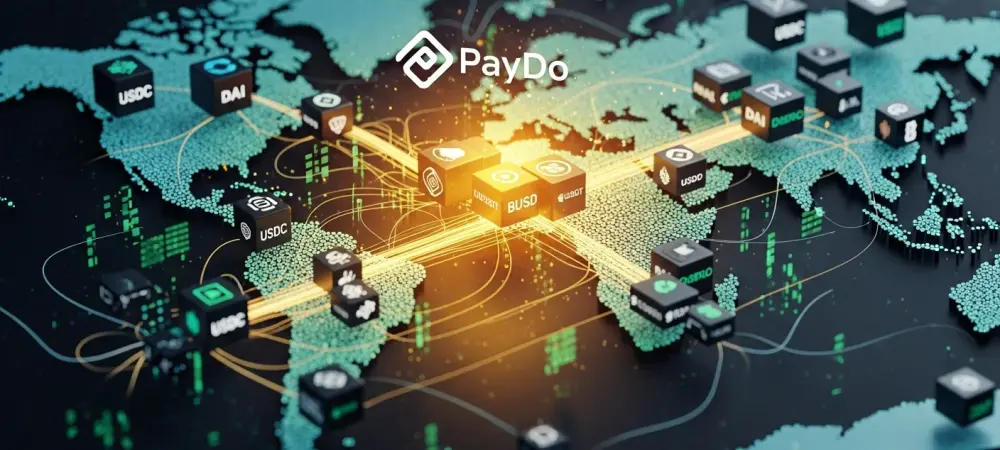
The modern global economy functions as a relentless, twenty-four-hour engine, yet the financial infrastructure beneath it often operates like a relic of a slower, more localized era. While information moves across the planet at the speed of light, the actual settlement of funds frequently grinds to a halt during weekends and bank holidays. This discrepancy has created a significant bottleneck for companies attempting to scale in a borderless digital market. PayDo is currently tackling this disparity by adopting stablecoins, not as a speculative gamble, but as a robust replacement for the aging rails of traditional finance. By prioritizing utility over hype, the platform has begun to fundamentally alter how liquidity is managed across continents.
Traditional banking depends on a sequence of handshakes between disparate institutions that do not always share the same operating hours or technology. When a merchant in one hemisphere attempts to pay a partner in another, the capital must navigate a labyrinth of intermediary banks, each introducing a point of failure or a delay. This system was designed for an age of physical ledgers and postal correspondence, making it increasingly incompatible with the instant demands of modern e-commerce. PayDo addresses this by utilizing blockchain technology to ensure that value moves as fluidly as the data it represents, bypassing the artificial constraints of the traditional banking day.
The End of the Banking Day: Why Traditional Money Movement Is Breaking
The legacy of correspondent banking has long forced businesses to accept a three-to-five-day settlement window as an inevitable cost of doing business internationally. These delays are more than just a nuisance; they represent trapped capital that could otherwise be used for growth, inventory, or operational expansion. Because traditional SWIFT transfers are tethered to the schedules of central banks, any transaction initiated on a Friday afternoon might not reach its destination until the following Tuesday. This lag creates a disconnect between the real-time nature of digital sales and the delayed reality of the corporate treasury.
Moreover, the lack of transparency in these legacy systems means that fees are often deducted by intermediaries without prior warning, leaving the final recipient with less than the intended amount. This “black box” approach to global payments makes financial planning difficult for high-growth enterprises. PayDo recognized that the only way to fix this systemic issue was to move away from these fragmented paths and toward a unified digital ledger. By adopting stablecoins, the platform allows for near-instant settlement that operates independently of the traditional bank-to-bank hierarchy.
The Friction Problem in Modern Fintech
Operating in the global fintech space involves navigating a minefield of hidden costs and unpredictable volatility. For businesses managing high-volume transactions, the reliance on multiple intermediary banks often leads to a “correspondent banking trap” where fees stack up at every stop along the payment route. This unpredictable cost structure eats into profit margins and complicates the reconciliation process for accounting departments. Without a direct path from sender to receiver, the complexity of the global financial web becomes a significant barrier to entry for smaller firms looking to compete on a world stage.
Beyond the logistics of the transfer itself, the volatility inherent in standard digital assets has historically kept conservative businesses at arm’s length. While the speed of the blockchain is attractive, the prospect of a payment losing five percent of its value during the transfer process is an unacceptable risk for payroll or supply chain management. Furthermore, the regulatory burden of managing digital wallets and securing private keys often requires a level of technical expertise that most traditional companies simply do not possess. These obstacles have created a stalemate where the potential of blockchain remained locked away from those who needed it most.
A Strategic Bridge: The PayDo and BVNK Integration
To solve these persistent issues, PayDo established a strategic partnership with BVNK, a leader in digital asset infrastructure, to create a hybrid financial ecosystem. This integration allows businesses to enjoy the efficiency of the blockchain while remaining anchored in the stability of fiat currency. Through this collaboration, users can fund their accounts using stablecoins, which are then immediately converted into the merchant’s preferred local currency. This mechanism ensures that the benefits of digital assets—namely speed and 24/7 availability—are captured without exposing the business to market fluctuations.
The functionality extends to the customer-facing side as well, enabling a seamless “stablecoin checkout” for global merchants. This feature allows online businesses to accept digital assets from a global customer base while receiving the final settlement in a predictable fiat format. By handling the conversion on the backend, the platform removes the need for merchants to change their internal accounting practices or tax reporting methods. This bridge between two different financial worlds provides a pathway for mainstream adoption, allowing the digital and traditional economies to coexist within a single, streamlined interface.
Expert Perspectives on the “No-Custody” Framework
Financial analysts have noted that the most significant hurdle to digital asset adoption is the complexity of custody. By implementing a “no-custody” framework, PayDo ensures that businesses never have to handle the underlying blockchain tokens directly. This model mitigates the security risks associated with managing private keys and protects firms from the regulatory scrutiny that often follows entities holding digital assets. Experts suggest that this abstraction layer is the key to institutional trust, as it keeps the merchant’s operational focus entirely on fiat management while the technology handles the heavy lifting of the transfer.
From a scalability perspective, the use of stablecoins as a high-speed “rail” rather than a speculative asset represents a major shift in fintech philosophy. Industry leaders argue that for a platform processing over five billion euros annually, the primary goal must be the reliable and rapid movement of value. By focusing on the utility of stablecoins for liquidity management, the partnership demonstrates that blockchain technology is finally moving beyond its experimental phase and into a role as a critical infrastructure component. This shift allows businesses to treat digital assets as a functional tool for cross-border logistics rather than a volatile investment.
How to Leverage Stablecoin Rails for Your Business
Adopting these advanced payment standards requires a shift in strategy but does not necessitate a total overhaul of existing financial infrastructure. Companies can begin by consolidating their operations through a single API that handles merchant acquiring, card issuing, and stablecoin transfers simultaneously. This unified approach eliminates the need to manage multiple vendor relationships and provides a central point of control for global liquidity. By integrating these tools, businesses can significantly reduce the administrative overhead associated with managing international accounts and diverse payment methods.
Furthermore, the ability to initiate “stablecoin-out” functions allows companies to pay international contractors and vendors in minutes rather than days. This optimization of the supply chain ensures that capital remains productive for as long as possible, rather than being stuck in the transit phase of a bank wire. By removing time-zone dependencies and bypassing bank holidays, firms can maintain a constant flow of capital that matches the speed of their digital operations. The final result is a more resilient and agile financial structure that is capable of thriving in an increasingly competitive global marketplace.
The adoption of stablecoin-based rails offered a transformative solution for businesses that had previously struggled with the limitations of the traditional banking system. By integrating digital asset functionality into a fiat-based ecosystem, the partnership between PayDo and BVNK successfully bridged the gap between legacy finance and the digital age. These organizations provided the necessary tools to minimize transaction delays and reduce the hidden costs of international trade. Looking forward, the focus shifted toward expanding these capabilities to include more local currency pairs and further simplifying the regulatory landscape for global merchants. This evolution empowered companies to manage their liquidity with unprecedented precision and security, ensuring they were well-equipped for the demands of a unified financial future.