

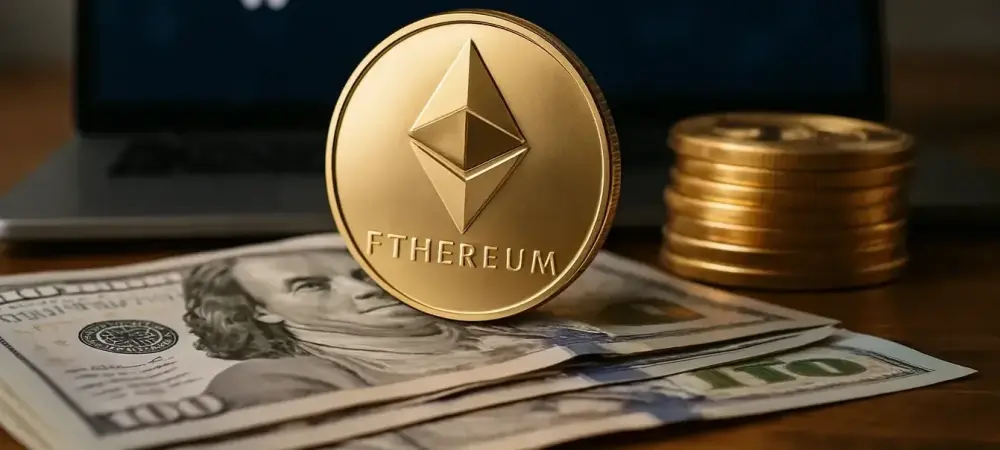
In a volatile cryptocurrency market where prices often swing dramatically, strategic players seize opportunities that others might overlook, turning downturns into potential windfalls. A notable example of this approach is evident in the recent actions of BitMine Immersion Technology, a well-known Bitcoin mining firm, which has aggressively expanded its Ethereum (ETH) portfolio during a recent price dip. This bold move not only positions the company as a heavyweight among corporate cryptocurrency holders but also underscores a growing trend of institutional confidence in Ethereum, the second-largest cryptocurrency by market capitalization. With market fluctuations creating both risks and rewards, BitMine’s calculated accumulation of Ethereum highlights a broader narrative of savvy investment tactics amid uncertainty. This development offers a glimpse into how major players navigate choppy waters, leveraging dips to build substantial holdings while others remain hesitant.
Strategic Moves in a Volatile Market
Capitalizing on Price Declines
BitMine Immersion Technology has taken a decisive step by acquiring an additional 106,485 ETH during a recent market downturn, bringing its total holdings to an impressive 1,297,093 ETH, valued at approximately $5.68 billion at the current price of $4,384.05 per ETH. This latest purchase alone accounts for around $466.83 million, demonstrating a significant commitment to Ethereum as a core asset. The transactions were conducted discreetly through over-the-counter (OTC) deals and direct transfers, facilitated by intermediaries such as Galaxy Digital, FalconX, and BitGo. This sophisticated approach minimizes market disruption and reflects a deliberate strategy to accumulate large volumes without drawing excessive attention. By buying during a dip, BitMine showcases an opportunistic mindset, betting on Ethereum’s long-term potential despite short-term price volatility. Such moves suggest a deep understanding of market cycles and a willingness to act when others might retreat.
Building a Long-Term Vision
Beyond the immediate acquisition, BitMine’s strategy extends to a broader vision for Ethereum as a foundational asset in its portfolio, evidenced by the dramatic expansion of its equity program from $5 billion to $24.5 billion. This fivefold increase, detailed in a filing with the United States Securities and Exchange Commission (SEC), signals a bullish outlook on Ethereum’s future value. The equity offering, managed by financial firms with commissions up to 3% on gross proceeds, will be sold through various channels, including direct trading on major exchanges. This financial maneuver is not merely about immediate gains but about positioning BitMine as a dominant institutional holder over the coming years. The scale of this expansion highlights a confidence that transcends temporary market fluctuations, focusing instead on Ethereum’s role in the evolving digital economy. It also raises questions about how such large-scale commitments might influence market perceptions and inspire similar actions by other firms.
Institutional Trends and Market Confidence
Rising Corporate Interest in Ethereum
The trend of institutional accumulation of Ethereum is not limited to BitMine, as other major players are also staking significant claims in this cryptocurrency, reflecting a shared belief in its enduring value. SharpLink, for instance, has emerged as the second-largest corporate holder with 728,804 ETH, valued at roughly $3.3 billion, and has made Ethereum its primary treasury reserve asset since mid-year. This decision underscores a growing consensus among certain firms that Ethereum offers stability and growth potential, even in turbulent markets. Additionally, reports of an unidentified large investor accumulating 92,899 ETH worth approximately $415 million through newly created wallets indicate that high-net-worth entities are also betting on Ethereum for long-term storage. These actions collectively point to robust confidence in Ethereum’s fundamentals, suggesting that institutional adoption may serve as a stabilizing force amid price swings.
Diversification and Comparative Opportunities
While Ethereum remains the focal point of institutional interest, some firms are exploring diversification into other promising cryptocurrency projects, indicating a broader risk-tolerant approach to digital assets. For instance, innovations like Bitcoin Hyper, a Layer 2 solution for Bitcoin offering faster transactions and lower costs, have caught attention with a presale raising significant funds at a competitive price point. Although not directly tied to Ethereum, such developments highlight the dynamic nature of the crypto space, where investors like BitMine and SharpLink might consider complementary opportunities to balance their portfolios. This diversification does not dilute the focus on Ethereum but rather complements it by showcasing a willingness to engage with emerging technologies that could reshape the market. The interplay between established assets like Ethereum and nascent projects underscores the complexity of investment strategies in this rapidly evolving sector, where adaptability is key.
Reflecting on Strategic Triumphs
Looking back, BitMine Immersion Technology’s audacious acquisition of over 106,000 ETH during a market dip stood as a testament to strategic foresight, cementing its position with holdings valued at $5.68 billion. Alongside SharpLink and other significant investors, the firm contributed to a narrative of unwavering institutional trust in Ethereum, navigating volatility with calculated precision through OTC deals and expansive equity programs. These maneuvers not only reshaped BitMine’s portfolio but also set a precedent for how corporate entities could approach cryptocurrency investments. Moving forward, the focus should shift to monitoring how such large-scale accumulations influence market dynamics and whether they encourage broader adoption. Exploring regulatory landscapes and technological advancements in blockchain will be crucial for sustaining this momentum. As the cryptocurrency realm continues to mature, the lessons from these strategic plays offer valuable insights for navigating future uncertainties with confidence and clarity.