

Today, we’re thrilled to sit down with Nikolai Braiden, a pioneering figure in the FinTech world and an early adopter of blockchain technology. With a passion for harnessing financial technology to revolutionize digital payments and lending, Nikolai has spent years advising startups on driving innovation in this dynamic space. In this interview, we’ll explore how embedded payments are reshaping the landscape for small businesses, the balance between seamless consumer experiences and business needs, and the exciting potential of industry-specific solutions and emerging technologies like AI.
What are “disappearing payments,” and how are they changing the way small businesses handle transactions?
Disappearing payments refer to transactions that happen so seamlessly that they’re almost invisible to the consumer. Think of booking a rideshare or checking into a hotel without ever pulling out a wallet—the payment is embedded into the experience. For small businesses, this shift is becoming the norm because customers now expect frictionless interactions. It’s driven by technology that integrates payments directly into platforms or apps, allowing businesses to meet these expectations while streamlining their operations. It’s no longer just a cool feature; it’s what keeps you competitive.
Can you walk us through a real-world example of how these invisible payments play out for everyday consumers?
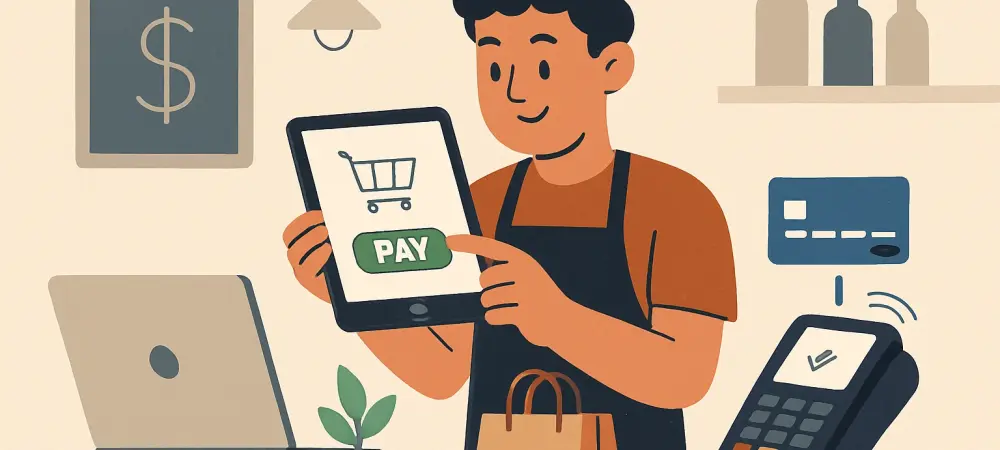
Absolutely. Imagine you’re at a local coffee shop that uses a point-of-sale system with embedded payments. You order through their app, pay with a digital wallet, and walk out with your coffee without ever swiping a card or signing a receipt. The payment happens in the background, tied to your account or app. For the consumer, it’s effortless—just a tap and you’re done. This kind of experience is becoming standard, especially with younger generations who prioritize speed and convenience over traditional checkout processes.
How are embedded payments fueling growth for small businesses, based on the latest insights or trends?
Embedded payments are a game-changer for small businesses because they integrate financial services directly into the tools they already use, like booking systems or e-commerce platforms. Recent research suggests that a huge majority—around 90%—of small businesses see this as critical to their growth. It simplifies transactions, reduces checkout abandonment, and often provides access to additional services like financing or analytics. This isn’t just about payments; it’s about creating an ecosystem where businesses can scale without getting bogged down by complex financial processes.
Why is it still crucial for small businesses to maintain visibility and control over payments, even as consumers push for invisibility?
While consumers want payments to disappear, small businesses can’t afford to lose sight of the money coming in and out. Visibility ensures they can track transactions, manage cash flow, and catch discrepancies or fraud early. Without control, a business risks financial chaos, no matter how smooth the customer experience is. It’s about striking a balance—making payments seamless for the customer while giving the business owner the tools to oversee everything behind the scenes. That’s non-negotiable for sustainability.
What does the ideal payment system look like for both small businesses and consumers, and how do you find that balance?
The ideal system, or the “sweet spot,” is one where consumers have flexibility—whether they want to tap a card, use a digital wallet, or pay via an app—without overthinking it. For small businesses, it’s about having a system that’s intuitive and low-effort to manage but still powerful enough to provide insights and control. It’s a tall order because you’re designing for two very different needs, but when done right, it eliminates friction on both ends. Common frustrations, like slow processing for customers or clunky software for businesses, have to be ironed out through thoughtful design and integration.
How are embedded payment solutions being customized for specific industries, like restaurants or veterinary practices?
Customization for specific industries is all about understanding the unique workflows and pain points of a business. For instance, a veterinary office might need a payment system that integrates financing options for pet owners right at the point of booking an appointment. A restaurant, on the other hand, might prioritize quick transactions for high-volume orders. These vertical-specific solutions differ from generic ones because they’re built with deep knowledge of the industry’s revenue streams and customer interactions, making the payment process feel like a natural part of the experience for both parties.
What are some of the biggest challenges in designing payment systems that are seamless across the user interface and backend processing?
Designing these systems is incredibly complex because you’re juggling multiple layers. On the consumer side, the interface has to be dead simple—think one-click payments. But on the backend, you’ve got payment processing, security protocols, and integrations with other business tools that need to run flawlessly. The challenge is ensuring the consumer never feels the weight of that complexity. Technology, especially AI and cloud-based platforms, plays a huge role in bridging this gap by automating processes and anticipating issues before they disrupt the experience.
How is artificial intelligence shaping the future of embedded payments for small businesses?
AI is transforming embedded payments by providing insights and automation that small businesses couldn’t access otherwise. It can analyze customer behavior, predict trends, and even assess risks for things like financing—all within the same platform. For a small business with limited data, AI embedded in a payment system can leverage broader datasets to offer powerful analytics. Plus, it’s shaking up the industry by challenging outdated software providers to innovate or get left behind. Ultimately, this tech benefits both businesses and consumers by delivering smarter, more tailored solutions.
What’s your forecast for the evolution of embedded payments in the small business sector over the next few years?
I’m incredibly optimistic about the future of embedded payments for small businesses. Over the next few years, I expect to see even deeper integration of financial services into everyday business tools, driven by advancements in AI and cloud technology. We’ll likely see more hyper-specialized solutions for niche industries, making payments not just a transaction but a strategic asset for growth. The focus will be on creating “everything platforms” that handle payments, analytics, and operations in one place, taking the burden off merchants. It’s an exciting time, and I think small businesses will be the biggest winners as these technologies mature.