

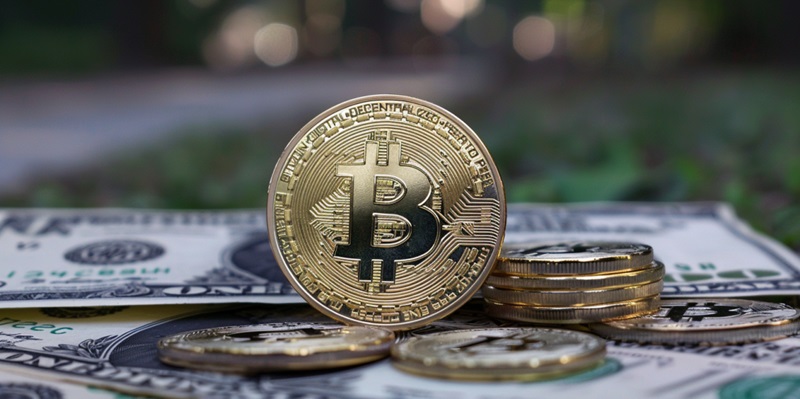
The crypto investment sphere has been rocked by a tide of withdrawals unprecedented in scale, with a staggering $942 million exiting various cryptocurrency products in just one week. This startling figure eclipses prior weeks of successful inflows, with a total of $12.3 billion having trickled in over seven consecutive weeks. The bulk of these outflows is concentrated in the market leader, Bitcoin (BTC), which alone witnessed $904 million in withdrawals. This appears to have been triggered by Bitcoin’s notable slump, descending over 10% from its apex value.
Correspondingly, other major cryptocurrencies were not immune to the market’s withdrawal syndrome. Ethereum (ETH), Cardano (ADA), and Solana (SOL) also saw sizeable sums being pulled from their holdings. It was a testament to investors’ wavering confidence or perhaps a strategic retreat to safeguard against broader market uncertainties.
Global Investment Trends and Altcoins
Despite the blanket withdrawal across most mainstream cryptocurrencies, the pattern wasn’t mirrored universally. A report from CoinShares highlights that certain alternative coins actually saw an uptick in interest. Polkadot (DOT), Avalanche (AVAX), and Litecoin (LTC) collectively drew in a net positive influx of $16 million. This contrast indicates that while general sentiment skews toward caution, there remains a segment of the investment community willing to bank on the potential of specific altcoins.
Furthermore, geographical variances also manifest in how crypto investments are being approached. While the United States and several European nations such as Sweden, Switzerland, and Germany observed a slowdown in particular with ETFs, the Americas beyond the US, with Brazil and Canada, stood out for their positive inflows. This demonstrates a differentiated response across regions, potentially influenced by local market conditions and regulatory climates.
The Road to Recovery and Future Prospects
Even amid the market’s bearish phase, Bitcoin shows a glimmer of resilience. Recent trading positioned its value at $67,565.00, marking a modest recovery in the wake of a substantial liquidation movement where leveraged futures of up to $100 million faced closure. Experts like Robert Kiyosaki suggest that Bitcoin still has bullish potential. With the upcoming halving event, he believes Bitcoin’s scarcity will amplify, thus enhancing its value proposition.
Investors are advised to consider paths like fractional ownership or Bitcoin ETFs, especially in anticipation of the halving process. It is a period marked by hope amidst volatility, where the prospects of Bitcoin’s increased worth post-halving intermingle with current market trepidation. The scenario offers a complex narrative but one that underscores a message of cautious optimism and the merit of diversified investment strategies within the crypto landscape.