

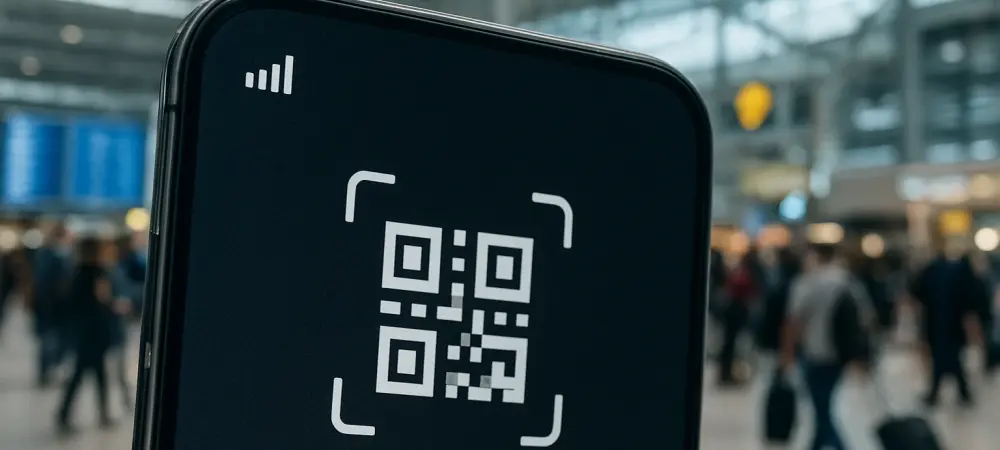
Nearly 40% of tourists report missing out on authentic local experiences like street food markets because they lack the specific QR-based payment methods required by vendors. This financial disconnect is a major component of what researchers call “arrival anxiety,” the stress travelers feel when landing in a foreign country without immediate connectivity or local currency. A comprehensive YouGov survey involving over 14,000 international travelers revealed that 62% of adults relied heavily on accommodation Wi-Fi to stay connected, which led to inefficient and frustrating behaviors. For instance, 24% of travelers purchased items at cafes they did not want just to access a network, and 15% stood outside tourist attractions to use public signals. Perhaps most telling, 7% resorted to asking strangers for a personal hotspot connection. By launching an integrated eSIM and QR payment system, Wise aims to eliminate these dual pain points, ensuring that the transition from the airport to the city streets is smooth and digitally secure for everyone.
Streamlining Digital Connectivity Through Flexible eSIMs
The Wise eSIM represents a departure from the traditional telecommunications model, which often traps international travelers in rigid and expensive roaming plans offered by standard carriers. Instead of forcing users into pre-packaged data bundles that might not fit their specific needs, this service utilizes a “build-your-own” model that emphasizes flexibility and waste reduction. Available in major markets including the United States, Canada, and the European Economic Area, the eSIM allows customers to install a single digital profile that remains on their device for future trips. This eliminates the need for repetitive downloads or the physical swapping of SIM cards at airport kiosks. Travelers can use the application to select the exact amount of data and the specific duration required for their trip, ensuring the plan aligns perfectly with their itinerary. This approach converts mobile data into a reliable background utility that can be reactivated with a few taps whenever a traveler crosses a border.
In a move that challenges prevailing industry norms, the eSIM service introduces features designed to mitigate financial waste and improve transparency for the consumer. Data usage only commences once the device successfully connects to a supported network at the destination, preventing the premature depletion of data while a traveler is still in transit. Furthermore, the platform offers refunds for any purchased data plans that remain unused, a policy that is virtually unheard of in the travel telecommunications space. To help users navigate their data requirements, the application provides intuitive guidelines that help estimate how much data is necessary for common tasks like navigation or social media. This granular control allows travelers to manage their digital footprints with the same precision they apply to their travel budgets. By removing the guesswork from mobile roaming, the system allows users to focus on their experiences rather than worrying about unexpected carrier charges or connection drops.
Bridging the Payment Gap With Global QR Integration
Financial friction remains a primary hurdle for travelers, especially in regions where street vendors and local markets favor domestic digital wallets over international credit cards. Historically, these local systems were inaccessible to foreign visitors because they required a local bank account or a regional phone number to function. Wise has bridged this gap by integrating local payment schemes from five continents directly into its application interface. This allows users to pay like a local using established systems such as Pix in Brazil, PayNow in Singapore, and DuitNow in Malaysia. By bypassing the need for a local bank account, the app opens doors to “on-the-street” transactions that were previously impossible for tourists to navigate without physical cash. This shift is vital in economies where mobile payments have become the default standard for everything from street food to public transportation. Consequently, the reliance on carrying bulky amounts of physical currency is greatly reduced.
A centerpiece of this payment expansion is the strategic partnership with Alipay+, which provides a vital link for travelers visiting the Chinese mainland and other major Asian markets. In many of these destinations, traditional cash is increasingly obsolete and foreign credit cards are frequently declined by small-scale merchants. Through the Wise application, travelers can now scan and pay at millions of Alipay+ enabled merchant locations, covering over 50 destinations including South Korea, Nepal, and Cambodia. This integration allows users to navigate high-tech mobile-first economies without the need to open local bank accounts or register for regional phone services. This seamless bridge ensures that Western travelers can participate in local commerce with the same ease as a resident, effectively eliminating the isolation that often comes with card incompatibility. It represents a significant step toward a unified global payment network where geographical boundaries no longer dictate a person’s ability to transact.
Navigating the Future: A Comprehensive Ecosystem for International Mobility
The consolidation of telecommunications and financial services into a single platform suggests a move toward a “super-app” model for international mobility. Beyond connectivity and QR payments, the account has been augmented with several smart features to enhance the overall traveler experience. Users can now purchase pay-as-you-go airport lounge passes directly through the application, providing a convenient way to find comfort during long layovers. Furthermore, the inclusion of multi-currency bill splitting and group spending trackers allows travelers to manage shared costs with ease, regardless of the local currency used. The application also provides localized insights and destination guides to help users navigate unfamiliar environments safely and efficiently. These tools reflect a broader mission to build a comprehensive ecosystem for the 19 million individuals and businesses who rely on the platform. By managing the logistical and financial complexities of travel in one place, the company provides a level of utility that extends far beyond simple money transfers.
In the end, the integration of flexible eSIMs and diverse QR payment methods successfully addressed the most common stressors of international travel. People who utilized these tools found that they could land in a new country with the immediate confidence to communicate and transact without the typical hurdles of traditional banking. To prepare for future journeys, travelers should have verified that their smartphones supported digital SIM technology and updated their applications to access the latest regional payment integrations. It was also beneficial to review data estimation guides to avoid purchasing excessive bandwidth for shorter trips. Looking forward, the emphasis shifted toward maintaining digital hygiene and ensuring that multi-currency accounts remained funded to take advantage of real-time exchange rates. By consolidating these essential services, the platform effectively transformed the way individuals navigated global borders. The transition from a traveler to a local participant became a matter of a few digital clicks, marking a significant evolution in cross-border mobility.