

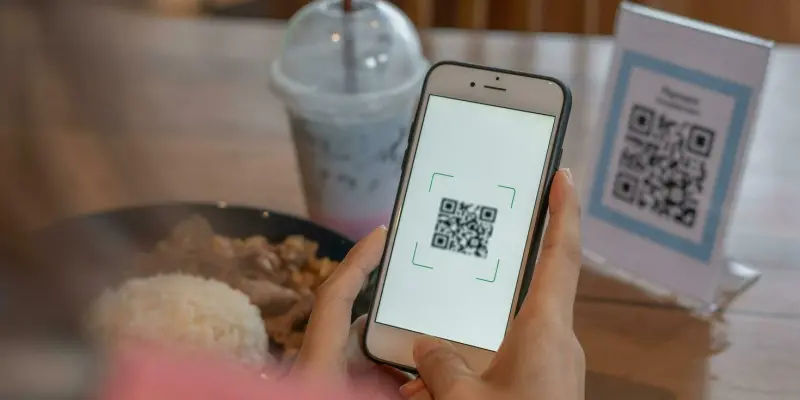
The global landscape of digital payments is rapidly evolving, and one of the most significant players in this transformation is the emergence of QR code payments. Driven by the standardization of national QR payment schemes and the expansion of Account-to-Account (A2A) payment systems, the value of QR code payments is projected to increase by 50% globally—from $5.4 trillion in 2025 to over $8 trillion in 2029, according to a study by Juniper Research. In the midst of this evolution, Nigeria is fervently working to harness QR code technology to foster its cashless economy, with the Nigeria Inter-Bank Settlement System (NIBSS) at the forefront of this movement.
The Rise of QR Code Payments
QR code payments are gaining widespread traction due to their high accessibility, affordability, and universal compatibility. Unlike traditional Point-of-Sale (POS) systems that require specialized hardware, QR codes can be scanned using any smartphone equipped with a camera. This broad device compatibility and reduced operational costs are particularly appealing in developing markets, such as Nigeria, where mobile penetration is high while the traditional banking infrastructure remains underdeveloped.
In Nigeria, the NIBSS is leading the charge with the adoption of the Nigeria Quick Response (NQR) payment system. The NQR system, launched in March 2021, is designed to accelerate Nigeria’s transition towards a cashless economy by enabling quick, secure, and convenient digital transactions for businesses and individuals. Recent enhancements to the NQR system have significantly bolstered its capacity, positioning it as a pivotal component of Nigeria’s cashless policy. By offering an alternative to cash transactions, the NQR system aims to streamline financial operations, increase transparency, and reduce the shadow economy.
Advantages of QR Code Payments
One of the most compelling advantages of QR code payments is their low operational costs compared to traditional POS systems. This cost-effectiveness alleviates the financial burden on small businesses, empowering them to adopt digital payments without requiring substantial upfront investments. Furthermore, QR codes do not necessitate specialized hardware; any smartphone with a camera can scan them, lowering the barrier to entry especially for merchants in regions where financial resources are limited.
Daniel Bedford, the lead author of the Juniper Research study, underscores the potential of QR code payments in promoting financial inclusion. For small businesses and informal sectors, QR code technology is not only more affordable but also more accessible compared to traditional POS systems. This inclusivity enables smaller vendors, such as street hawkers, drivers, and independent workers, to accept payments seamlessly, thus encouraging financial participation across a broader population and decreasing reliance on cash transactions. Financial inclusion is a critical component for economic development, particularly in emerging markets.
Challenges and Competition
However, while QR code payments are expected to dominate various regions, they face significant competition from Near-field Communication (NFC) payments, especially in advanced economies like North America and Europe. Apple’s decision to open its NFC technology to third-party apps is expected to shift consumer preferences in these regions, presenting a formidable challenge to QR code dominance. Nonetheless, QR code payments are anticipated to maintain their strong appeal thanks to their inherent accessibility, affordability, and applicability in developing markets.
In Nigeria, the adoption of QR code payments is not without its own set of challenges. Key issues include limited awareness and access to digital payment tools among small businesses and informal traders, infrastructure and internet connectivity deficits in rural areas, and consumer skepticism towards digital transactions fueled by concerns around fraud and cybersecurity. Addressing these challenges head-on is essential for driving widespread adoption of QR code payments in Nigeria. By raising awareness, improving infrastructure, and enhancing cybersecurity measures, the barriers to adoption can be significantly reduced.
NIBSS’s Strategic Measures
NIBSS is taking decisive steps to expand the capabilities and adoption of the NQR payment system as a solution to these challenges. Premier Oiwoh, the Managing Director and CEO of NIBSS, has assured that the NQR will revolutionize Nigeria’s payment industry by ensuring instant processing of transactions. This system aims to offer a cost-effective and user-friendly alternative to traditional banking methods, allowing users to transact simply by scanning a QR code. This innovation promises to cater to a wide array of users, from tech-savvy urban consumers to small-scale rural vendors.
Oiwoh’s vision for the future includes street hawkers being able to provide their QR codes for payment, demonstrating the system’s potential to replace cash transactions comprehensively. As the NQR payment system becomes widely adopted among merchants—including small-scale vendors and informal traders—cash transactions are expected to decline, aligning with the Central Bank of Nigeria’s (CBN) financial inclusion goals. Continued investment in public awareness campaigns and infrastructure development will be pivotal in consolidating QR code payments as a dominant force within Nigeria’s payment ecosystem.
Promoting Financial Inclusion
The global landscape of digital payments is experiencing rapid evolution, with QR code payments emerging as a significant player in this transformation. This growth is fueled by the standardization of national QR payment schemes and the rise of Account-to-Account (A2A) payment systems. According to a study by Juniper Research, the value of QR code payments is expected to grow by 50% worldwide, increasing from $5.4 trillion in 2025 to over $8 trillion in 2029.
Amid this evolution, Nigeria is making strong efforts to leverage QR code technology to promote a cashless economy. The Nigeria Inter-Bank Settlement System (NIBSS) is at the forefront of this initiative, striving to implement and expand the use of QR code payments within the country. This move is part of a broader strategy to improve financial inclusion, reduce the reliance on cash, and enhance the efficiency and security of transactions. By adopting QR code payments, Nigeria aims to join the global movement toward faster, more secure, and convenient digital payment methods.