

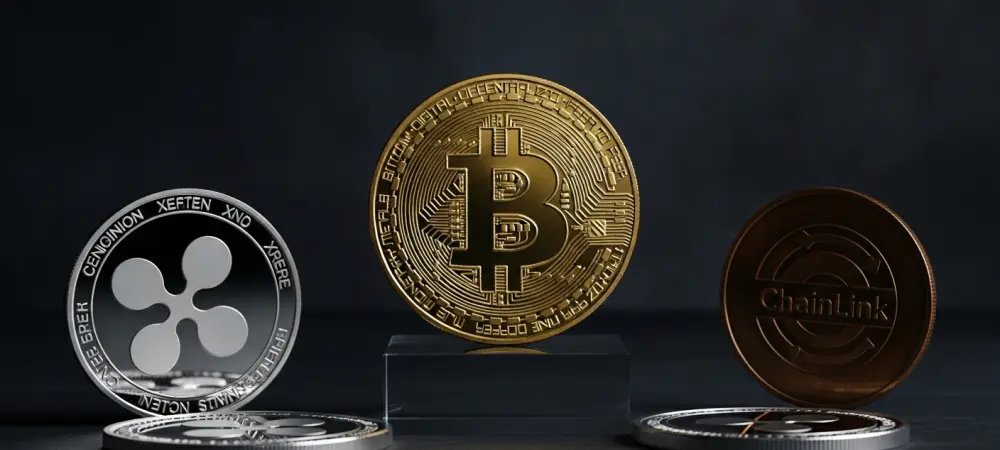
The current landscape of the global digital asset market is navigating a highly sophisticated environment defined by the interplay between traditional financial metrics and localized technical indicators. While the release of the most recent Nonfarm Payrolls report initially provided a significant boost to risk-on sentiment, the subsequent trading sessions have revealed a notable divergence among major digital assets that challenges the idea of a uniform market rally. This mixed performance underscores the growing importance of specific price levels in determining the immediate future of the sector, forcing traders to look beyond general trends toward localized support zones. While some assets benefit from bullish setups, others are hampered by bearish indicators and a lack of clear buying interest from retail participants.
Bitcoin’s Technical Outlook: Resilience and Growth Factors
Bitcoin continues to function as the primary bellwether for market sentiment, currently hovering just below the $65,000 mark as it undergoes a period of significant price consolidation. Following an initial surge driven by renewed institutional interest, the asset has entered a phase of tight movement, fluctuating within a narrow corridor defined by the $64,800 support and the $65,082 resistance. This specific range is considered critical by technical analysts who believe that a sustained move above the upper boundary is necessary to catalyze a sustained rally toward the next major hurdle at $65,375. The market’s ability to maintain these levels despite broader economic uncertainty suggests that a robust floor has been established, preventing a deeper retreat toward the $64,400 zone. This consolidation phase is a necessary reset that allows the market to build the liquidity required for a more permanent push into higher valuation territory during the current trading cycle.
The technical outlook for the leading cryptocurrency remains overwhelmingly positive, supported by several key indicators that point toward continued strength in the coming weeks. The Relative Strength Index currently suggests that while the price has significant upward momentum, it has not yet reached overbought territory, which provides ample room for further appreciation before a cooling-off period is required. Furthermore, the Moving Average Convergence Divergence provides a strong buy signal, indicating that recent buying pressure from major market players is significantly outweighing the previous bearish trends seen earlier in the month. Long-term institutional sentiment also remains high, with many global asset managers projecting substantial valuation increases by 2030, driven primarily by the asset’s inherent scarcity and its growing role as a hedge against currency devaluation. This confidence from professional investors serves as a stabilizing force for the primary benchmark’s current price trajectory.
XRP’s Critical Resistance: The Struggle for Momentum
In stark contrast to the strength seen in the primary market, XRP presents a much more cautious scenario for investors as it undergoes a high-stakes retest of its previous resistance levels. The asset is currently attempting to flip the $1.03 mark into a reliable support floor following a brief breakout that failed to attract significant follow-through from the broader community. Success at this level is vital for maintaining any semblance of a bullish narrative, as it could pave the way for a gradual move toward the $1.05 threshold. However, the lack of aggressive buying at these prices suggests that the market is hesitant, and a failure to defend this ground may result in a swift slip back toward the $1.00 psychological support level. This precarious position highlights the vulnerability of altcoins that lack the same institutional backing as Bitcoin, leaving them susceptible to rapid shifts in sentiment and potential liquidations if the broader market experiences a correction.
The primary concern for XRP holders lies in the growing disconnect between recent price action and the underlying technical oscillators that typically predict future movements. The Relative Strength Index currently indicates that demand is surprisingly weak at these levels, while the Moving Average Convergence Divergence remains in negative territory, suggesting that bearish momentum has not yet fully dissipated from the system. Market experts are also quick to clarify that the speculative, astronomical price targets often discussed in online forums are mathematically improbable given the current circulating supply and market capitalization constraints. These analysts urge traders to focus on realistic, data-driven targets that are supported by regulatory clarity and actual utility within the global payments ecosystem. Without a significant fundamental catalyst, XRP may continue to face significant overhead resistance that prevents it from participating fully in the broader market’s upward moves.
Chainlink’s Market Position: Stability and Institutional Integration
Chainlink is currently defined by a period of relative equilibrium, with its price trading within a highly restricted range between $8.10 and $8.27 for several consecutive sessions. This period of consolidation suggests that the market has entered a “wait-and-see” mode, with participants looking for a significant fundamental catalyst before committing to a clear direction. Technical indicators for the asset are currently divided, reflecting the indecision that has gripped the mid-cap segment of the cryptocurrency market. While some shorter-term metrics give a slight edge to buyers who are looking for a breakout, other medium-term indicators remain neutral or have begun to point toward a potential sell signal as volume begins to taper off. This stagnation is often a precursor to a volatile move, but until a decisive breach of the current range occurs, the asset is likely to remain tethered to its current valuation. Traders are advised to monitor volume spikes for the next shift. Despite the short-term stagnation in its price action, the fundamental value proposition for Chainlink remains exceptionally robust due to its increasing integration into the world’s financial infrastructure. Its ongoing partnerships with major global entities like Swift demonstrate an essential role in allowing traditional banking institutions to transfer tokenized assets across various blockchains with security. The shift toward the tokenization of real-world assets is a trend that is expected to accelerate significantly through 2028, and Chainlink’s oracle technology is uniquely positioned to capture value from this transition. By providing a bridge between legacy financial systems and decentralized networks, the project ensures its long-term relevance for institutional accumulation and strategic investment.
Strategic Market Evolution: Future Directions and Observations
The market dynamics observed throughout this period demonstrated that the digital asset landscape had become far more nuanced, requiring a sophisticated analytical approach. Investors who focused solely on broad market sentiment often missed the subtle technical signals that predicted the divergence between Bitcoin’s strength and the struggles of altcoins like XRP. The data showed that while macroeconomic reports provided an initial spark, the sustainability of any rally depended heavily on localized support levels and institutional utility. It was clear that the era of universal asset growth had transitioned into a phase where fundamental value and technical precision were the primary drivers of success. Those who monitored the tight consolidation ranges in assets like Chainlink were better prepared for the lack of immediate volatility, recognizing that fundamental infrastructure developments were happening beneath the surface. This period confirmed that the market had matured significantly.
Moving forward, the strategic focus for market participants shifted toward identifying assets that possessed clear regulatory pathways and established roles in the global financial system. The resilience of Bitcoin near the $65,000 level suggested that building a core position in high-liquidity assets remained a prudent foundation for any digital portfolio. Meanwhile, the challenges faced by XRP highlighted the importance of setting realistic price expectations based on market capitalization rather than social media sentiment. For those interested in the infrastructure layer, the consolidation of Chainlink offered a lesson in patience, as institutional adoption of tokenization continued to provide a strong long-term tailwind. By prioritizing assets with proven utility, traders prepared themselves for a future where digital assets are fully integrated into the global economy.