

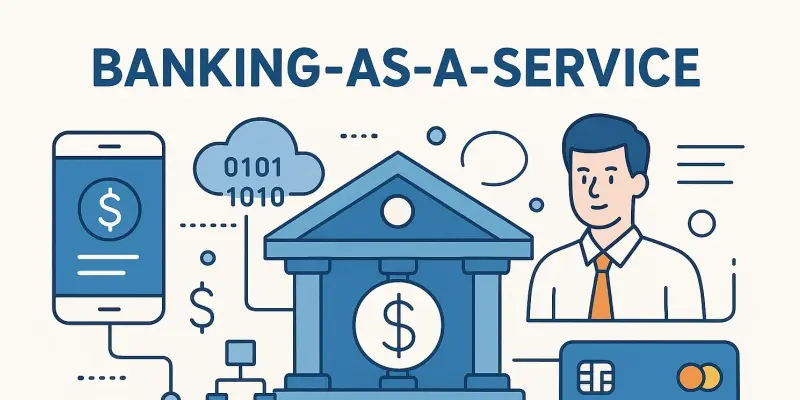
The relentless evolution of financial technology has been punctuated by groundbreaking developments. Among these, the rise of Banking-as-a-Service (BaaS) platforms signifies a profound shift in how financial and technological sectors interface, recasting traditional banking paradigms into agile, integrated models. These platforms, much like evolving technological ecosystems, enable multiple innovations by providing a framework where banks and fintech companies can collaborate seamlessly. This review intends to dissect these platforms’ transformative aspects and evaluate their impact and future potential.
Evolution of Banking-as-a-Service
Emerging from the crossroads of technological advancements and financial industry needs, Banking-as-a-Service stands as a testament to modern ingenuity. Rooted in the necessity to offer enhanced banking capabilities through technology, BaaS platforms integrate banking services with external developers and firms via APIs. This approach enables businesses to offer banking products without needing to establish a banking infrastructure. It highlights a significant shift in technology, where BaaS becomes pivotal in driving business innovation in finance.
In recent years, the ubiquity of digital interactions and cloud computing advancements have propelled BaaS into the forefront of fintech. These platforms resonate with the broader demands for more technological inclusivity and efficiency, providing seamless transaction and operational capabilities for diverse industries. Consequently, BaaS is not just a technological progression but a crucial component in redefining financial landscapes.
Central Features of Banking-as-a-Service
Seamless API Integration
The backbone of BaaS platforms is formed by robust API integration, delivering unrivaled connectivity between traditional banking systems and innovative fintech solutions. This feature unlocks new potential for developers, granting them access to banking functionalities directly. Its ease of integration allows businesses to orchestrate direct financial services with minimal lead time, reflecting its core significance within the BaaS model.
APIs facilitate swift and efficient data exchange, offering significant performance improvements in creating financial solutions. They enable services that previously seemed out of reach for non-banking entities, allowing quick adaptation to market needs. As a cornerstone of BaaS, these APIs are essential for fostering agile financial environments that are ready to navigate the complexities of modern finance.
Cloud-Native Architecture
In tandem with API integration, the cloud-native architecture of BaaS platforms supports scalability and resilience. By utilizing cloud technologies, these platforms manage to reduce latency, enhance security, and support robust operational frameworks for financial transactions. Cloud environments offer strategic advantages, providing adaptability that is essential for maintaining service reliability and scalability. Real-world usage illustrates the cloud’s significant impact on improving the performance metrics of financial services, clearly demonstrating the shift from physical infrastructure reliance to digital-first strategies. This transformative reliance on cloud infrastructure ensures that businesses using BaaS platforms can expand effortlessly, responding dynamically to fluctuating market demands.
Latest Innovations and Industry Shifts
Continual innovation characterizes the BaaS landscape, driven by evolving market expectations and technological progressions. Recent advancements showcase an increased emphasis on vertical integration, streamlining processes by minimizing intermediaries. This has led to an acceleration of product deployment timelines, enhancing competitive advantages in financial markets. Moreover, the linkage between BaaS and regulatory frameworks marks an important advancement, as platforms begin to incorporate compliance features directly into their architecture. These innovations address the pressing needs for secure, compliant financial processes, ensuring that firms adopting BaaS can preemptively tackle regulatory challenges while remaining focused on core business strategies.
Practical Implementations and Sector Examples
BaaS platforms have already made remarkable inroads across various industries, with finance, retail, and utilities being prime beneficiaries. These platforms empower businesses to embed banking services directly into their operations, allowing for tailored financial products that cater to specific sector demands. For instance, fintech firms have leveraged BaaS to streamline payment processing, expanding service offerings significantly.
A unique implementation is the vertical integration of BaaS, exemplified by partnerships between banks and fintech companies. These partnerships highlight the utility of BaaS in optimizing financial transactions through direct collaborations, fostering environments conducive to rapid technological adoption. This synergistic approach manifests in use cases where scalability and security are paramount, emphasizing BaaS’s adaptability across diverse applications.
Challenges and Hurdles in Adoption
Despite its numerous advantages, BaaS faces several challenges that pose barriers to its seamless adoption. Technical complexities, such as ensuring data integrity and secure API communications, represent notable hurdles. Additionally, regulatory landscapes demand rigorous adherence to compliance, requiring platforms to implement robust frameworks to navigate these intricate requirements.
Efforts to address these challenges are ongoing, with industry players investing in technologies that enhance platform resilience and compliance. Addressing these challenges requires a concerted effort to refine technical infrastructures and align with regulatory expectations. These endeavors position BaaS platforms at a junction where innovation meets regulation, aiming to solidify their future standing in the financial domain.
Prospects for Banking-as-a-Service
Looking forward, the trajectory of BaaS platforms appears poised for continued expansion and enrichment. Potential breakthroughs in decentralized banking and fintech collaborations are anticipated to redefine traditional banking responsibilities further. As technology progresses, BaaS has the potential to become even more integral in facilitating intricate financial processes, enhancing service delivery across the board. Predictions for the industry’s future include broader acceptance of digital finance practices, driven by BaaS’s capability to support diverse operational models. The envisaged long-term impact suggests a shift toward more democratized financial ecosystems, where BaaS empowers greater access and opportunity across varied economic landscapes.
Concluding Remarks
This exploration of Banking-as-a-Service platforms reveals their pivotal role in shaping the future of finance, as they blend technological innovation with financial pragmatism. Delving into its core components, from API integration to cloud architecture, illustrates how BaaS has repositioned traditional banking approaches for modern needs. The challenges faced underscore the importance of continued development and adaptation in a rapidly evolving regulatory environment. As BaaS platforms mature, their influence on financial services promises to redefine industry standards, pushing boundaries and fostering innovative financial solutions. The ability to balance rapid technological advancement with stringent compliance demands marks a new era for financial institutions and businesses worldwide. This evolution sets the stage for a transformative future in banking, characterized by a seamless blend of security, innovation, and accessibility.