

A single misplaced decimal point in a digital product catalog can dismantle months of relationship building and result in a catastrophic loss of revenue during a critical negotiation. When a sales representative presents a quote based on outdated or manually entered information, the discrepancy does more than just delay a transaction; it erodes the foundational trust between a brand and its client. This breakdown often occurs when organizations rely on “good enough” data management, a strategy that inevitably fails as teams scale and product lists expand. Administrative friction, characterized by the time-consuming process of cross-referencing disparate spreadsheets, creates a drag on the modern sales cycle that most businesses cannot afford to ignore in an increasingly competitive environment.
The Hidden Cost: A Single Pricing Typo
Manual data entry is a silent killer of productivity and professional credibility within high-stakes sales environments. For instance, when a representative promises a specific discount or a tiered pricing structure that the backend system does not reflect, the resulting friction requires multiple rounds of internal approval to rectify, significantly slowing down the momentum of a deal. Beyond the immediate financial loss, these errors foster a perception of incompetence that can push a lead toward a competitor who demonstrates better operational control. The modern buyer expects instant, accurate, and consistent information across all touchpoints, making manual errors a primary source of customer churn.
Inconsistent quotes across various team members also create internal confusion that hampers collaboration and morale. When one salesperson uses an old Excel sheet while another uses the updated internal portal, the lack of a unified front creates unnecessary internal debate over which data is the definitive version. This administrative friction acts as a barrier to growth, as senior staff must spend valuable hours auditing entries instead of focusing on high-level strategy. “Good enough” data management might suffice for a small boutique operation, but for any organization looking to scale its operations, it represents a significant vulnerability in the sales pipeline.
The Evolution: From Digital Rolodex to Growth Engine
Customer Relationship Management systems have undergone a profound transformation, moving away from simple contact lists to becoming the central nervous system of modern business operations. This shift requires the CRM to act as a comprehensive “single source of truth” where every product detail, price point, and service offering is housed in a centralized location accessible to all departments. Managing the increasing complexity of extensive product catalogs, which often include thousands of individual Stock Keeping Units, demands a level of precision that cannot be maintained through manual entry or fragmented storage solutions.
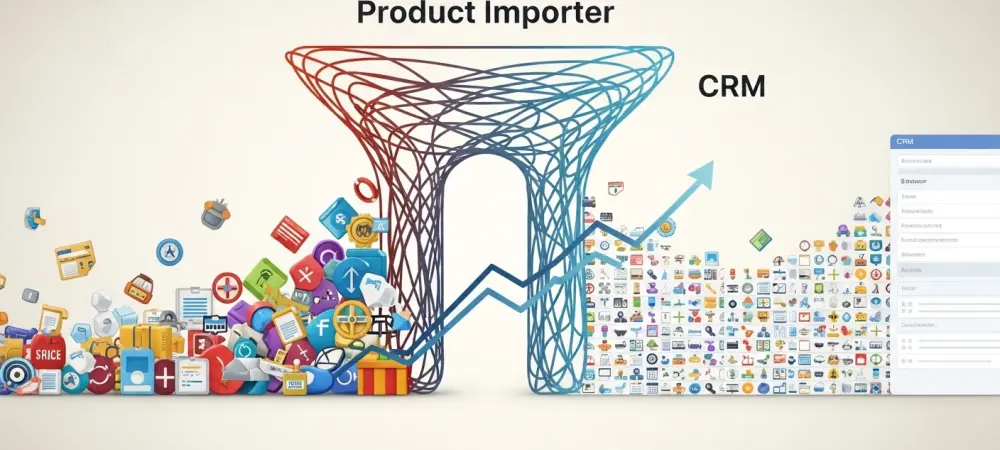
The role of specialized data tools becomes apparent when considering the bottleneck created by the traditional “copy-paste” method of data management. As a company expands its inventory or adjusts its pricing to meet market demands, the volume of data that must be migrated from external spreadsheets to internal databases grows exponentially. Without a robust product importer, organizations find themselves trapped in a cycle of reactive maintenance, where the CRM is perpetually out of sync with the actual product offerings. This gap prevents the platform from functioning as a true growth engine, turning it instead into a source of frustration for the sales team.
Operational Excellence: Replacing Manual Input With Automation
Automated data ingestion through dedicated product importers allows organizations to reclaim thousands of productive hours every year by replacing manual tasks with high-speed bulk uploads. The mechanics of mapping and validation ensure that every column in a spreadsheet aligns perfectly with the predefined fields in the CRM, catching formatting errors before they contaminate the database. This process ensures that marketing, sales, and operations departments are all working from a unified dataset, effectively eliminating the information silos that lead to miscommunication and lost opportunities.
Furthermore, the ability to instantly reflect new offerings and seasonal price adjustments provides a level of market agility that manual entry simply cannot match. By reducing the “cognitive load” on sales staff, these tools allow representatives to focus their energy on building relationships and closing deals rather than navigating the complexities of backend data entry. When the product catalog is dynamic and responsive, the entire sales cycle accelerates, allowing the organization to pivot in response to competitor moves or supply chain shifts without administrative delay.
Market Trajectories: The Rise of Data Solutions
Analysis of current trends shows a projected 58% growth in the CRM market between 2026 and 2028, signaling a widespread adoption of data-centric sales architectures. As the market reaches an estimated value of over $64 billion, the ability to handle large volumes of structured data has become a primary competitive differentiator for industry leaders. Platforms like Nutshell, Monday CRM, and Pipedrive have implemented sophisticated import functionalities to cater to different organizational needs, ranging from intuitive bulk upload tools for small businesses to modular, visual workflows for complex enterprises. Expert perspectives suggest that clean, scalable data is the new gold standard for business intelligence. While Nutshell emphasizes a streamlined all-in-one approach to help teams get started quickly, Pipedrive utilizes a pipeline-centric design that keeps product data front and center throughout the sales journey. Monday CRM offers a high degree of customization through no-code automations, illustrating how different platforms prioritize modularity to fit unique business models. Regardless of the specific tool chosen, the underlying philosophy remains the same: the CRM must serve as the backbone of the organization’s data architecture to ensure long-term stability.
Strategic Integration: Moving Toward a Centralized Database
The organizations that successfully transitioned from fragmented spreadsheets to a centralized CRM database adopted a step-by-step approach to ensure long-term data integrity. They began by auditing their existing product catalogs and utilizing strict validation rules to catch errors during the initial bulk upload. Strategies for utilizing duplicate detection proved essential for maintaining a clean database, preventing the system from becoming cluttered with redundant information that could confuse sales representatives. This proactive framework allowed firms to establish a reliable foundation that supported rapid scaling without the need for constant manual oversight.
Human resources were effectively reallocated from mundane administrative maintenance to high-value strategic initiatives that directly impacted the bottom line. By automating the ingestion of product data, leadership teams shifted their focus toward analyzing market trends and optimizing their sales strategies based on real-time information. Continuous optimization became a core part of the organizational culture, ensuring that the product catalog remained dynamic and responsive to shifting market demands. Ultimately, the integration of a product importer turned the CRM into a reliable asset that empowered the entire workforce to perform at its peak.